Sagamai Perchlet (Plectranthias sagamiensis)
The Sagamai Perchlet (Plectranthias sagamiensis) known to tropical fish keeping enthusiasts as the Threadtail Perchlet is a highly sought after deep water anthiadine species found in western Pacific waters from Japan, south to the Philippines and southern Indonesia.
The Sagamai Perchlet was originally discovered in Sagami Bay, Honshu Japan where it gets its name, sagamiensis.
Like other Plectranthias, the Sagami Perchlet prefers cool, low light, rariphotic waters below the mesophotic zone at 400 to 1,000 foot depths where they can be found hovering tightly over complex rocky structures, deep reef ledges, mixed sandy-rocky bottoms and photosynthetic corals.
Plectranthias sagamiensis are a secretive, demersal species that rely on the rocky crevices for protection. They use the caves, crevices and ledges to hid from predators and to ambush small mobile invertebrates and zooplankton carried by the deep water currents. They like to sit on elevated rocky, lookout posts to snatch food from the water column.
Although the Sagamai Perchlet is in the Serranidae family, it is technically not a true anthias however, it is a very close cousin. Pseudanthias species like the Dispar Anthias belong to the subfamily Anthiadinae. The Sagamai Perchlet belongs to the subfamily Ananthiinae, formerly Anthiadinae, and commonly called Perchlets or Hawk Anthias.
Unlike true anthias that thrive in close groups with plenty of free swimming space and need multiple feedings a day; perchlets are more solitary ambush predators that have a much slower metabolism and need less attention.
Sagamai Perchlet (Plectranthias sagamiensis)
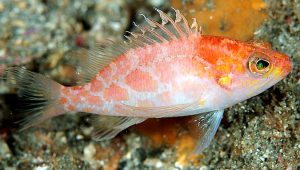
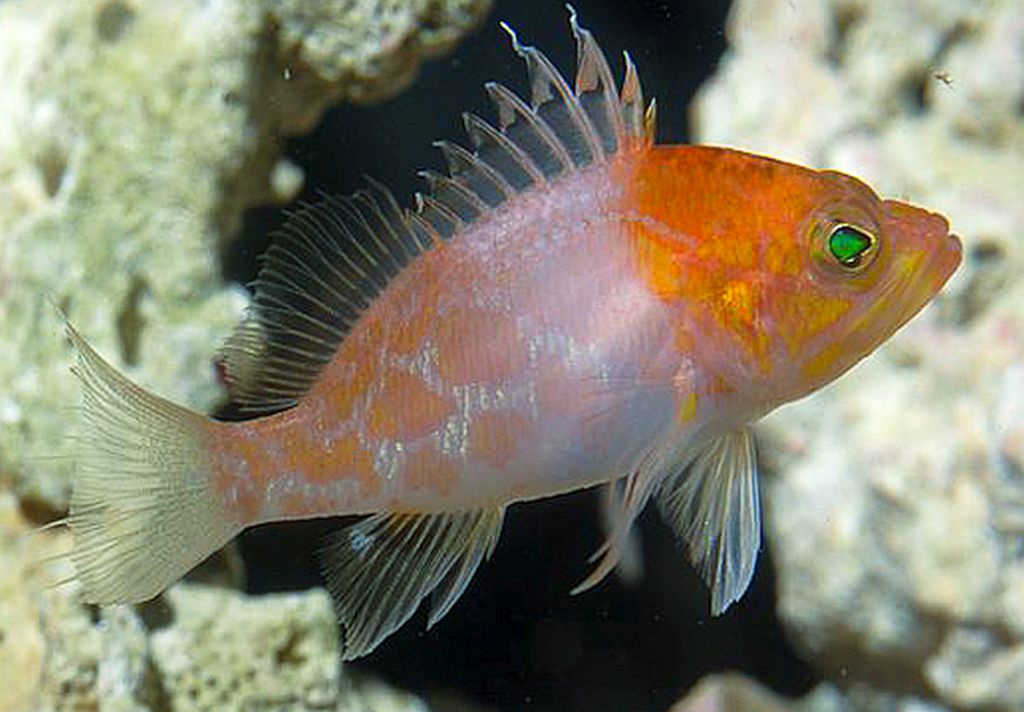
The Threadtail Perchlet has a stocky, diamond shaped body with a sharply pointed snout, large expressive eyes adapted for dim light, and a prominent, spiked dorsal fin that they they flare when displaying or hunting. Depending on their emotional state and activity, they have a chameleon like ability to drastically change colors.
At rest they Plectranthias sagamiensis have a uniform, monochromatic pinkish orange to muted red body color that blends into their surroundings; much like the Pygmy Hawkfish. When excited or feeding, they transform into a striking bi-color or tri-color form. Their body turns a vibrant reddish-orange color on the front upper half and a pale, pearlescent pink or white on the rear lower half; frequently accented by mottled yellow and white patches across the back and dorsal spikes.
Like most deep-water species, their intense red and orange colors make them completely invisible in the blue filtered light of the twilight zone, but under home aquarium actinic lighting, their colors pop.
The Sagami Perchlet is best housed in a mature deep water reef or FOWLR aquarium of at least 55 gallon capacity with a coralline substrate and plenty of live rock arranged into a slope with overhangs, deep crevices, ledges, and shaded caves for them to hide. They rarely swim in the open water column but enjoy hopping from ledge to ledge and hanging upside down in the cave ceilings.
Because they are collected from depths in excess of 400 feet, they are extremely sensitive to reef lighting. If you are keeping them in a brightly lit coral reef tank, it is essential to have deep dark caves for them to escape the light.
When first introduced, keep the aquarium lights dim or completely off for the first couple of days or run a heavily blue-skewed spectrum. A lighting system that provides a gradual dawn to dusk lighting cycle will greatly benefit this species in a tank that is brightly lit for corals. Over time, this species will adjust to brighter lights if they have plenty of shady rocky areas to retreat to.
An aquarium chiller is recommended to maintain water temperatures at their recommended range, and a wavemaker is needed to provide the strong, continuous water movement found in their deep water environment.
Heavy filtration, aggressive protein skimming, regular water changes, and media reactors are required to keep nitrates and phosphates at zero.
Sagami Perchlets are completely reef safe with corals and incredibly peaceful toward other fish, but because they are true carnivores with surprisingly large mouths, they will consider small ornamental shrimp potential snacks. Cleaner Shrimp and Fire Shrimp are normally safe once Sagami Perchlets are acclimated.
Keep one Sagamai Perchlet per tank unless you have a huge system with several distinct, separated rock piles. They are highly territorial toward their own kind and other similar-shaped bottom-species.
Good tankmates include deep water true anthias, tangs, or wrasses. Do not house them with highly aggressive bottom dwellers like large dottybacks or aggressive hawkfish that might run them out of their caves.
Plectranthias are pelagic spawners that have not been bred in a home aquarium or commercially.
The Sagamai Perchlet is a strict carnivore that in their mesophotic habitat feed on small, mobile benthic invertebrates like tiny crabs, microscopic ornamental shrimp, amphipods, and small fish larvae. Their surprisingly large mouths enable them to swallow their prey whole.
In an aquarium environment they do not require constant small feeding like true anthias. Instead they can initially be fed larger meals of live ghost shrimp, vitamin enriched brine shrimp, copepods, and amphipods. Once acclimated to live foods they will eagerly accept frozen Mysis shrimp, frozen chopped Krill, Calanus, chopped saltwater feeder shrimp, and potentially high quality carnivore pellets. Feeding once a day or even once every other day is sufficient for their low energy lifestyle.
The Sagamai Perchlet (Plectranthias sagamiensis) is a rare, highly coveted deep water species that is extremely limited and seasonal in the United States and can only be acquired from high end online retailers, specialized boutique importers, or elite quarantine builders.
Because Threadtail Perchlets live below standard recreational diving limits, specimens that enter the aquarium trade are hand-collected by specialized deep-diving collectors using mixed gas, closed circuit rebreathers.
When specialized deep-water collectors in Japan successfully collect them up and safely decompress them, they usually enter the United States market as single, isolated specimens that command a price tag typically ranging from $1,000 to well over $2,500 depending on the size, condition, and length of quarantine or conditioning.
If you are a serious tropical fish keeping enthusiast looking to acquire one, your best bet is to contact a specialized rare fish boutique vendor directly and ask to be put on a dedicated deep-water specimen waiting list.
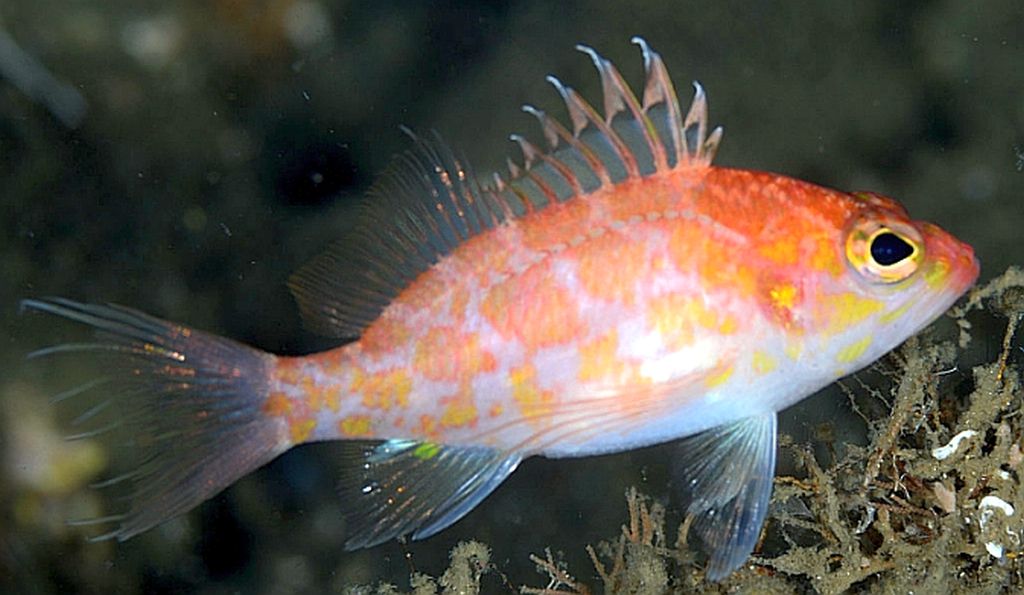
Sagamai Perchlet (Plectranthias sagamiensis)
Minimum Tank Size: 55 gallons
Aquarium Type: Reef or FOLR
Care Level: Moderate
Temperament: Semi Aggressive
Aquarium Hardiness: Hardy
Water Conditions: 72°F to 76°F, dKH 8 to 11, pH 8.1-8.4, sg 1.024-1.026
Max size: 3.8″
Color Form: Orange, Red, Yellow
Diet: Carnivore
Compatibility: Reef
Origin: Sagami Bay, in Honshu, Japan
Family: Serranidae
Lifespan: 4-8 years
Aquarist Experience Level: Expert/Advanced