Recent advancements in filtration technology have made tropical fish keeping much easier than most people can ever imagine.
The old phrase “Aquariums are too much trouble to keep” for the most part can be put to pasture, and organisms that were once thought impossible to keep in a closed aquarium environment are now being kept by thousands of aquarists throought the world.
Before you decide on what type filter to use in your aquarium, you need to consider some basic information.
- What species are you going to keep in your tank?
- What are their special requirements, if any?
- How many fish are you going to keep?
- Is your tank freshwater or saltwater?
- How big is your tank?
- How much can you afford?
The answers to these basic questions will have an impact on what type filter or filters you choose, and how well it will clean the water in your tank.
There are many types of filters available that vary in price, size, efficiency and their their ability to mechanically, chemically and biologically filter your aquarium’s water.
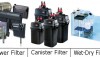
The more common types of filters are listed below:
- Under Gravel Filters
- Internal Tank Filters
- Power Filters
- Canister Filters
- Wet/Dry Filters
- Fluidized Bed Filters
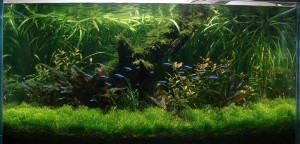
Some densly planted freshwater aquariums and saltwater reef aquariums do not require biological filtration, but they DO need chemical and/or mechanical filtration to keep the tank healthy.
Most other types of freshwater or saltwater aquariums need a filter that efficiently performs all three types of filtration. Unplanted tanks, invert tanks and heavily stocked tanks fit into this category.
Here is a brief synopsis of the types of filters and how they function.
Under Gravel Filters:
Under Gravel Filters are made from a slotted plastic plate that is installed under a gravel substrate.
The undergravel filter has one or more uplift tubes that extend towards the surface of the tank. An air stone is placed inside and at the bottom of the tube to create an upward flow of water that pulls additional water through the substrate.
A power head is frequently substitued for the air stone to create increased water flow through the gravel substrate.
As water is sucked through the substrate, mechanical and biological filtration occurs.
The gravel traps suspended particulate matter before it decays and creates an unwelcome biological load in the aquarium. Biological filtration also occurs by the bacteria that live on the surface of the substrate that the water is passing through.
In order to function correctly, a sufficient layer of gravel must be placed above the slotted plastic plate and the substrate must be cleaned from built up particulate matter on a regular basis.
A weekly cleaning with a gravel cleaner will remove built up particulates before they begin to decay and cause problems with your tank. The weekly gravel cleanings also provide an opportunity for making partial water changes.
The amount of biological filtration that actually takes place in an undergravel filter is limited by the amount of dissolved oxygen in the water that passes through the substrate.
Another con to biological filtration using this type of filter is the uneven flow of water through the substrate.
Even when the gravel is layered evenly over the slotted plastic filter, decorations and rocks placed on the substrate will create unavoidavble “dead spots” underneath the filter and in the filter bed. These “dead spots” can cause hydrogen sulfide to build up to dangerous levels however, this problem can be easily addressed by agitating the filter bed with regular gravel cleaning and by adding a carbon cartridge to the uplift tubes.
Unless regularly maintained, tanks with undergravel filters will usually have higher nitrate and phosphate levels.
A pro for ungergravel filters is their cost. They are low to moderately priced but require an air stone, air pump or power head to function.
They are versitile and can be used in a variety of aquarium set ups; from a goldfish bowl to a 55 gallon tank.
Undergravel filters should not be used for planted freshwater tanks. The plant roots eventually grow underneath the filter plates and restrict water flow.
Internal Tank Filters:
Internal filters are placed inside of your aquarium either mounted to the glass by suction cups or in a corner on top of the substrate.
Like Undergravel Filters, most Internal Tank Filters have an airstone that is driven by an air pump outside the aquarium. The air that is pumped to the stone at the bottom of the filter creates water circulation through the filter and air bubbles that increase dissolved oxygen levels in the tank.
Corner box filters are the most common type of Internal Tank Filter. They are simply plastic boxes with slots in the top and bottom that allow water flow through the filter media. Corner box filters economically perform all three types of filtration but with limited efficiency.
Layers of fiberglass floss and activated carbon are generally used for mechanical and chemical filtration, and the bacteria colonies that grow on the filter media provides a modicum of biological filtration.
Corner box filters need regular cleaning in order to remain efficient. This is usually done during routine water changes by rinsing the filter media in the aquarium water that is removed from the tank. Using tap water to rinse off the filter media will kill the bacteria and render biological filtration useless.
When replacing the filter media in these filters, only replace half of the media at one time. This will preserve the bacteria that needed for biological filtrattion.
Sponge Filters are another type of Internal Tank Filter that provide mechanical and biological filtration, usually in smaller systems.
Sponge filters are designed with a U-shaped tube that is used to pull water through a very large surface area sponge like material.
The sponge media provides both mechanical and biological filtration.
Suspended particulates are trapped by the pores in the sponge as water passes through it, and biological filtration is provided by the beneficial bacteria that live on the sponge’s surface.
Sponge filters are easy to maintain and are very cost effective. Cleaning is a matter of simply rinsing out the sponge in water from the aquarium.
Both types of Internal Tank Filters are primarily used in smaller aquariums with only a few fish, in tanks where fry are being reared, in tanks where brine shrimp are being hatched out and in hospital tanks.
Because these filters have no moving parts, the fry cannot be sucked into the filter to die.
Power Filters:
The term “Power filter” is used to describe a variety of filters available on the marketplace that are specifically designed to hang on the back of your aquarium.
Almost all of these filters provide mechanical, chemical and biological filtration and are extremely easy to maintain.
All of these filters are powered by a small, self contained, electric water pump, that pulls water from the aquarium through a U-tube and forces it through some type of filter cartridge where it is “polished” and then returned back into the tank.
Most Power Filters have filter cartridges that use activated carbon for chemical filtration. These filter cartridges are specific to each manufacturer and generally are not interchangeable.
Mechanical filtration is accomplished as water passes through the floss or foam filter cartridge.
The main con to power filters is that the filter cartridges load up quickly and must be cleaned or changed out on a regular basis to remain efficient. As the cartridges load up and become clogged; water passes around the filter cartridge and is returned to the aquarium without being filtered.
Like other mechanical filtration systems, it is important to remove an rinse out power filter cartridges on a regular basis in tank water to maintain their efficiency.
Biological filtration also takes place in the mechanical and chemical areas of the power filter. Huge numbers of beneficial bacteria that aid the nitrogen cycle in the tank grow on these surfaces and are dependent on sufficient oxygen to survive.
Another con to these filters is that when you replace a filter cartridge, you lose all the beneficial bacteria that is growing on the old cartridge’s surface.
On Power filters that have two filter cartridges; it’s a simple matter to change out only one cartridge at a time at set intervals.
With power filters that have only one cartridge, many aquarists keep a new cartridge in the back of the tank or inside the filter to seed it with beneficial bacteria prior to changing it out.
Replacing an old filter cartridge with a new one without doing this will cause a spike in your aquarium’s biological filtration that could cause problems with your fish.
Some Power Filters are designed with separate chambers for adding activated carbon or more specialized chemical media and resins. Their efficiency is directly proportional to the amount of water flowing through the media.
Several companies make Power Filters with biowheels in addition to the regular filter cartridges for more efficient biological filtration.
Biowheels are constructed from pleated media and look like minature canister filters. The wheel is mounted sideways and spins as water passes over it. Because of the amount of air that contacts the water as the wheel spins, biowheels are extremely efficient biological filters.
They only need a periodic rinsing to remove excess buildup on the media and require little other maintenance.
Because of their relatively low price and ease of maintenance, Power Filters are the preferred filtration system for most beginning tropical fish keeping enthusiasts.
Canister Filters:
Canister filters are pressurized outside units that are usually placed underneath the aquarium. They also mechanically, chemically and biologically filter the water in freshwater and marine aquariums.
They are manufactured as complete units and as modular filters that require an additional pump.
Many tropical fish keepers prefer modular units plumbed in with other types of filtration systemsm, such as wet/dry filters.
Self contained canister filters use a U-tube to siphon water from the tank into the filter and another U-tube, usually fitted with a spray bar, to return the filtered water back into the tank.
To install the system, first prime the canister filter by starting a siphon from the tank into the canister. The tank water is first forced under pressure through a mechaical media (usually filter pads or floss), then through the chemical media, and finally into the last chamber where the biological media is kept. The filtered water is then pumped back to the tank.
Canister filter mechanical filtration is far more superior to any other mechanical filtration system. This is because the tank water is forced under pressure through a much finer filter media than in other systems.
The finer filter media traps up to micron size particulates, and literally “polishes” the water in the aquarium.
Chemical filtration is also more efficient in canister filters for the same reasons as mechanical filtration. In addition, you have the added flexibility of being able to use more specialized types of chemical filtration media for the removal of specific contaminants.
Canister filters have long been used as backup filters in emergencies to remove a wide range of tank pollutants and excess nutrients but, they can also be used on a regular basis to minimize the amount of maintenance required on a system.
Although Canister Filters are far superior in mechanical and chemical filtration, they are less efficient biological filters. Because they are pressurized, there is very little water to air contact within the biological media, therefore less biological activity takes place.
This con can be overcome by adding a biowheel to the Canister Filter water return to the aquarium.
Canister Filters need a moderate amount of maintenance, are moderately priced and are a good choice for almost any type of aquarium setup.
They are great for densely planted freshwater aquariums and when used in conjunction with added biological filtration, are an excellent choice for saltwater reef and tropical fish aquariums.
A pro for Canister Filters is their ability to be customized to fit specific requirements.
They can be used strictly for mechanical or chemical filtration, a combination of both, or in conjunction with more efficient biological filtration in fresh or saltwater. Because they return filtered water to the tank without disturbing the surface, they are ideal filters for planted freshwater aquariums, marine reef aquariums and tanks where surface agitation is not desireable.
Wet/Dry Filters:
Wet/dry filters are normally located underneath the aquarium and use an overflow device inside the tank to siphon water into the filter, or they can be directly plumbed into the tank overflow if one exists.
If the tank is not built with a center or corner overflow, an overflow device must be used to pull water from the aquarium.
The “device” is made from two boxes joined together. One is placed inside the aquarium and the other outside the aquarium. A large diameter U tube siphons water from the inside box to the box outside the tank which contains the prefilter media. The inside box can be raised or lowered to alter the water level inside the aquarium.
As the water enters the outside box, it is filtered free of large particulates before dropping into the wet/dry filter beneath the tank.
Before the water drops into the wet/dry biological filter media chamber, it is aerated and dispersed by a drip plate or a spray bar. The oxygenated water then passes over the filter media where the biological activity takes place before collecting in another chamber of the filter called the sump.
The sump is where protein skimmers, calcium reactors, denitrators, or additional chemical media is placed to further condition the water before it is pumped back into the tank.
An in-line, exterior pump or an inside submersable water pump is used to return the filtered water back into the tank.
Because of their design, water flow in wet/dry filters cannot be restricted therefore, mechanical filtration in these systems is limited to what occurs in the prefilter, (usually by a large pored sponge) which is not very efficient.
The prefilter media must be cleaned regularly to prevent clogging and to insure the cleanliness of the main biological media. If the main biological media becomes dirty or covered with slime, biological activity is significantly reduced.
Biological filtration in wet/dry filters is far superior to any other type of filtration system and is highly recommended for both freshwater and marine systems.
When huge numbers of beneficial bacteria colonize vast amounts of surface area that the biological media in a wet/dry filter provides, more biological filtration occurs.
In addition to the oxygen content of the water being extremely high, the filter media is directly exposed to the air and bacteria that grow on it are exposed to higher amounts of oxygen, making them more efficient.
Although chemical filtration can be accomplished by placing chemical media in the sump, wet/dry filters are not very efficient chemical filters.
.
There are many different types of filter media used in wet/dry filters. From bio balls, engineered glass, plastic products of various shapes, to the use of live rock in marine aquariums; all will work well depending on the bio load of the tank.
Wet/dry filters are pricey but they are low maintenance and extremely effective biological filters. For this reason they are used by most commercial tropical fish keeping operations and are an ideal solution for heavily stocked fresh and saltwater tanks.
Fluidized Bed Filters:
Fluidized bed filters are also called “suspended particle filters” or “suspended sand filters”.
They are highly efficient biological filters that can either be hung on the back of your tank, placed in the sump under your tank, or located on the floor next to your tank.
It is nothing more than a round tube or square box with a water inlet at the bottom and a water outlet at the very top. The filter is partially filled with small heavy granules; usually sand, plastic, or silica chips in the bottom.
A water pump is needed to pump water from the tank into the bottom of the filter, up through the media, and then return it back into the tank from the top of the filter body.
Water passes through the suspended filter media at such a speed that it becomes “fluidized”.
The small heavy granules of sand, plastic, or silica chips are constantly being pushed up by the water current and falling back through the water in response to gravity. They have the same action as the agitated “snow” in snow globes.
Fluidized bed filters provide biological filtration similar to that provided by under gravel filters.
Colonies of nitrifying bacteria grow on the surface of the sand particles in the bed and process ammonia and Nitrite into Nitrate as the water passes through the filter.
Fluidized Bed Filters require very little maintenance, however they are quite expensive.
The only cons to fluidized bed filters is that they need to be monitored to ensure that the bed particles remain “fluidized” and free moving.
In the event of an extended power outage, they may need to be restarted by shaking the filter or inverting it to get the bed back in motion.
Fluidized Bed Filters can take enormous loads and like wet/dry filters are used in many commercial tropical fish import operations.
Each of these types of filters have their strengths and weaknesses. Consider your needs vs the price of each type filter when making your decision.


 , water sprite, etc. in a dark substrate, provide them with a lot of swimming space, some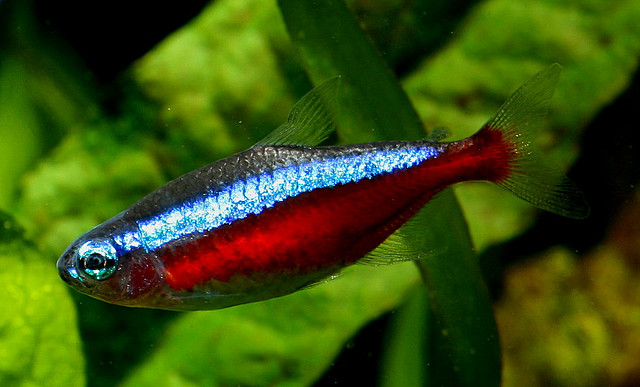
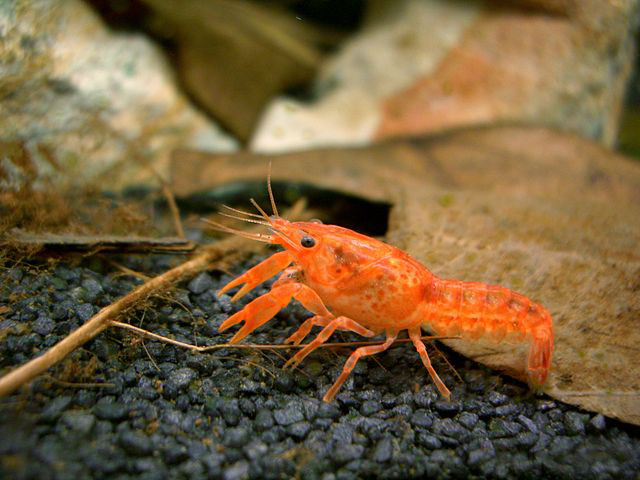
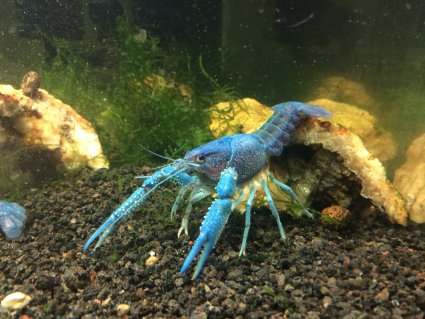
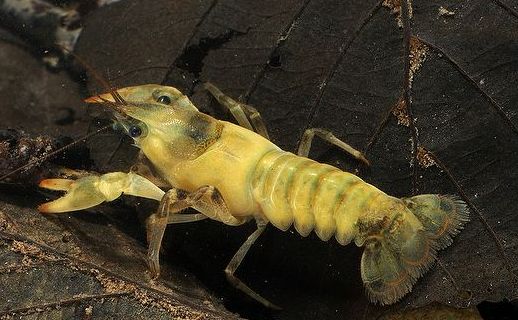
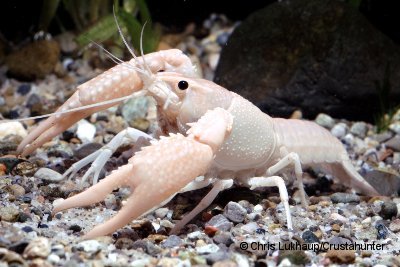

 to their water on a daily basis during this period will help them along and speed up the process. After the molt, don’t be surprised if your crayfish looks bigger or it changes color, this is perfectly normal.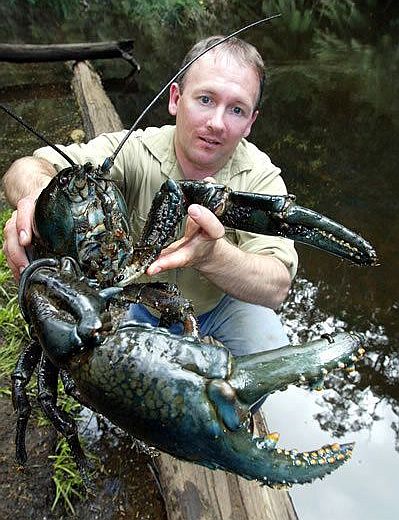



 .
.