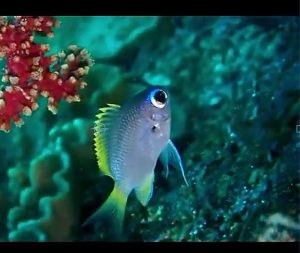
Juvenile Moonstone Chromis (Chromis tingting)
The Moonstone Chromis (Chromis tingting) is one of the rarest chromis species available to high end tropical fish keeping enthusiasts. First described from Sagami Bay, Southern Japan in 2019; their natural range in the Northwest Pacific includes the Ryukyu Islands, Okinawa region, Southern Japanese archipelago and according to deep reef surveys, probably Korea.
Although the scientific range for Moonstone Chromis was not originally described as extending into the Northern Philippines, deep water specimens have been collected from this region.
Moonstone Chromis are found in pairs and loose groups or schools hovering near structure along the sponge dominated steep reef drop offs and low light coral reefs of their range, in areas with strong steady currents at depths from 80 to over 280 feet, often in areas where deepwater anthias reside.
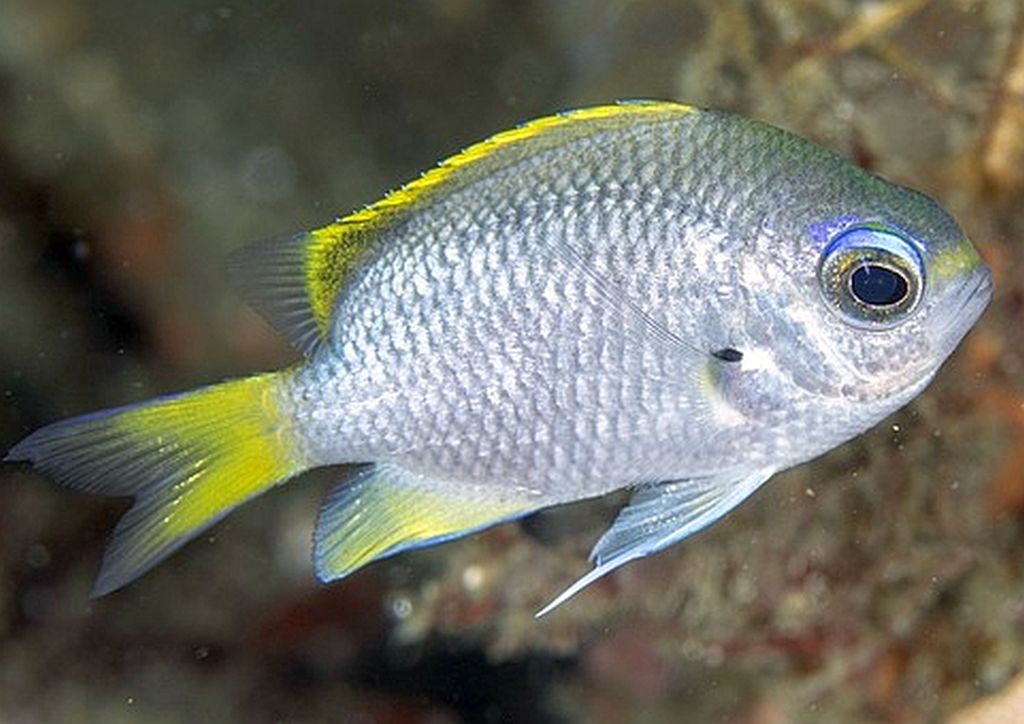
Moonstone Chromis (Chromis tingting)
Adult Moonstone Chromis have a soft, silvery-green to pastel lavender to moon blue body color that is slightly iridescent and appears to glow softly under low light. They have large golden or copper ringed eyes and semi transparent, bluish tinted dorsal, anal, and caudal fins edged in pale lavender with a slightly iridescent sheen.
Juveniles are slightly more translucent with less lavender and a more silvery blue tone. The entire head and body is a silvery gunmetal grey color,
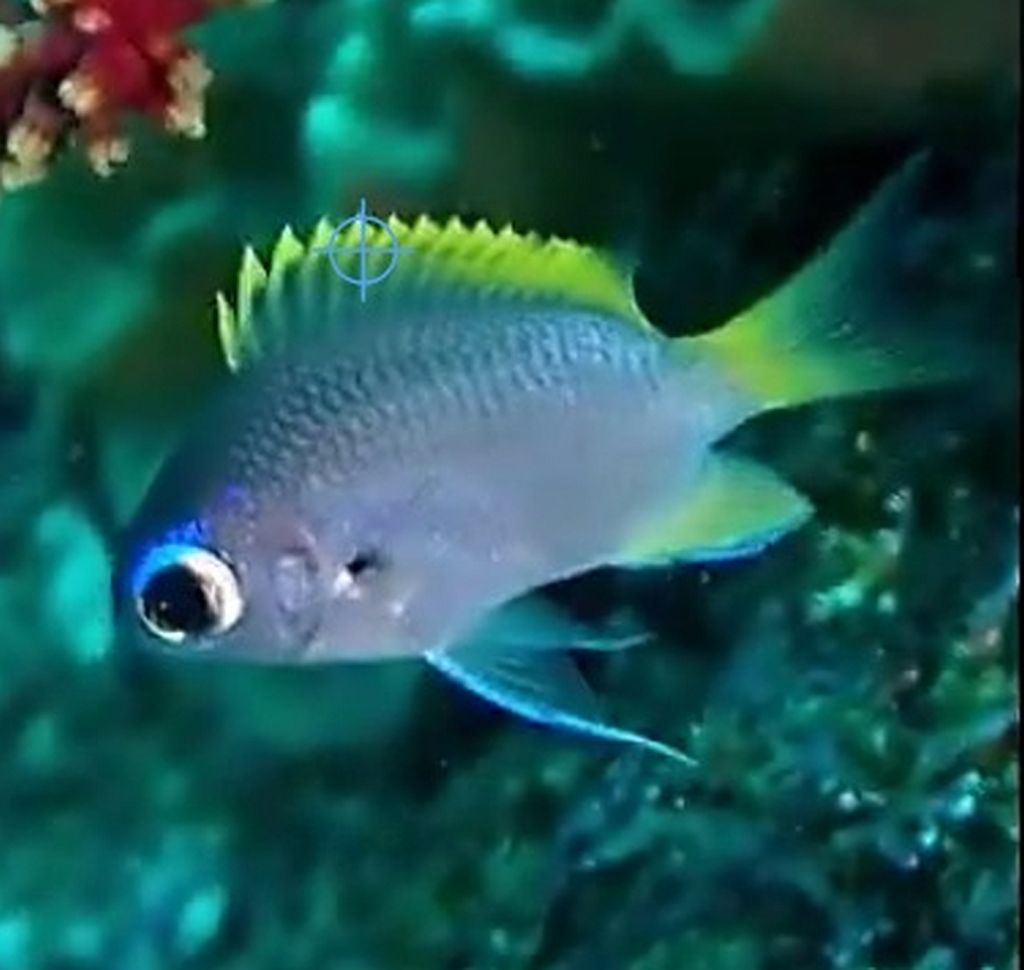
Juvenile Moonstone Chromis (Chromis tingting)
overlaid with greenish blue iridescence along the dorsal, with a large black spot at the base of the pectoral fin axil. The dorsal fin is edged in bright yellow, the base of the caudal and anal fins are a grayish yellow and the pectoral fins are hyaline. The eyes in juveniles have a bright blue “eyebrow” like splotch above.
Despite having larger eyes and differences in coloration, Chromis tingting were earlier confused with Chromis mirationis.
Although no specific husbandry data for the Moonstone Chromis has been published, mesophotic species require cooler water parameters, lower lighting, high oxygenation and more vertical swimming space than shallow water species.
Chromis tingting are best housed in a mature deep water reef or FOWLR tank of at least 55 gallon capacity with a coralline substrate, copious amounts of live rock arranged into tall vertical pinnacles, dark overhangs and caves for them to shelter among and plenty of open swimming area in the upper water column.
To replicate their natural deep water reef slope environment, multiple wavemakers are needed to provide strong, continuous water movement and proper oxygenation along with an aquarium chiller to maintain water temperatures at their recommended range of 72-76° F.
The Moonstone Chromis is a shoaling species that is reef safe and can be housed with sponges, corals, and species of the genera Sacura, Pseudanthias, Tosanoides and Pseudolabrus. Like many deep water species, they are more peaceful, less prone to hierarchy culling and more cohesive in groups of 5 to 7 individuals.
The Moonstone Chromis is a newly described species that has not yet been bred in an aquarium environment.
Based on the breeding patterns of other deep reef damselfish, they are believed to be egg scatters that lay demersal eggs on rock or coral rubble. Males are believed to guard and fan the adhesive eggs until they hatch out in 3 to 5 days into tiny pelagic larvae that drift for 20 to 30 days or more.
Moonstone Chromis are strict, opportunistic mid water planktivores that continuously feed on copepods like Calanus spp., Parvocalanus spp., Acartia spp., Harpacticold copepods drifting from the benthos; Mexozooplankton like small pelagic amphipods, larval shrimps, larval crabs, larval gastropods, Chaetognaths; Microcrtustaceans including Ostracods, Cladocerans, and tiny Mysids; Larvaceans and Tunicate Larvae; floating fish eggs and newly hatched larvae.
In an aquarium environment they can be offered frozen or live Calanus, live copepods, Mysis shrimp, enriched brine shrimp, reef plankton blends, tiny krill, Masstick, Cyclops and rotifers for juveniles. Because they are continuous grazers in the wild, 2 to 3 small portions should be fed daily.
Because it is a newly described species that is rarely even seen at mesophotic depths in Japan, Korea or the Philippines; the Moonstone Chromis (Chromis tingting) is not currently available to tropical fish keeping enthusiasts or high end collectors anywhere.
Japan rarely exports deepwater species and Korean deep reef collection is minimal. The Philippines has the largest deep‑reef collection infrastructure in the world.
Collecting teams in the Philippines regularly work at mesophotic depths in excess of 100 feet with mixed gas or rebreathers using slow decompression protocols to collect Blotched anthias, Narcosis angelfish, deepwater wrasses and nearly all of the rare mesophotic species available to tropical fish keeping enthusiasts globally.
If or when a rarely collected Moonstone Chromis at some point becomes available for sale; you can expect prices between $2,000 to $3,500 USD per individual.
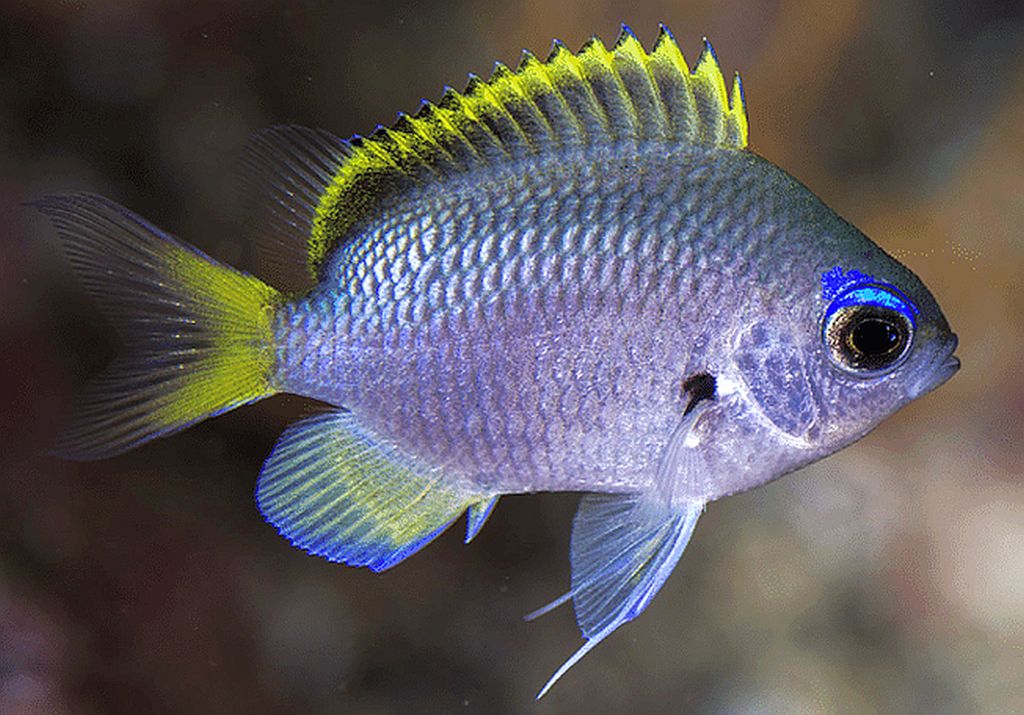
Moonstone Chromis (Chromis tingting)
Minimum Tank Size: 55 gallons
Aquarium Type: Reef or FOLR
Care Level: Moderate
Temperament: Peaceful
Aquarium Hardiness: Hardy when acclimated
Water Conditions: 72-76° F, dKH 8 to 9, pH 8.1-8.3, sg 1.025-1.026
Max size: 3.5″
Color Form: Lavender, Bluish Silver, Yellow
Diet: Carnivore
Compatibility: Reef
Origin: Japan; possibly South Korea
Family: Pomacentridae
Lifespan: 5 – 7 years
Aquarist Experience Level: Advanced/Expert