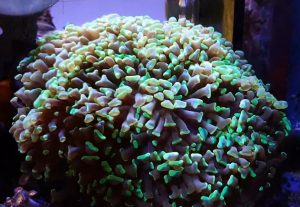
Hammer Coral (Fimbriaphyllia ancora)
The Hammer Coral (Fimbriaphyllia ancora) formerly Euphyllia ancora or Euphyllia paraancora is known to tropical fish keeping enthusiasts as the Anchor Coral, Wall Coral, Ridge Coral, Sausage Coral, and Kidney Coral and is found throughout the Indo Pacific. Their range extends from the coast of Africa to the Western Pacific, including the waters of Indonesia, Australia, the Solomon Islands, and the Great Barrier Reef.
Hammer Coral is native to the warm waters of the Indo-Pacific region where they are common in relatively shallow coastal reefs, lagoons, and turbid waters.
Although the Hammer Coral is generally found among the protected coral reef slopes of their range in clear shallow to deeper waters with gentle to moderate currents. They are quite adaptable and are also found in shadier spots closer to shore growing on rocks and coral rubble where water movement shields their delicate tissue from tearing. In general, Fimbriaphyllia ancora can typically found at depths ranging anywhere from 10 to 130 feet.
Hammer Coral (Fimbriaphyllia ancora)
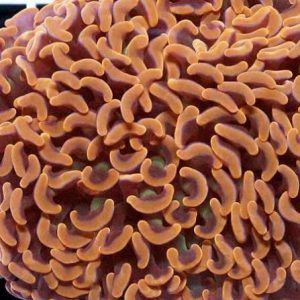
Like all species of Fimbriaphyllia, Hammer Corals form a hard, calcified skeleton that is topped with multi-tipped T shaped, flesh toned tentacles, that closely resemble an anchor or a hammer, hence their common name.
Hammer Coral (Fimbriaphyllia ancora)
Hammer Corals grow in two primary skeeletal configurations:
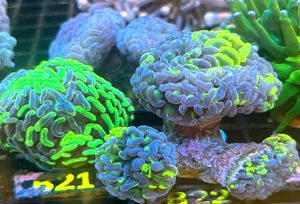
The Branching Hammer Coral variety (Fimbriaphyllia paraancora) that grows as separate individual calcified heads that branch out like a tree. Fimbriaphyllia paraancora is generally easier to propagate (frag) and handles aquarium stress better.
The Wall Hammer Coral variety (Fimbriaphyllia ancora) that grows as a continuous, meandering wall-like skeleton with a single large, interconnected fleshy polyp. Euphyllia remains the correct genus for Torch Corals like Euphyllia glabrescens.
The Hammer Coral has multiple recognized species and sub-clades within the genus:
Euphyllia divisa (Veron & Pichon, 1980)
Euphyllia ancora (Veron & Pichon, 1980)
Euphyllia glabrescens (Chamisso & Eysenhardt, 1821)
Euphyllia paraancora (Veron, 1990)
Euphyllia paradivisa (Veron, 1990)
Euphyllia bayeri (Hodgson & Ross, 1982)
Euphyllia cristata (Chevalier, 1971)
Hammer coral (Euphyllia ancora)
Hammer coral (Euphyllia ancora)
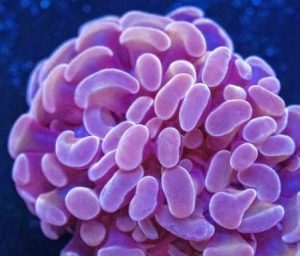
Hammer Coral (Fimbriaphyllia ancora)
Fimbriaphyllia ancora are naturally found in shades of brown, tan, or green with green, pink or purple tips that frequently fluoresce under actinic reef lighting. Aquacultured strains are found in neon greens, deep purples, oranges, golds, pinks, and various multi colored, bi colored, or “splattered” colored patterns.
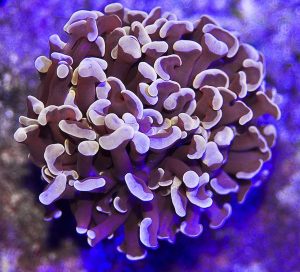
Hammer Coral (Fimbriaphyllia ancora)
Their color and the intensity of their colors is entirely dependent on how much light they receive and the presence of actinic lighting. The more balanced the light, the richer the fluorescent coloration of the coral.
Like the Frogspawn Coral (Fimbriaphyllia divisa), the Hammer Coral can be housed in a small nano reef tank, however, they are best kept in larger mature reef aquariums of at least 30 gallon capacity with a live sand or fine coralline gravel substrate and plenty of live rock or other aquascape architecture for them to attach themselves to. They do well when placed in the bottom to middle of the tank with low to moderate lighting, gentle to moderate indirect water flow, and adequate space to prevent them from stinging neighboring corals.
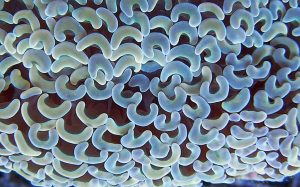
Hammer Coral (Fimbriaphyllia ancora)
Fimbriaphyllia ancora is semi-aggressive towards other corals and although their normal tentacles are relatively short, they will emit long, stinging sweeper tentacles at night to ward off invasive competitors.
Albeit aggressive to outsiders like Acropora, Montipora, Chalices, Brain corals, Zoanthids and other LPS or SPS coral; Fimbriaphyllia ancora is a peaceful addition alongside other Fimbriaphyllia and certain Euphyllia sub-clades like Frogspawns, allowing hobbyists to group them together into a “Euphyllia garden.”
Compatible tankmates for Hammer Coral include Clownfish, Firefish, Cardinalfish, Gobies, Blennies, Cleaner Shrimp, and other peaceful reef-safe species.
The Hammer Coral reproduces through both sexual and asexually methods. How they reproduce depends on whether they are the Wall or Branching variety.
In their natural environment Fimbriaphyllia ancora is historically known as a gonochoristic spawner where individual colonies produce either only eggs or only sperm during a breeding cycle.
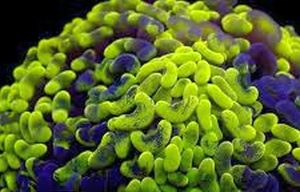
Hammer Coral (Fimbriaphyllia ancora)
However, marine biologists have discovered that roughly 73% of Fimbriaphyllia ancora colonies undergo an annual sex change (sequential hermaphroditism), switching between male and female roles from one season to the next.
The lunar cycle and water temperature dictates when mass spawning occurs. In Taiwan, it normally occurs around April or May. Colonies synchronously release pink gamete bundles into the open water column roughly 3 to 6 nights after a full moon with fertilization taking place externally in open water. The swimming planula larvae drift with the currents before anchoring to the substrate to build a new skeleton.
Asexual reproduction also occurs with Hammer Corals, especially in a stable reef environment. A single Hammer Coral will clone itself to expand the colony through a process of budding or longitudinal fission.
In branching varieties (Fimbriaphyllia paraancora), a single head will slowly constrict and divide across its center to form two distinct new heads, expanding the skeleton upward and outward, whereas wall varieties grow continuously along a single meandering ridge.
Over time, large branching colonies can be manually fragmented (fragged) by carefully cutting the lower skeletal branches well below the living tissue line to create independent specimens.
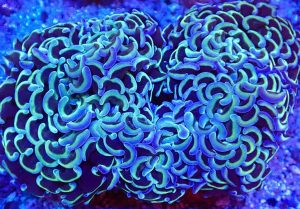
Hammer Coral (Fimbriaphyllia ancora)
In their natural environment, Hammer Corals obtain most of their nutrients from their zooxanthellae, symbiotic algae. Although they rely mostly on photosynthesis and dissolved organics for growth, they are active micro predators that use the stinging nematocysts on their sticky, hammer shaped tentacles to paralyze and capture small prey. The tentacles slowly retract and pull the captured food inward to the center of thepolyp head where the mouth is located.
In an aquarium environment with indirect water flow, they greatly benefit from weekly supplemental feedings of mysis shrimp, enriched brine shrimp, or specialized LPS pellet foods mixed with water that they catch with their sticky nematocysts.
The Hammer Coral, (Fimbriaphyllia ancora) is readily available in the aquarium trade to tropical fish keeping enthusiasts as wild caught and captive-bred specimens from a variety of online retailers at moderate to premium prices depending on the rarity of the color morph.
Hammer Corals (Fimbriaphyllia ancora, Euphyllia ancora) are among the most popular and vibrant Large Polyp Stony (LPS) corals in the reef hobby, famous for their anchor-shaped, hammer-tipped tentacles that add substantial movement to an aquarium.
Aquaculture of this coral has been highly successful, leading to increased availability, hardiness, and sustainability in the hobby.
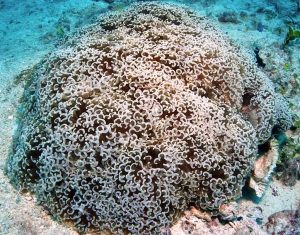
Hammer Coral (Fimbriaphyllia ancora)
Minimum Tank Size: 30 gallon
Tank Placement: Bottom to Middle
Water Flow: Gentle to Moderate (Indirect)
Care Level: Moderate
Aquarium Hardiness: Moderately Hardy
Temperament: Aggressive
Toxicity: Yes, strong stinging cells (Sweeper Tentacles)
Invasive: No
Water Conditions: 76 – 80°F, dKH 8 – 11°, pH 8.1–8.4, sg 1.024-1.026, Nitrate 1 – 10 ppm, Calcium 400-450 ppm
Lighting: Low to Moderate (100-150 PAR)
Feeding: mysis shrimp, brine shrimp, LPS pellets
Growth Rate: Moderate
Color Form: Green, Tan, Pink, Purple, Gold, Bi-color, etc.
Diet: Photosynthetic, Carnivore (Target Feeder)
Origin: Indo-Pacific, Australia
Family: Euphylliidae
Lifespan: Decades (Under proper care)
Aquarist Experience Level: Intermediate