Haddoni Carpet Anemone (Stichodactyla haddoni)
The Haddoni Carpet Anemone (Stichodactyla haddoni), known in the tropical fish keeping hobby as the Saddle Carpet Anemone, Haddon’s Carpet Anemone, or Short-Tentacle Carpet Anemone is a massive, brightly colored cnidarian found across tropical marine environments throughout the Indo-Pacific. Its range extends from the Red Sea and East Africa to Fiji, southern Japan, and northern Australia.
Stichodactyla haddoni is a favorite centerpiece for advanced tropical fish keeping enthusiasts with sand-bed reef displays.
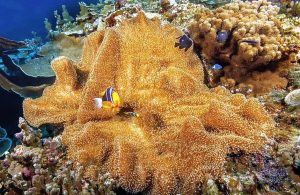
Haddoni Carpet Anemones are most commonly found in shallow sandy lagoons, muddy coastal flats, and sheltered seagrass beds in warm coastal waters. They are typically found from just below the low-tide line down to about 40 feet—with occasional records reaching 130 feet—over soft, fine-grained sand, rubble patches, and gentle lagoon slopes. There they live in close, mutually beneficial relationships with several species of anmonefish and porcelain crabs. Unlike Bubble Tip or Magnificent anemones, which climb onto upper rockwork, Haddoni Carpet Anemones are true sand-burrowing invertebrates. They dig their muscular foot deep through fine sand until it anchors firmly to the bottom glass or buried rock. Day and night, the pale column stays hidden beneath the substrate while the broad, undulating oral disc spreads flush across the sand like a living rug. If a daytime predator threatens, the anemone rapidly expels water and pulls its entire body below the sand surface.
Socially, Haddoni Carpet Anemones are peaceful toward their symbiotic clownfish and porcelain crabs but aggressively predatory and territorial toward neighboring corals and unwary fish. In the wild, they live as solitary giants spaced across lagoon floors rather than in dense clusters. Once rooted in deep sand they rarely wander, though their intensely sticky oral disc will severely sting nearby corals and ensnare bottom-dwelling or careless fish that brush against it.
Haddoni Carpet Anemone (Stichodactyla haddoni)
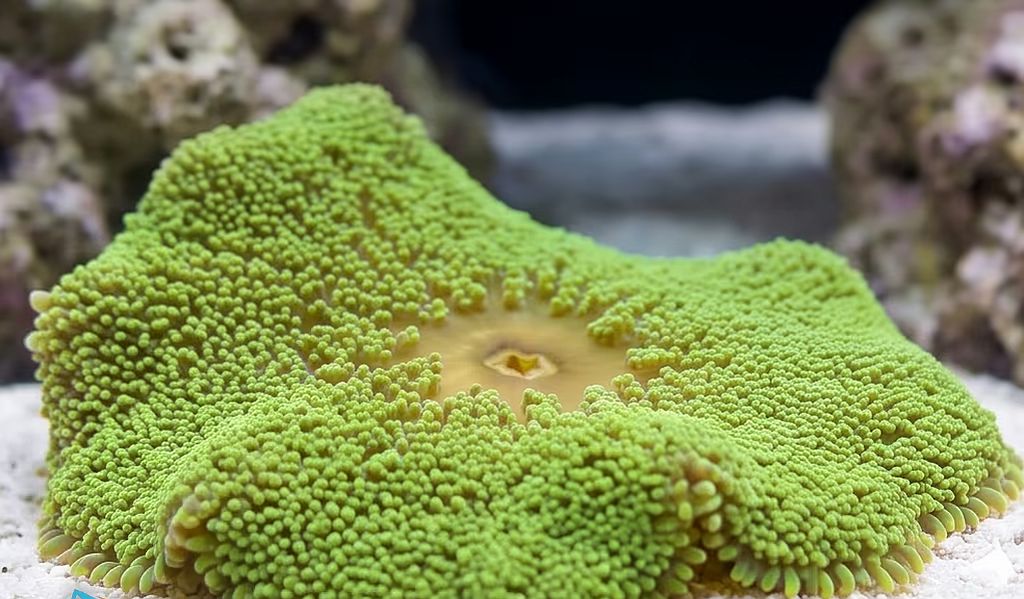
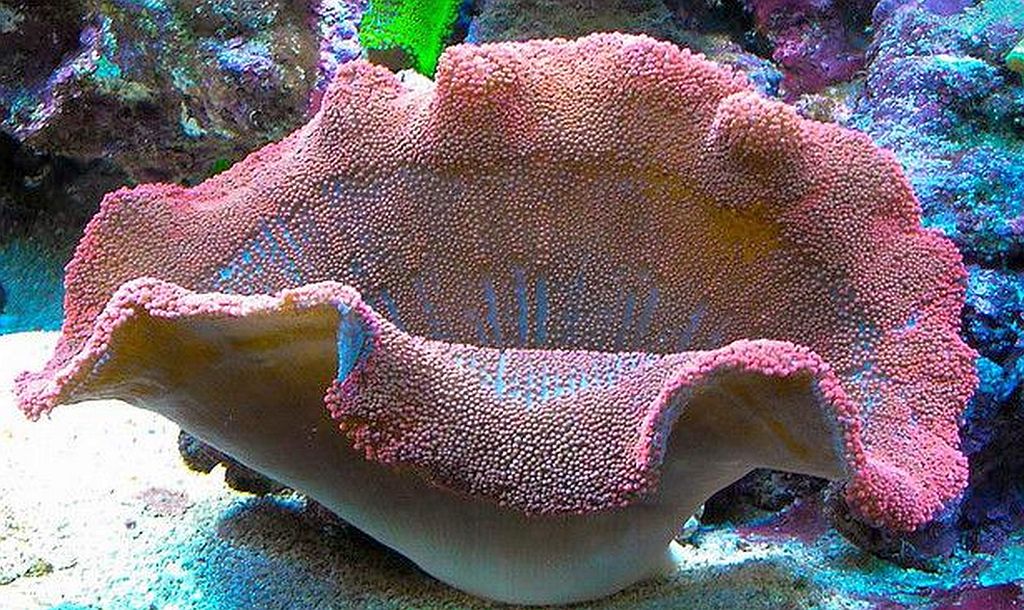
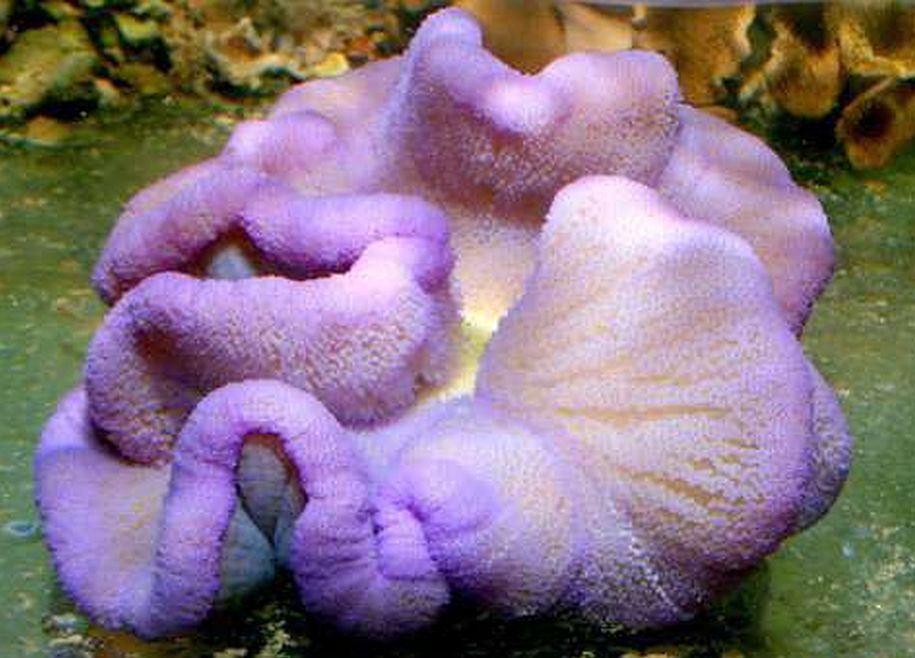
True Haddoni Carpet Anemones have a lush, carpet-like appearance. The deeply folded oral disc is densely covered in thousands of tiny, rounded, bead-like tentacles less than a quarter-inch long, with a bare, tentacle-free zone surrounding the central slit-like mouth. The column is smooth and creamy-white to pale grey, featuring subtle non-adhesive bumps on the upper portion. Dense populations of symbiotic algae (zooxanthellae) in their tissues fuel the Haddoni Carpet Anemones’s metabolism and create rich coloration under reef lighting.
Popular varieties range from classic olive green, tan, and grey-striped patterns to neon green, electric blue, bright
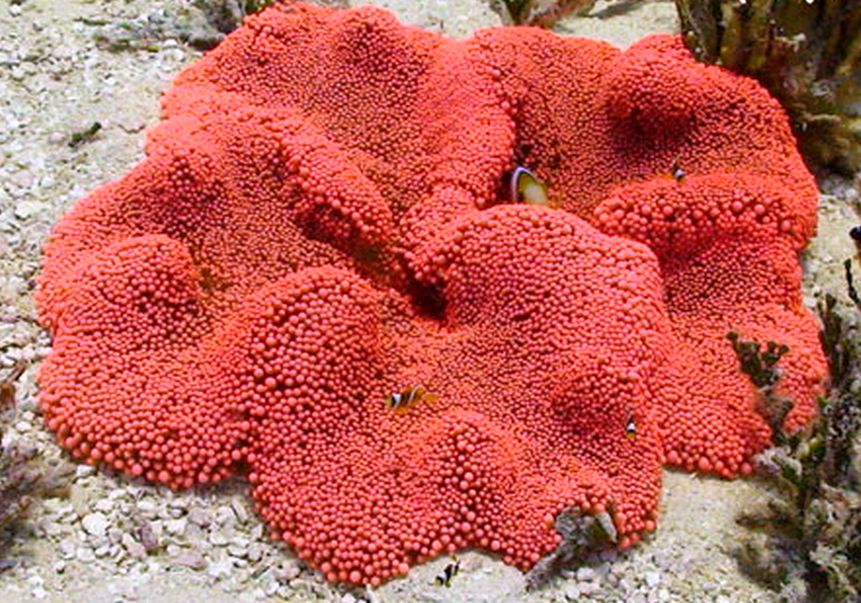
Haddoni Carpet Anemone (Stichodactyla haddoni) Ruby Red variety on ocean floor
red, and rare multicolor morphs. In home aquariums, their oral disc diameter commonly reaches 12 to 20 inches, while mature wild specimens occasionally expand to 24 to 32 inches across.
The Haddoni Carpet Anemone is best housed in a mature, ultra-stable reef, FOWLR, or species-specific lagoon aquarium of at least 125 to 180 gallons that has been running for 8 to 12 months. Provide a deep 3 to 4 inch fine aragonite sand bed so the anemone can fully bury its column, plenty of mature live rock, strong biological filtration, moderate to high reef lighting (150–250 PAR), and gentle to moderate, indirect currents that ripple across the oral disc without lifting its edges off the sand. Cover all wavemaker intakes, powerheads, and overflow drains with foam guards or mesh screens until the anemone has securely buried its foot.
Because Stichodactyla haddoni is an advanced-care species, acclimation requires careful attention. Like other giant carpet anemones, it is highly susceptible to shipping stress, bacterial infections, and sudden swings in salinity, alkalinity, and temperature. To thrive, it needs stable tropical temperatures between 75–81°F, a specific gravity of 1.025–1.026, a pH of 8.1–8.4, and alkalinity of 8 to 12 dKH. Copper-based medications are immediately fatal.
The Haddoni Carpet Anemone is semi-reef safe, with caution. While peaceful toward resident clownfish and anemone crabs, its ultra-sticky tentacles pack one of the strongest stings in the aquarium trade and will capture and consume expensive reef fish. Leave plenty of open sand around it, and wear protective gloves during tank maintenance.
Good tank mates include natural host clownfish—such as Clarkii, Saddleback, Sebae, and Pink Skunk Clownfish—alongside Porcelain Anemone Crabs, Sexy Anemone Shrimp, and alert mid-water swimmers like Chromis or Anthias.
Avoid slow-moving bottom dwellers and grazers such as Mandarin Dragonets, Hawkfish, Blennies, Gobies, Tangs, Angelfish, Butterflyfish, and Triggerfish, as they frequently blunder into the sticky disc and are quickly paralyzed and eaten.
Haddoni Carpet Anemone (Stichodactyla haddoni)
Haddoni Carpet Anemones have separate male and female individuals with no external visual differences, making it impossible to sex them in a home aquarium. In the wild, males and females reproduce via broadcast spawning, releasing eggs and sperm synchronously into the water column where fertilized larvae drift as plankton before settling onto soft lagoon floors. Unlike Bubble Tip Anemones, which split frequently in captivity, Haddoni Carpet Anemones almost never reproduce sexually or split asexually in home aquariums. Plan around housing a single large specimen with plenty of open substrate to expand.
The Haddoni Carpet Anemone is a powerful photosynthetic carnivore, pairing energy from its symbiotic algae with active predation. In nature, its sticky tentacles instantly paralyze passing crustaceans, sea urchins, snails, and small to medium-sized fish, then fold inward to draw prey to the mouth.
In an established aquarium, it draws much of its baseline energy from reef lighting and waste produced by host clownfish. Experienced reef keepers can supplement its diet by target-feeding small portions of finely chopped mysis shrimp, krill, clam, mussel, or squid once every one to two weeks. Keep pieces modest in size so the anemone can digest them cleanly without regurgitating rotting matter.
The Haddoni Carpet Anemone (Stichodactyla haddoni) is a moderately common, high-impact specialty invertebrate available from online marine retailers and specialized reef stores. It is prized by advanced reef and clownfish keepers for its velvety carpet texture, intense fluorescent pigments, and centerpiece presence on the aquarium floor.
Classic green, tan, or striped specimens currently retail for $89.99 to $179.99, while rare electric blue, neon green, and vibrant crimson red morphs frequently cost $299.99 to $799.99 or more, depending on size, area of collection and vendor.
Haddoni Carpet Anemone (Stichodactyla haddoni)
Minimum Tank Size: 125–180 gallons (mature tank running 8+ months with 3–4″ deep sand bed)
Aquarium Type: Mature Reef or Dedicated Anemone System
Tank Care Level: Difficult
Temperament: Aggressive (eats unwary bottom-dwelling fish; peaceful with host clownfish)
Aquarium Hardiness: Moderately Delicate
Water Conditions: 75–81°F, dKH 8–12, pH 8.1–8.4, SG 1.025–1.026
Max Size: 20″–32″
Color Form: Green, Tan, Striped Grey, Electric Blue, or Red Morphs
Diet: Photosynthetic (zooxanthellae) / Carnivore
Compatibility: Semi-Reef Safe (with caution, fish eater)
Origin: Indo-Pacific (Red Sea to Fiji and Australia)
Family: Stichodactylidae
Lifespan: 20–80+ years
Aquarist Experience Level: Advanced / Expert