Magnificent Sea Anemone (Heteractis magnifica)
The Magnificent Sea Anemone (Heteractis magnifica), also classified under the synonym Radianthus magnifica and formerly sold as Radianthus ritteri, known to tropical fish keeping enthusiasts as the Ritteri Anemone, Purple Base Anemone, or Magnificent Anemone, is found across tropical marine environments throughout the Indo-Pacific.
Their range extends from the Red Sea and East Africa to Micronesia, French Polynesia, southern Japan, and northern Australia.
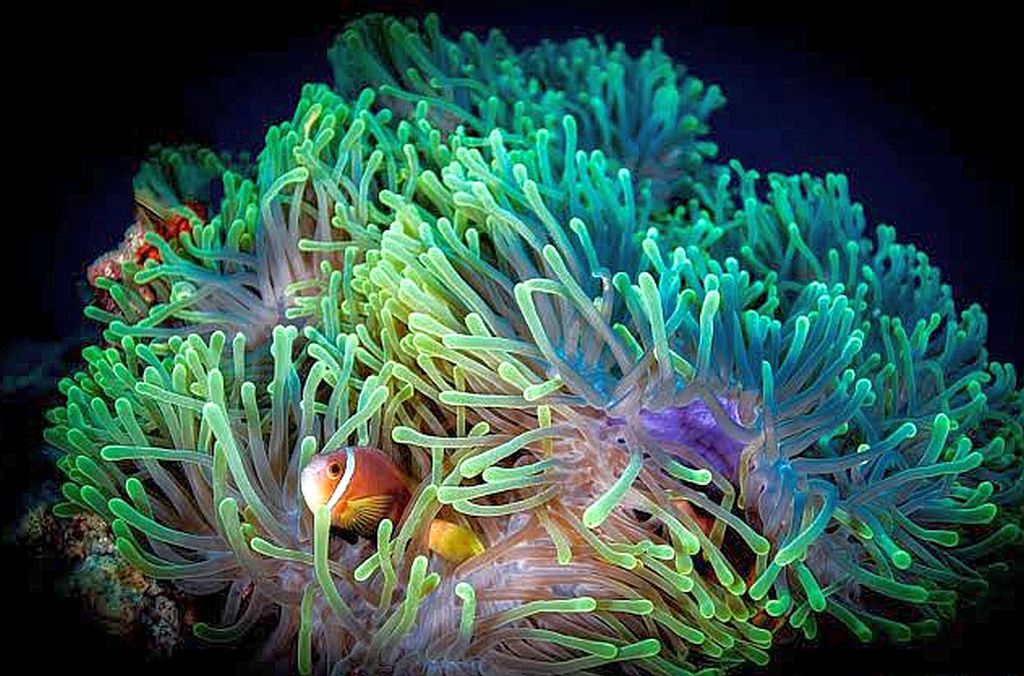
Magnificent Sea Anemones are most commonly found among exposed coral reef crests, rocky pinnacles, and shallow lagoon slopes of their range in warm, high-current coastal waters, from just below the low-tide line down to depths of 65 feet where they live in close, mutualistic association with numerous species of anemonefish.
Heteractis magnifica is a massive, brightly colored cnidarian species that have been recorded from the shallow sublittoral zone down to roughly 130 feet among sun-drenched reef tops, flat coral heads, and prominent rock outcrops where intense sunlight and brisk, turbulent reef currents bathe their expansive tentacle crowns.
Heteractis magnifica are not sand-burrowing organisms. Instead of digging into soft substrates or hiding inside of deep rocky crevices, Magnificent Sea Anemones are exposed, epibenthic invertebrates that anchor their broad, muscular pedal disc directly onto flat, elevated rock surfaces in full sunlight.
Magnificent Sea Anemones are usually found perched on top of the highest, brightest rock structures available,
Magnificent Sea Anemone (Heteractis magnifica)
using their adhesive foot to grip firmly against strong reef surge. Living out in the open on prominent reef pinnacles maximizes exposure to intense sunlight for photosynthesis and keeps them directly in the path of passing plankton-rich currents.
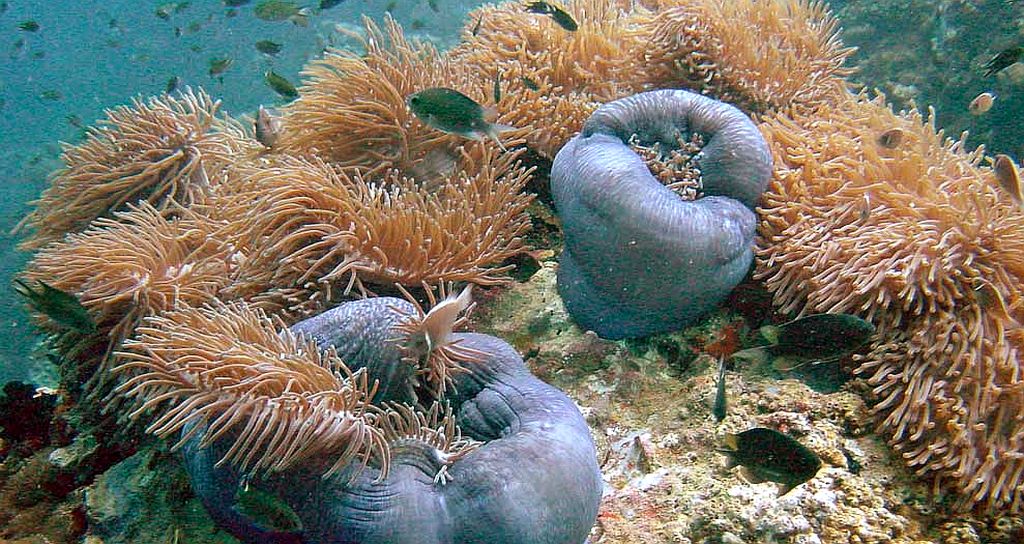
Magnificent Sea Anemones are typically found either as massive solitary individuals in deeper water, or in dense clonal aggregations along shallow reef flats.
Although Magnificent Sea Anemones are well known for forming sprawling, clonal carpets in shallow reef environments, they are aggressively territorial toward neighboring corals and competing sessile invertebrates.
While tolerant of their own genetically identical clones, they will relentlessly climb upward toward light and water flow, stinging and smothering any stony or soft corals in their path.
Heteractis magnifica are among the largest host anemones in the ocean, commonly reaching 12 to 20 inches in oral disc diameter in home aquariums. In the wild, mature specimens are occasionally found expanding to 36 inches or more across.
Magnificent Sea Anemone (Heteractis magnifica)
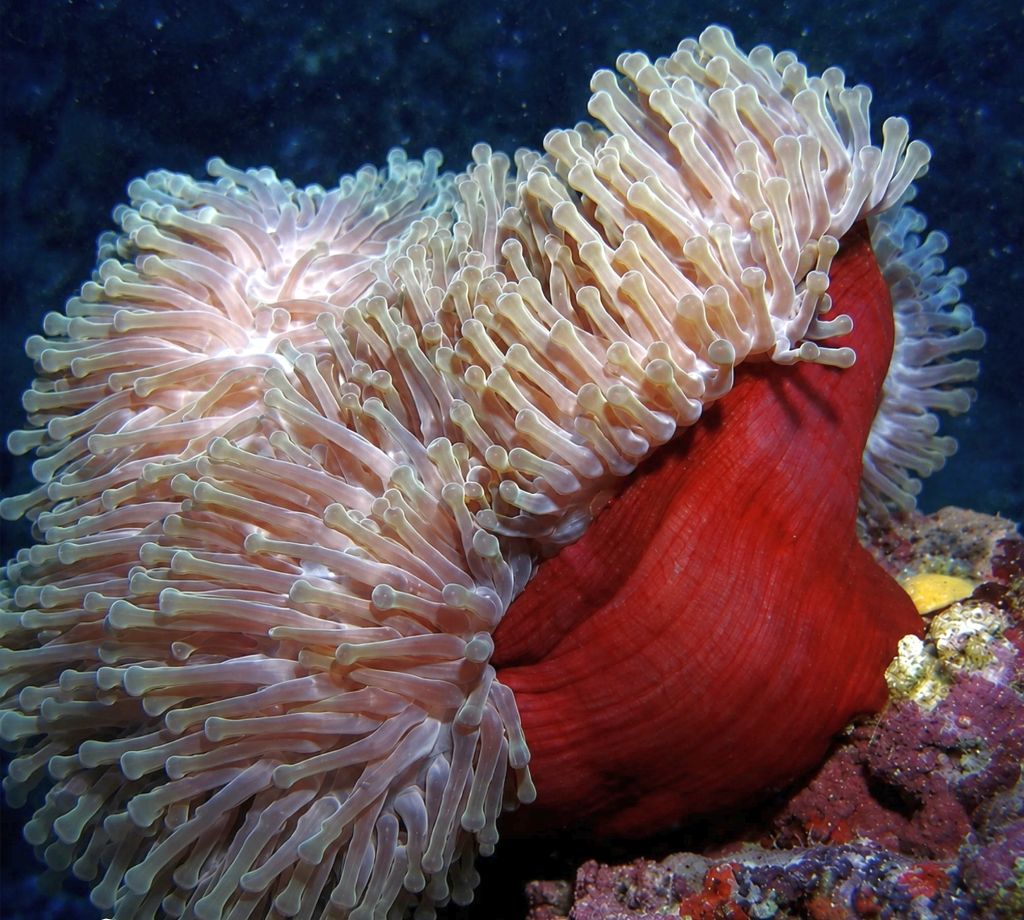
True Magnificent Sea Anemones display a breathtaking, highly distinctive coloration that features a smooth, vividly pigmented column in shades of deep purple, magenta, crimson red, electric blue, or rich brown, topped by a broad oral disc packed with dense, finger-like tentacles. They have a characteristically flared, fleshy column that rises visibly above the rockwork and long, non-adhesive tentacles measuring up to 3 inches long with blunt, slightly bulbous tips colored in contrasting shades of yellow, green, tan, or white.
Magnificent Sea Anemones harbor dense populations of symbiotic photosynthetic algae known as zooxanthellae within their tissues, which fuel their rapid metabolism and shift their tentacle hues under intense reef lighting. When disturbed or resting, they can draw their outer column margin upward around their tentacles like a drawstring purse, exposing the bright colors of their outer body wall.
Unlike stony corals that build rigid calcium carbonate skeletons, the Magnificent Sea Anemone lacks any hard protective armor. Instead, they rely on potent stinging cells called nematocysts covering their tentacles and the fierce territorial defense of their resident clownfish for survival. When threatened by predators or irritated by poor water quality, they contract their oral disc inward and inflate their colorful column to shield their delicate mouth and tentacles.
The Magnificent Sea Anemone is semi-reef safe and is best housed in a large, well-established reef, FOWLR, or species-specific aquarium of at least 50 to 75 gallon capacity with an aragonite sand substrate, at least one tall isolated pillar of live rock placed directly beneath intense reef lighting in strong, turbulent water flow, a mature biological filter, and thoroughly covered wavemaker intakes.
Unprotected powerheads and overflow drains must be strictly shielded with foam guards or fine mesh covers, as wandering Ritteri anemones frequently climb high onto tank walls and can be catastrophically shredded by circulation pumps
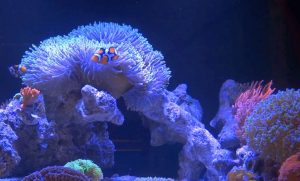
Magnificent Sea Anemones are peaceful toward symbiotic clownfish, making them the ultimate natural host
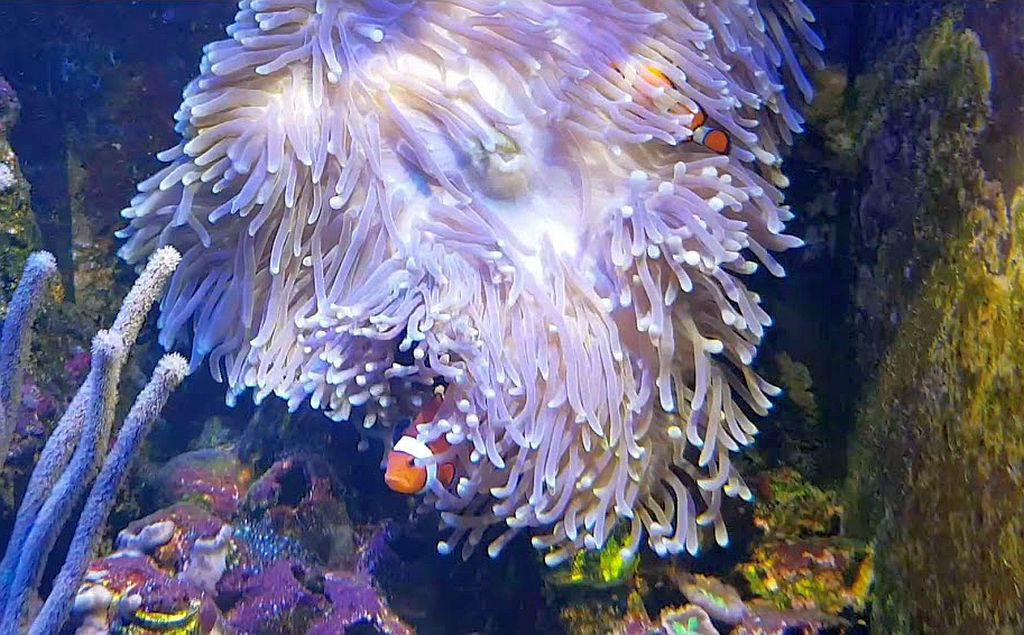
Magnificent Sea Anemone (Heteractis magnifica)
centerpiece for Percula, Ocellaris, Pink Skunk, and Clarkii clownfish. However, they are notorious wanderers that will relentlessly climb aquarium glass and rockwork until they reach the highest light and strongest current, stinging and killing any corals they contact along the way.
Magnificent Sea Anemones are generally peaceful toward agile reef fish and do best in a large, high-flow reef or dedicated anemone tank with compatible clownfish and cautious tank mates.
In addition to symbiotic clownfish, good tank mates include Domino Damselfish, Chromis, Dartfish, and peaceful reef-safe Blennies.
Avoid keeping them with large Angelfish, Butterflyfish, Filefish, Triggerfish, Pufferfish, or slow-moving bottom dwellers like Mandarin Dragonets and Lionfish. Angelfish and butterflyfish will often nip at their tentacles while slow-moving fish can accidentally blunder into their powerful sting.
The Magnificent Sea Anemone is an expert-only species that is notoriously difficult to acclimate and should only be added to a mature, ultra-stable marine system that has been running for at least 9 to 12 months. Like most giant host anemones, they are extremely sensitive to shipping stress, bacterial infections, and sudden parameter swings—especially shifts in salinity, alkalinity, and temperature. Copper-based medications are immediately fatal to them. To thrive in a reef aquarium, they require stable tropical temperatures between 76–82°F , a specific gravity of 1.025–1.026, a pH of 8.1–8.4, very high lighting (250–350+ PAR), and strong, chaotic water movement. Pristine water quality, intense illumination, and high oxygenation are critical for keeping this demanding invertebrate alive long-term.
Magnificent Sea Anemone (Heteractis magnifica)
Magnificent Sea Anemones are broadcast-spawning cnidarians that lack external sexual dimorphism, making it impossible to visually distinguish males from females in a home aquarium. In the wild, separate male and female colonies release gametes synchronously into the water column, whereas in shallow reef rim habitats they frequently reproduce asexually via longitudinal fission.
Although Magnificent Sea Anemones rarely spawn sexually in standard home aquariums, healthy, well-fed specimens will occasionally reproduce in captivity through asexual splitting.
Asexual reproduction occurs via longitudinal fission, where a large anemone slowly stretches its oral disc and divides straight down the middle over several hours to days. The two resulting halves gradually heal their margins and develop complete central mouths, producing two genetically identical clones.
In a home reef aquarium environment, splitting is extremely uncommon and typically occurs only in mature, large
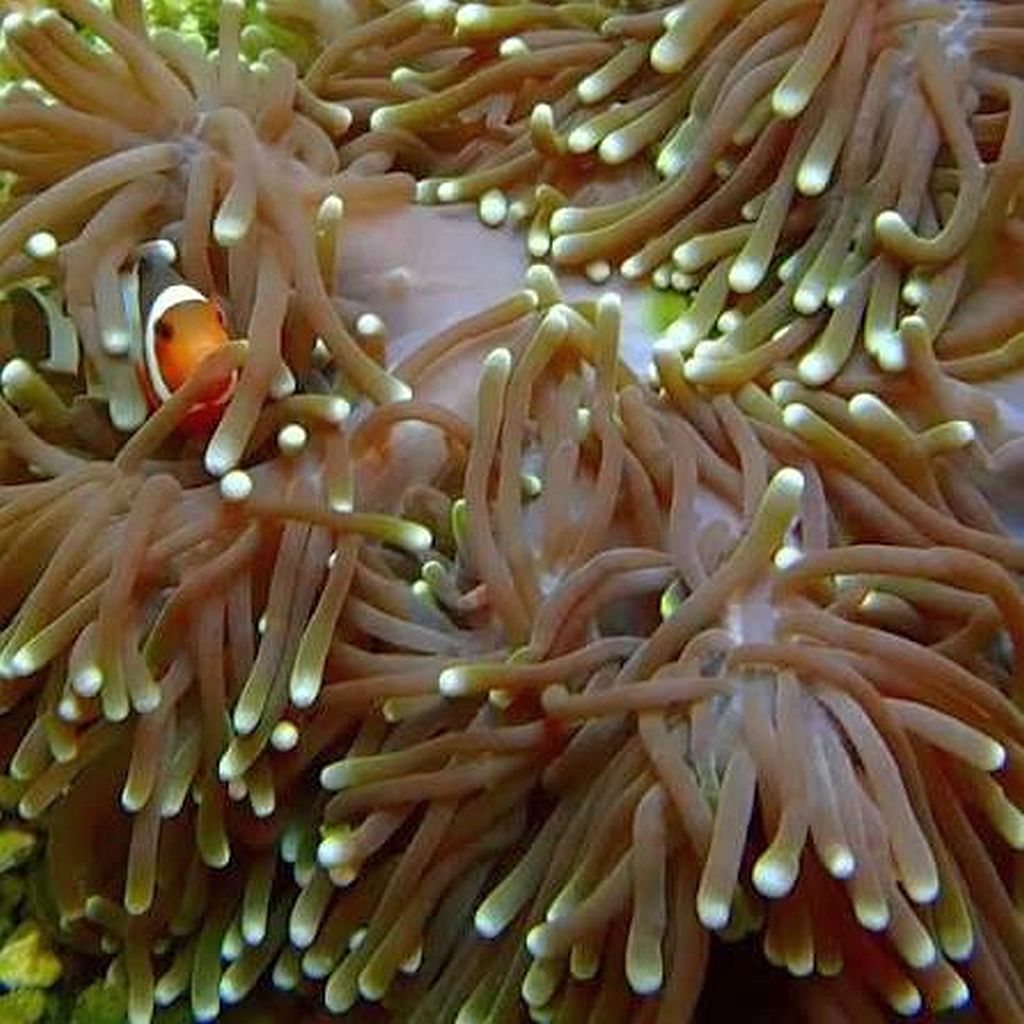
Magnificent Sea Anemone (Heteractis magnifica)
specimens receiving intense lighting and steady nutrition.
Unlike predatory species that actively hunt prey, the Magnificent Sea Anemone (Heteractis magnifica) is primarily a photosynthetic organism that relies heavily on its symbiotic zooxanthellae for daily energy, supplemented by opportunistic carnivory.
In their natural environment, they use their sticky, nematocyst-laden tentacles to capture passing zooplankton, small crustaceans, and larval fish swept in by strong reef currents, while absorbing dissolved organic nutrients excreted by their host clownfish.
In an established aquarium environment, Magnificent Sea Anemones derive the vast majority of their nutrition directly from high-output reef lighting and nitrogenous waste from resident fish.
Experienced tropical fish keeping enthusiasts can supplement their diet by target-feeding small portions of finely chopped mysis shrimp, krill, clam, mussel, or squid once every one to two weeks. It is important that the food pieces are small enough to digest easily without causing internal bacterial infections.
The Magnificent Sea Anemone (Heteractis magnifica) is a moderately common, high-demand specialty invertebrate that can be purchased from online wholesalers, marine retailers, and specialized reef stores at moderate to high prices depending on size and column coloration.
They are highly prized by advanced reef and clownfish enthusiasts for their iconic natural host status, vibrant purple or crimson base coloration, and dramatic swaying tentacle crown.
Magnificent Sea Anemone (Heteractis magnifica)
Minimum Tank Size: 50 – 75 gallons (mature tank running 9+ months)
Aquarium Type: Mature Reef , FOWLR or Dedicated Anemone System
Tank Care Level: Expert Only
Temperament: Semi-Aggressive (Stings neighboring corals; peaceful with host clownfish)
Aquarium Hardiness: Delicate
Water Conditions: 76–82° F, dKH 8 to 12, pH 8.1 – 8.4, sg 1.025 – 1.026
Max Size: 20″ – 36″
Color Form: Tan, Yellow, or Green Tentacles with Purple, Red, Blue, or Brown Base
Diet: Photosynthetic (Zooxanthellae) / Carnivore
Compatibility: Semi-Reef Safe (With Caution)
Origin: Indo-Pacific; Red Sea to Polynesia and Australia
Family: Stichodactylidae
Lifespan: 20 – 80+ years (Potentially indefinite via clonal division)
Aquarist Experience Level: Expert