Merten’s Carpet Anemone (Stichodactyla mertensii)
The, Merten’s Carpet Anemone (Stichodactyla mertensii) sold in the aquarium hobby as the Mertens Carpet Sea Anemone, Giant Rock Carpet, Spotted-Base Carpet Anemone, Non-Stinging Carpet Anemone, or Red-Spotted Carpet Anemone, and known to tropical fish keeping enthusiasts as Merten’s Sea Anemone, Merten’s Giant Carpet is the largest known sea anemone species on Earth, found across tropical marine environments throughout the Indo-Pacific.
The Merten’s Carpet Anemone’s range extends from the Red Sea and East Africa to Micronesia, Melanesia, the Ryukyu Islands of southern Japan, and northern Australia.
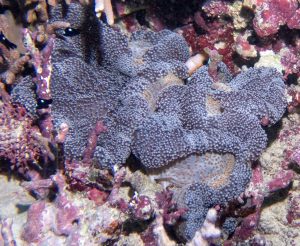
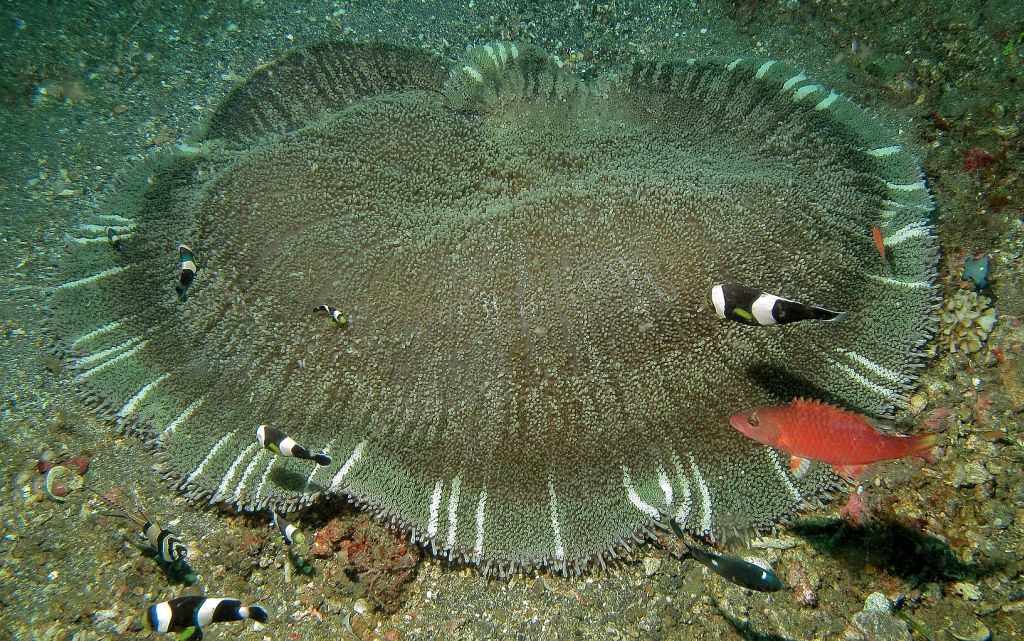
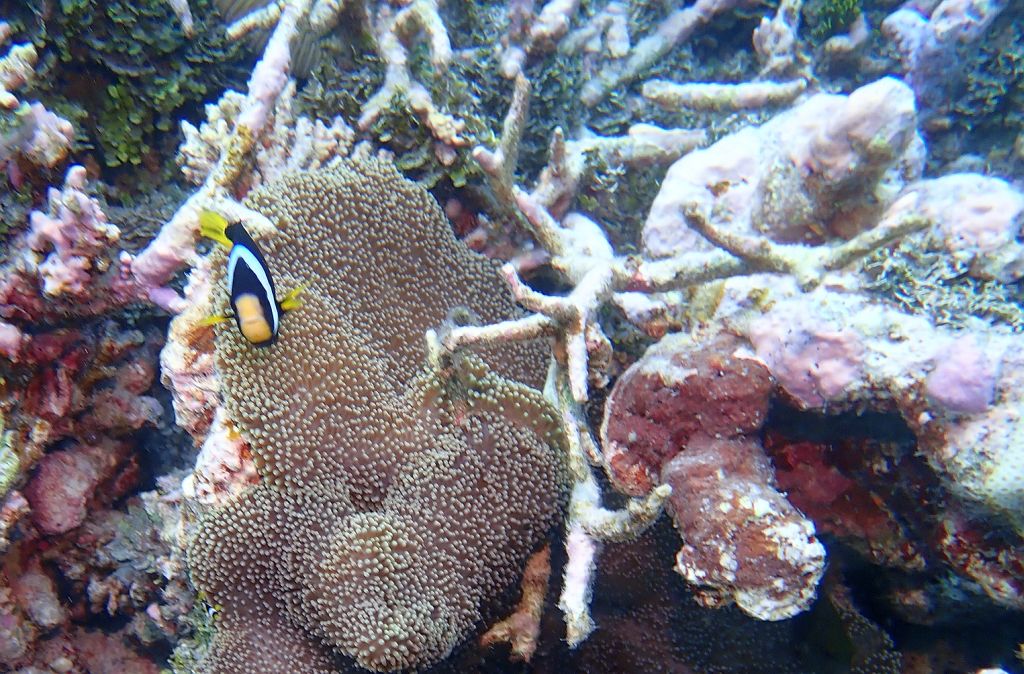
Merten’s Carpet Anemones (Stichodactyla mertensii) are true rock-anchoring organisms rather than sand burrowers. Unlike Stichodactyla haddoni, which buries in deep lagoon sand, Merten’s Carpet Anemones wedge their narrow pedal disc deep inside a rocky hole or coral crevice and drape their enormous, flattened oral disc across vertical or sloped reef rock like a living tapestry. Because their sprawling disc is far wider than their anchor hole, they cannot retreat completely out of sight; instead, when disturbed or threatened, they partially deflate and curl the margins of their oral disc inward against the rock while relying on stinging nematocysts and resident clownfish for defense.
Merten’s Carpet Anemone (Stichodactyla mertensii)
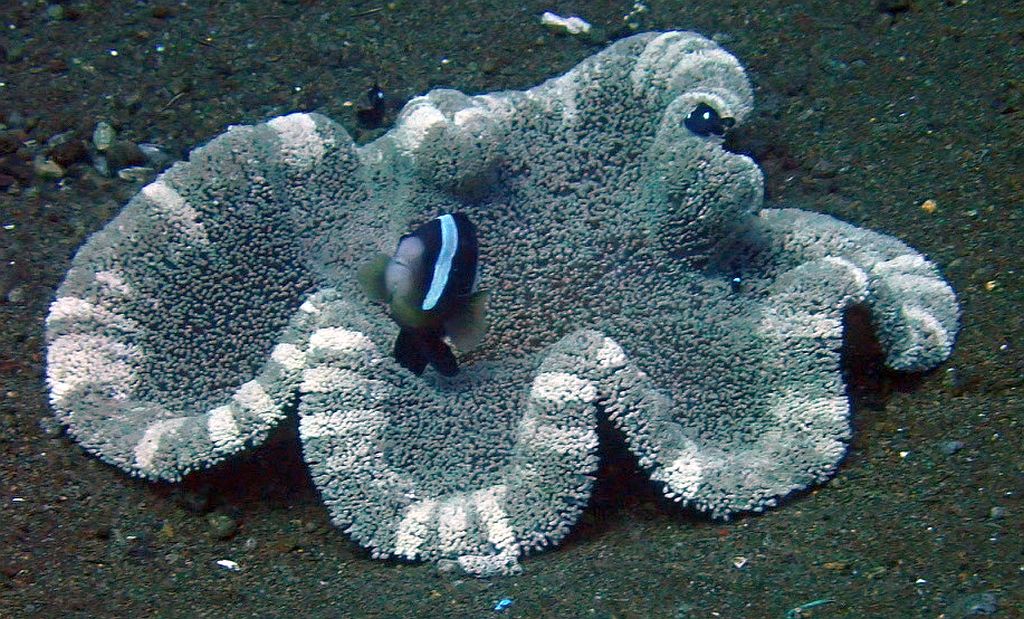
Stichodactyla mertensiiis a large anemone that tends to lie low over the bottom on a hard substrate. Merten’s Carpet Anemones are most commonly found in warm coastal waters from just below the low-tide line down to depths of 100 feet. Across this range, they inhabit coral reef crests, steep rocky slopes, and vertical drop-offs where bright tropical sunlight bathes their expansive oral disc, living in close, mutualistic association with over a dozen species of wild clownfish. It is usually occupied by Amphiprion chrysopterus, although some host a pair of Amphiprion tricinctus instead. When living in this anemone, the A. tricinctus are mostly black in color.
Merten’s Carpet Anemones are typically found as colossal, solitary individuals spaced apart along reef slopes rather than in dense clonal aggregations. Once securely rooted inside a rocky crevice, they rarely wander. However, they are aggressively territorial toward neighboring corals and competing sessile invertebrates—their massive oral disc will rapidly overgrow and severely sting any stony or soft corals within reach.
Stichodactyla mertensii are the largest sea anemones in the world, commonly reaching 18 to 24 inches in oral disc diameter in large home aquariums, with mature wild specimens regularly exceeding 36 to 40 inches across.
Merten’s Carpet Anemone (Stichodactyla mertensii)
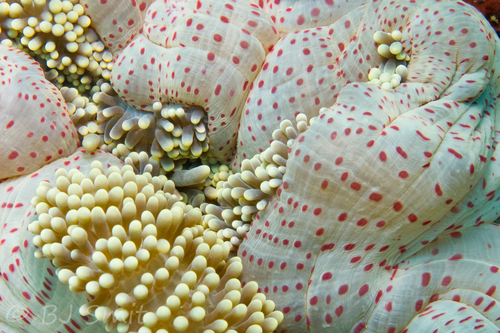
True Merten’s Carpet Anemones display a sprawling, flattened, velvety silhouette featuring a broad, gently undulating oral disc covered in dense rows of short, blunt-tipped or slightly club-shaped tentacles measuring less than three-quarters of an inch long. Their single most diagnostic feature is a smooth, white to pale tan column densely peppered with bright orange, magenta, or red adhesive spots (verrucae) on the upper body wall beneath the oral disc, which cling to adjacent rockwork to hold their massive disc flat.
Merten’s Carpet Anemones harbor dense populations of symbiotic photosynthetic algae known as zooxanthellae within their tissues, which fuel their high metabolism and produce rich surface coloration under reef lighting. Popular hobby color varieties range from classic golden-brown, olive green, and tan with contrasting white or neon-green oral stripes to vibrant fluorescent green, bright yellow-green, and rare white or multicolor morphs.
The Merten’s Carpet Anemone is semi-reef safe with caution and is best housed in a spacious, well-established reef or species-specific aquarium of at least 100 to 150 gallon capacity with an aragonite sand substrate, plenty of large mature live rock structures with deep crevices, a mature biological filter, moderate to high reef lighting, moderate turbulent water flow, and ample open clearance away from neighboring corals.
Unprotected powerheads and overflow drains must be strictly shielded with foam guards or mesh screens during initial acclimation until the anemone wedges its pedal disc securely into the rockwork.
Merten’s Carpet Anemones are peaceful toward symbiotic clownfish and commensal crustaceans, making them the ultimate natural host centerpiece for large display tanks. Unlike S. haddoni and S. gigantea—whose Velcro-like tentacles can easily trap and eat fish—S. mertensii has non-sticky tentacles and a noticeably milder sting, making it far safer around healthy tank mates, though its sheer adult size still requires generous clearance from neighboring corals.
Stichodactyla mertensii do best in a large, mature reef or dedicated anemone system alongside natural host clownfish, symbiotic invertebrates, and agile mid-water swimmers:
• Good tank mates: Ocellaris Clownfish, Clarkii Clownfish, Pink Skunk Clownfish, Orange Skunk Clownfish, Saddleback Clownfish, Tomato Clownfish, Porcelain Anemone Crabs, Sexy Anemone Shrimp (Thor amboinensis), Cardinalfish, Chromis, Dartfish, and Tangs.
• Tank mates to avoid: Large Angelfish, Butterflyfish, Filefish, Triggerfish, and Pufferfish that may nip at their tentacles, as well as slow-moving bottom-perching fish like Mandarin Dragonets and Frogfish that rest directly on the oral disc and could still be captured.
The Merten’s Carpet Anemone is an advanced-care species that—while noticeably hardier and less prone to shipping infections than Stichodactyla gigantea—still requires a large, mature, ultra-stable marine system running for at least 8 to 12 months. Like all giant host anemones, it is sensitive to sudden parameter swings in salinity, alkalinity, and temperature, while copper-based medications are immediately fatal.
To thrive, provide stable tropical temperatures between 75–81°F, a specific gravity of 1.025–1.026, a pH of 8.1–8.4, moderate to high lighting (200–300+ PAR), and gentle to moderate turbulent water movement across its broad oral disc. Ample room to expand, clean reef water, and consistent lighting are essential for keeping this colossal anemone thriving for decades.
Merten’s Carpet Anemone (Stichodactyla mertensii)
Merten’s Carpet Anemones are broadcast-spawning cnidarians that lack external sexual dimorphism, making it impossible to visually distinguish males from females in a home aquarium. In the wild, separate male and female individuals release eggs and sperm synchronously into the water column, where fertilized larvae drift as plankton before settling onto rocky reef slopes, and marine biologists have also documented rare asexual reproduction via column budding in nature.
In home aquariums, however, Stichodactyla mertensii almost never reproduces sexually or divides asexually. Because captive splitting is exceedingly rare, tropical fish keeping enthusiasts should plan around housing a single giant showpiece with abundant space to grow.
The Merten’s Carpet Anemone is a photosynthetic carnivore that relies heavily on its internal zooxanthellae for daily energy, supplemented by opportunistic capture of small marine fauna. In their natural environment, their short, nematocyst-coated tentacles trap passing zooplankton, amphipods, and tiny crustaceans, drawing prey toward the central mouth while absorbing dissolved nutrients excreted by their host clownfish.
In an established reef aquarium environment, Merten’s Carpet Anemones derive the vast majority of their nutrition directly from strong reef lighting and dissolved organics in the water column. Experienced tropical fish keeping enthusiasts can supplement their diet by target-feeding small portions of mysis shrimp, enriched brine shrimp, or finely chopped krill, clam, or squid once every one to two weeks, keeping food pieces small so the anemone can digest them easily without regurgitating undigested matter.
The Merten’s Carpet Anemone (Stichodactyla mertensii) is the rarest of the giant carpet anemones in the marine aquarium trade, available only periodically through select online marine retailers, rare-livestock collectors, and specialty reef stores.
They are prized by large-tank reef keepers and clownfish enthusiasts for their colossal showpiece size, non-sticky tentacles, and unmatched compatibility with over a dozen clownfish species.
Current retail prices for the Merten’s Carpet Anemone typically range from $229.99 to $349.99 for small to medium golden-brown or olive specimens, while vibrant neon green, bright yellow-green, or large showpiece individuals often cost between $450.00 and $799.99+ depending on diameter and vendor.
Merten’s Carpet Anemone (Stichodactyla mertensii)
Minimum Tank Size: 100–150 gallons
Aquarium Type: Reef (with caution) or Species-Specific Anemone Tank
Care Level: Moderate
Temperament: Semi-Aggressive (Territorial toward corals; mild sting to fish)
Aquarium Hardiness: Moderately Hardy (Once established in mature systems)
Water Conditions: 75–81°F, dKH 8–12°, pH 8.1–8.4, sg 1.025–1.026
Lighting: Moderate to High (200–300+ PAR)
Water Flow: Moderate (Turbulent / Indirect)
Max Size: 24″ (in captivity); up to 36–40″+ (in the wild)
Color Form: Golden-Brown, Olive, Tan, Neon Green, Yellow-Green, White, Multicolor
Diet: Photosynthetic, Carnivore (Supplemental target feeder)
Compatibility: Reef Safe with Caution
Origin: Indo-Pacific, Red Sea, Australia, Southern Japan
Family: Stichodactylidae
Lifespan: Decades
Aquarist Experience Level: Advanced/Expert