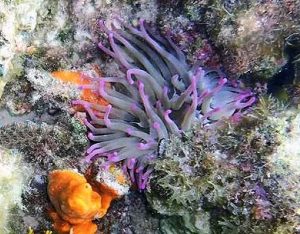
Condylactis Anemone (Condylactis gigantea)
The Condylactis Anemone (Condylactis gigantea), known to tropical fish keeping enthusiasts as the Condy Anemone, Haitian Anemone, Florida Condi, Giant Golden Anemone, Giant Caribbean Anemone, Atlantic Anemone, or Pink-Tipped Haitian Anemone, is a hardy, vibrant sea anemone found across tropical marine environments throughout the Caribbean Sea and western Atlantic Ocean.
Their natural range extends from Bermuda, southern Florida, and the Bahamas throughout the Gulf of America and the Caribbean Sea, including the Greater and Lesser Antilles, and south along the coast of South America to southeastern Brazil
Condylactis Anemones are collected for the aquarium trade across the Caribbean Sea, the Gulf of America, and the tropical western Atlantic Ocean.
Condylactis Anemones are most commonly found among shallow coral reefs, rocky lagoons, mangrove edges,
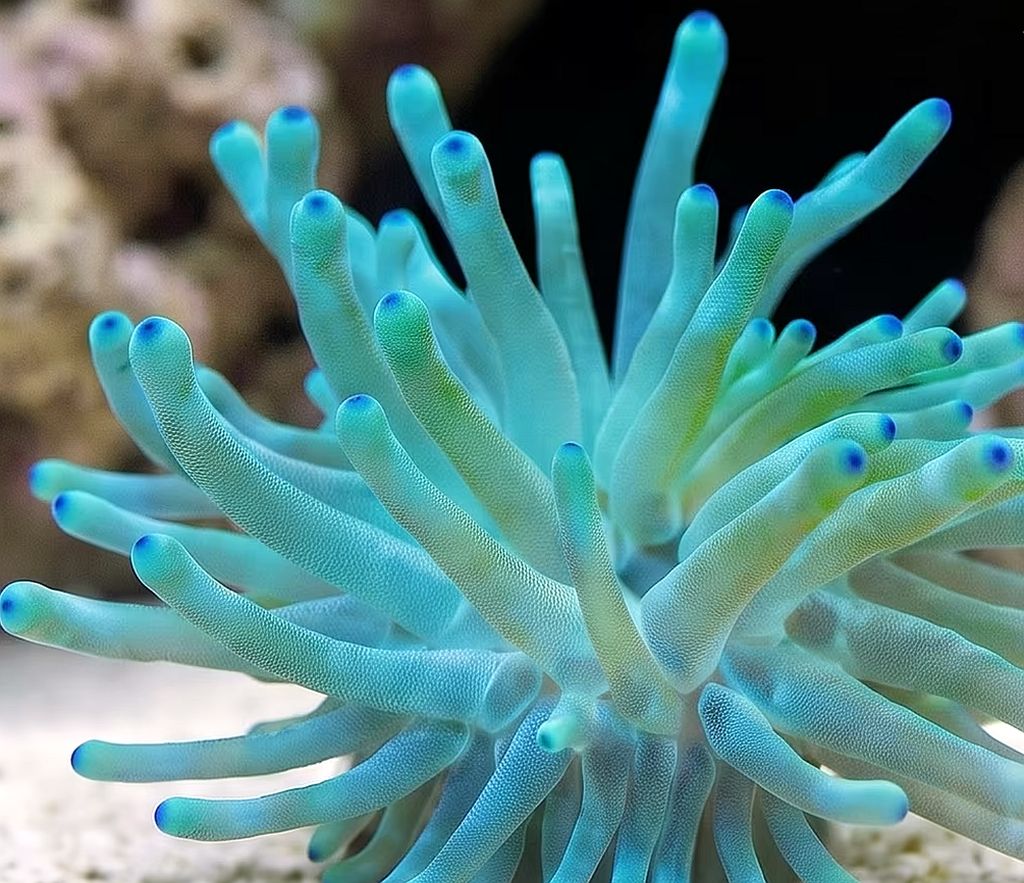
Condylactis Anemone (Condylactis gigantea)
and turtle grass beds in warm coastal waters, from just below the low-tide line down to depths of roughly 100 feet where they live in close association with cleaner shrimp, arrow crabs, and juvenile reef fishes rather than Indo-Pacific clownfish.
Unlike free-swimming animals, they are bottom-dwelling anemones that wedge their sticky foot deep inside hard reef ledges, limestone crevices, coral holes, or rubble-strewn seagrass meadows while stretching their long tentacles out into passing currents and bright tropical sunlight.
In the wild, Condylactis Anemones stay anchored inside rocky shelters, though in home aquariums they are well known for slowly walking across rockwork and glass until they find an ideal combination of light and water flow.
Living wedged in rock crevices provides immediate physical protection, allowing the anemone to rapidly retract its tentacles and pull its entire column tightly into the rock when threatened by daytime reef predators.
Socially, Condylactis Anemones are solitary inhabitants of Caribbean reef flats or live in loose, widely spaced groups rather than clonal colonies. They are aggressively territorial toward neighboring corals and competing benthic invertebrates, and because they move readily and pack potent stinging cells, they will severely injure or kill any stony or soft corals they brush against.
Condylactis gigantea are medium to large marine invertebrates that commonly reach 8 to 12 inches in oral disc diameter in home aquariums, with mature wild specimens occasionally expanding up to 16 inches across.
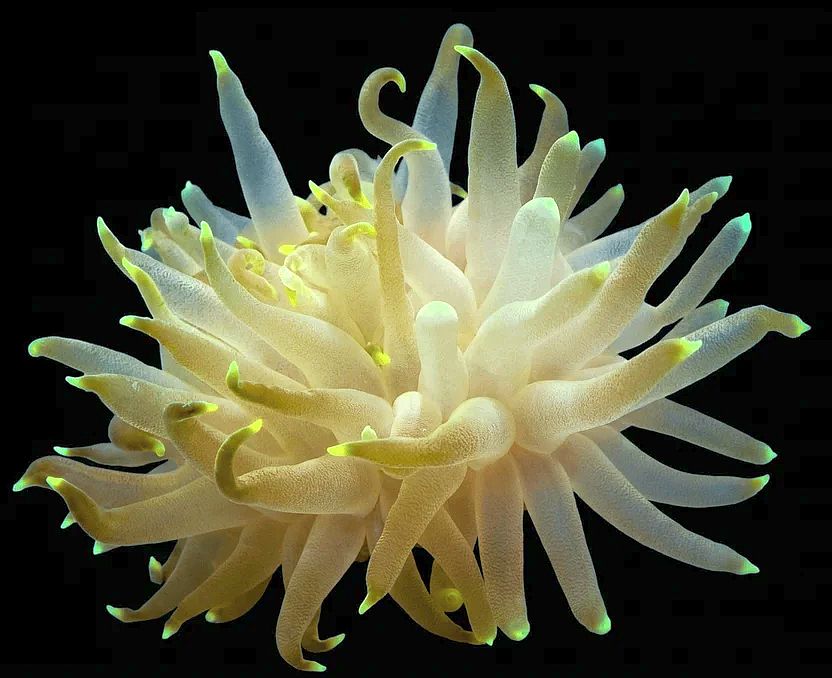
Condylactis Anemone (Condylactis gigantea)
True Condylactis Anemones display a bold, graceful silhouette featuring a smooth, vividly colored base column in shades of bright orange, red, tan, or cream, topped by a broad oral disc and a sparse, sweeping crown of long, thick, tapering tentacles. The tentacles measure up to 4 to 6 inches long and wave gracefully in the current, frequently accented by bright magenta, violet, pink, or neon green tips.
Condylactis Anemones harbor dense populations of symbiotic zooxanthellae within their tissues, which fuel their metabolism and give healthy specimens a rich golden-brown, cream, or olive-tan base coloration. Tropical fish keeping enthusiasts should avoid stark, translucent-white specimens that have expelled their symbiotic algae due to shipping stress, though healthy individuals can recover their rich golden-tan pigment under strong reef lighting.
Condylactis gigantea lack external sexual dimorphism, making it impossible to visually distinguish males from females in an aquarium, and unlike stony corals, they secrete no calcium carbonate skeleton for armor.
The Condylactis Anemone is best housed in a well-established reef, FOWLR, or Caribbean biotope aquarium of at least 55 gallon capacity with an aragonite sand substrate, plenty of porous live rock with deep crevices for anchoring, and a mature biological filter. To thrive, they require stable tropical temperatures between 74–80°F , a specific gravity of 1.024–1.026, a pH of 8.1–8.4, alkalinity of 8 to 12 dKH, moderate to high reef lighting (150–250 PAR), and gentle to moderate, indirect currents. Like all marine invertebrates, they are sensitive to sudden salinity swings, elevated nitrates, and copper-based medications, which are immediately fatal to them.
Although the Condylactis Anemone is the hardiest and easiest to care for among large host-style anemones, it should still only be added to a mature, stable marine system that has been running for at least 4 to 6 months.
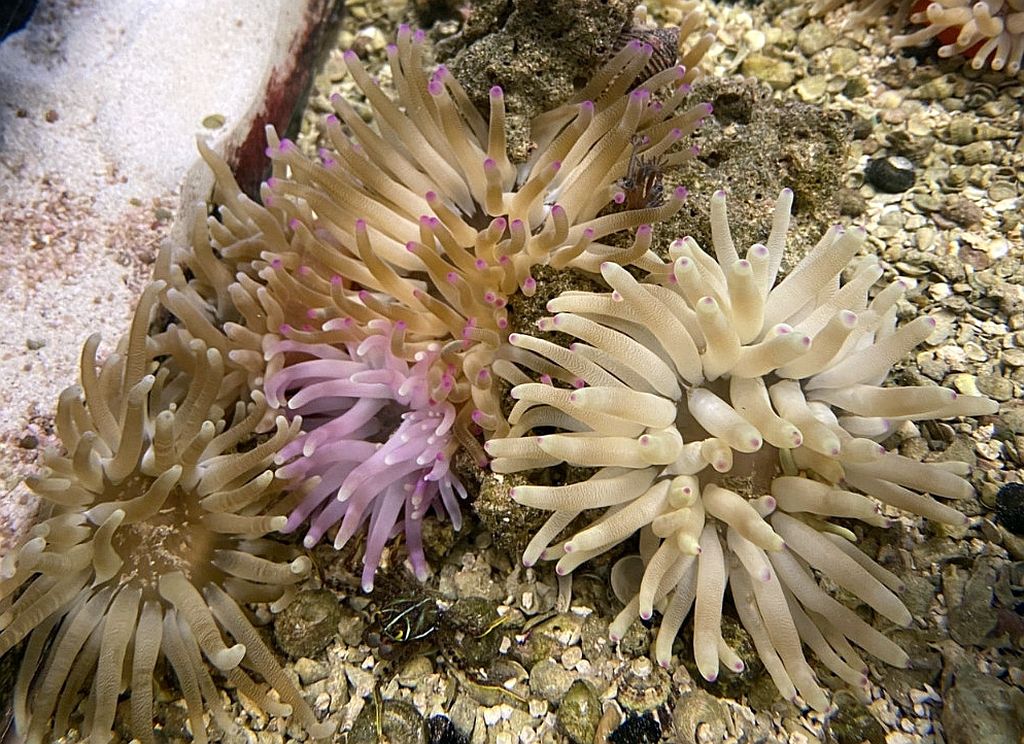
Condylactis Anemone (Condylactis gigantea)
The Condylactis Anemone is semi-reef safe, with caution. They make fascinating, budget-friendly centerpieces for Caribbean biotopes and beginner anemone keepers, though hobbyists should note that because they hail from the Atlantic rather than the Indo-Pacific, most clownfish do not naturally recognize them as hosts and may ignore them—or occasionally be stung by them. Because they are active wanderers with a strong sting, they are best kept in tanks with few stationary corals or plenty of open buffer room around them.
Unprotected wavemaker intakes, powerheads, and overflow drains must be strictly shielded with foam guards or mesh screens, as roaming Condylactis anemones frequently climb tank walls and rockwork and can easily be drawn into circulation pumps.
Condylactis Anemones are peaceful toward fast-swimming reef fish and do best in a mature FOWLR, Caribbean biotope, or cautious reef system with alert tank mates and compatible crustaceans.
- Good tank mates include Pederson’s Cleaner Shrimp, Spotted Cleaner Shrimp, Sexy Anemone Shrimp, Arrow Crabs (kept singly and watched closely around tiny shrimp or slow fish), Damselfish, Chromis, Dartfish, Royal Grammas, and hardy Clownfish like Clarkii or Maroon Clowns, which occasionally adopt them in captivity.
- Avoid keeping them with large Angelfish, Butterflyfish, Filefish, Triggerfish, Pufferfish, or slow-moving bottom dwellers like Mandarin Dragonets and Seahorses, as angelfish and butterflyfish nip at their tentacles while slow-moving fish can accidentally blunder into their powerful sting.
Condylactis Anemones reproduce via seasonal broadcast spawning in their natural Caribbean habitats, with peak spawning occurring around late May and low-level spawning continuing at other times of the year. They almost never reproduce sexually or asexually in standard home aquariums.
In the wild, separate male and female individuals release eggs and sperm simultaneously into the water column, where fertilized larvae drift as yolk nourished plankton before settling onto rocky reef ledges.
Because Condylactis gigantea almost never reproduce sexually and very rarely split down the middle in captivity, aquarists should plan around housing a single large specimen with plenty of space to expand.
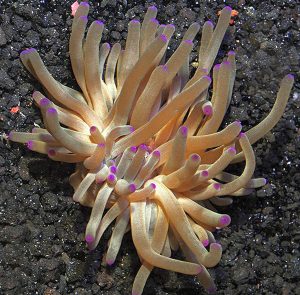
Condylactis Anemone (Condylactis gigantea)
Unlike predatory fish that actively pursue prey, the Condylactis Anemone (Condylactis gigantea) is primarily a photosynthetic organism that relies heavily on its internal zooxanthellae for daily energy, supplemented by opportunistic feeding. In their natural environment, they use their sticky, stinging tentacles to capture passing zooplankton, small crustaceans, mussels, and tiny fish, while absorbing dissolved organic nutrients from surrounding reef waters.
In an established aquarium environment, Condylactis Anemones derive much of their baseline energy directly from high-output reef lighting and fish waste. Keepers can supplement their diet by target-feeding small portions of finely chopped mysis shrimp, krill, clam, mussel, or squid once every one to two weeks, keeping pieces modest so the anemone can digest them cleanly without regurgitating undigested matter.
The Condylactis Anemone (Condylactis gigantea) is a common, widely available invertebrate sold by online marine retailers and local fish stores at budget-friendly prices. While most specimens in the trade are wild-collected—with heavy harvesting in Florida raising concerns over local population declines—aquacultured individuals are also occasionally offered, so always purchase from reputable, responsible sources.
Small to medium specimens currently retail for $19.99 to $39.99, while large or quarantined showpiece individuals with vivid magenta, purple, or neon-green tips typically cost $44.99 to $69.99, depending on size and vendor.
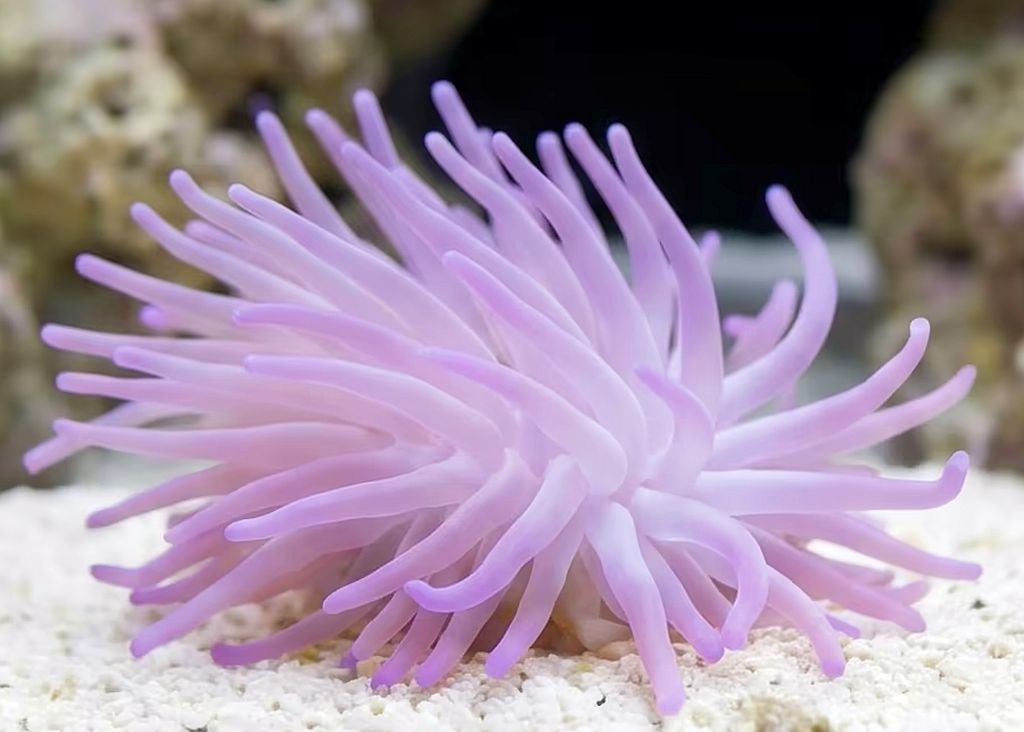
Condylactis Anemone (Condylactis gigantea) Purple variety from Caribbean
Minimum Tank Size: 55 gallons (mature tank running 4–6+ months)
Aquarium Type: Mature Reef, FOWLR, or Caribbean Biotope System
Care Level: Easy to Moderate
Temperament: Semi-Aggressive (stings neighboring corals and unwary slow fish)
Aquarium Hardiness: Hardy
Water Conditions: 74–80°F, dKH 8–12, pH 8.1–8.4, SG 1.024–1.026
Max Size: 8″–12″, up to 16″ in the wild
Color Form: Cream, Tan, or Golden-Brown Tentacles with Purple, Pink, or Green Tips and Orange/Red Column
Diet: Photosynthetic (zooxanthellae) / Carnivore
Compatibility: Semi-Reef Safe with Caution (not a natural clownfish host)
Origin: Caribbean Sea, Gulf of America, and Western Atlantic
Family: Actiniidae
Lifespan: Long-lived (decades; up to ~75 years in the wild)
Aquarist Experience Level: Beginner / Intermediate