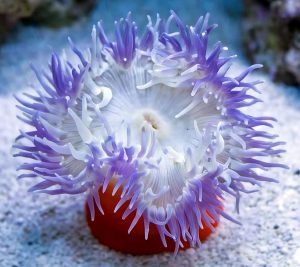
The Long Tentacle Anemone (Macrodactyla doreensis), also classified in scientific literature as Condylactis doreensis, is a graceful, sand-dwelling cnidarian found across tropical marine environments throughout the Indo-Pacific.
Commonly sold in the reef keeping hobby as the LTA, Corkscrew Anemone, or Purple Long Tentacle Anemone, this popular species is also known to tropical fish keeping enthusiasts as the Long-Tentacle Sea Anemone, Sand Anemone, or Corkscrew Sea Anemone.
Their range extends from the waters of Southeast Asia and Indonesia to northern Australia, New Guinea, and southern Japan.
Commercial specimens for the aquarium trade are primarily collected from shallow coastal waters in Indonesia, the Philippines, and Vietnam.
Long Tentacle Anemones are most commonly found among sheltered sandy lagoons, silty seagrass beds, and muddy reef flats of their range in shallow coastal waters, from just below the low-tide line down to depths of 20 feet where they live in close, mutualistic association with several species of anemonefish.
Instead of anchoring onto exposed upper rockwork like Bubble Tip or Magnificent anemones, Long Tentacle Anemones keep their brightly colored column and muscular foot buried entirely beneath the sand bed, leaving only their broad oral disc and crown of undulating tentacles resting flush with the substrate surface.
Long Tentacle Anemones are typically found spaced quite far apart across sandy lagoon bottoms rather than in tight colonies. Once they are securely rooted in a deep sand bed, they rarely wander, though their long, sweeping tentacles will severely sting any low-lying stony or soft corals placed within their reach.
Because they have no hard shell or skeleton, they rely on potent stinging cells called nematocysts lining their long tentacles to protect themselves and their ability to vanish beneath the sand bed when startled by diurnal reef predators.
Macrodactyla doreensis are large marine invertebrates that commonly reach 10 to 16 inches in oral disc diameter in home aquariums, with mature wild specimens occasionally expanding up to 20 inches across.
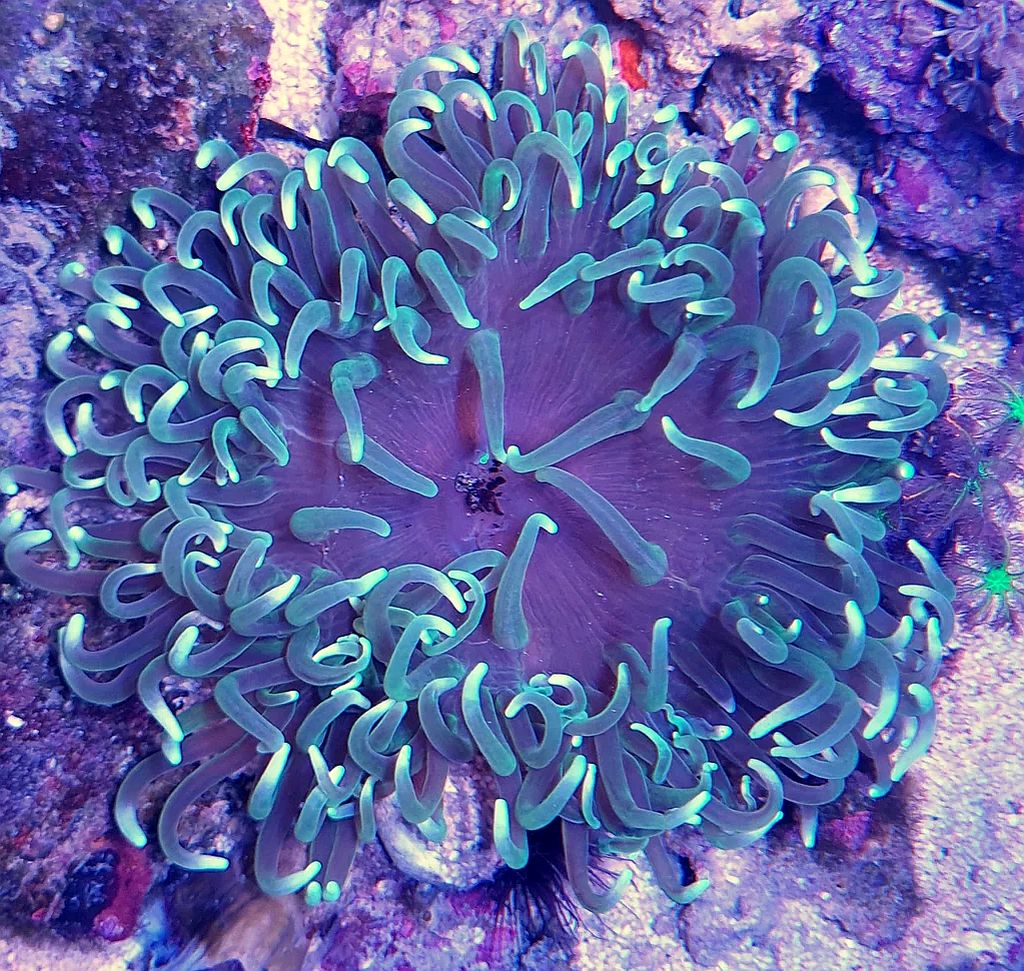
Long Tentacle Anemone (Macrodactyla doreensis)
True Long Tentacle Anemones are easy to spot by their brightly colored, smooth orange, salmon-pink, or red base column topped by longitudinal rows of prominent white adhesive spots (verrucae) just below the wide, scalloped oral disc, adorned with delicate radial lines. Their tapering tentacles grow 6 to 7 inches long and often twist into graceful corkscrew spirals. Dense beneficial populations of symbiotic photosynthetic algae known as zooxanthellae living within their tissues, give them their rich base coloration and shift their tentacle hues depending on aquarium lighting. Popular color varieties include vibrant neon green, deep royal purple, smoky grey-brown, and cream-tipped morphs, all accented by that signature bright orange-red buried foot.
The Long Tentacle Anemone is moderately difficult to care for and should only be added to a mature, stable tank that has been running for at least six months
Macrodactyla doreensis is best housed in a well-established reef, FOWLR, or lagoon aquarium of at least 40 to 50 gallon capacity with a deep 3 to 4 inch fine aragonite sand bed, plenty of mature live rock, moderate to high reef lighting (150–250 PAR), and gentle, swaying water flow that will not blow sand over its center mouth.
Cover powerheads and overflow intakes with foam guards or mesh screens before the anemone buries its foot, especially during the first few days in the tank. Keep water parameters steady at 75–81°F, a specific gravity of 1.025–1.026, and a pH of 8.1–8.4, and never use copper-based medications. Inspect new specimens carefully before buying, as tears to their delicate orange foot during shipping are often fatal.
The Long Tentacle Anemone is semi-reef safe and peaceful toward host clownfish, making it a great centerpiece for sand-bed reef tanks. Because it stays anchored deep in the sand rather than climbing rockwork, it is far less likely to bother upper-reef corals than Bubble Tip or Magnificent anemones, though its long tentacles will still sting nearby corals on the sand bed.
Good tank mates include Clarkii, Pink Skunk, Maroon, Ocellaris, and Percula Clownfish, along with Cardinalfish, Chromis, Dartfish, and peaceful reef-safe Blennies.
Avoid housing it with large Angelfish, Butterflyfish, Filefish, Triggerfish, and Pufferfish that nip at tentacles, or active sand-sifting Wrasses and large Pistol Shrimp that can repeatedly dig up its buried foot.
Long Tentacle Anemones are broadcast-spawning cnidarians that lack external sexual dimorphism, making it impossible to visually
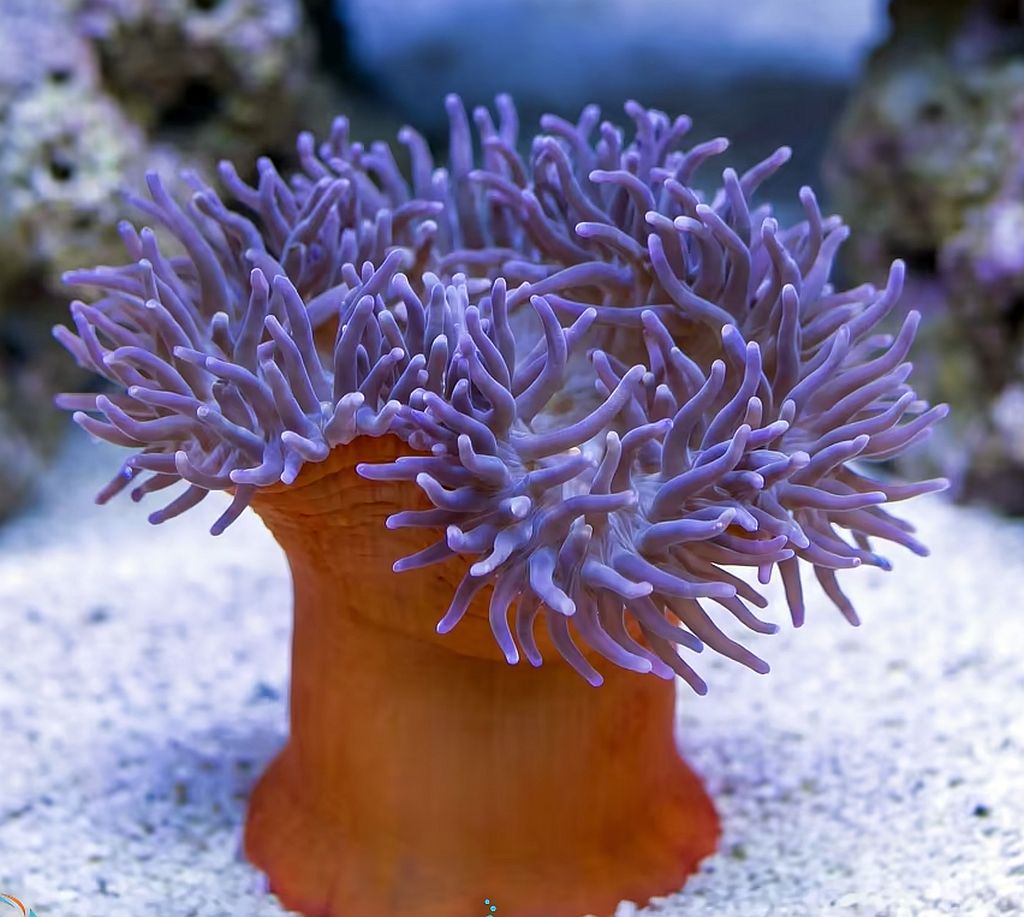
Long Tentacle Anemone (Macrodactyla doreensis)
distinguish males from females in a home aquarium. Unlike Bubble Tip Anemones that split frequently in captivity, Long Tentacle Anemones reproduce almost exclusively via seasonal sexual broadcast spawning in their natural coastal habitats and rarely divide asexually in home aquariums. Separate male and female individuals release eggs and sperm synchronously into the water column, where tiny fertilized larvae drift as plankton before settling onto soft lagoon floors.
Because Macrodactyla doreensis very rarely undergoes longitudinal fission in captivity, tropical fish keeping enthusiasts should plan on keeping a single large specimen rather than expecting it to multiply.
Like most host anemones, the Long Tentacle Anemone gets most of its daily energy from strong aquarium lighting through the symbiotic algae in its tissues, supplemented by meaty foods. In the wild, its sticky tentacles catch passing zooplankton, small shrimp, and tiny bottom-dwelling fish while absorbing nutrients from host clownfish waste.
In an aquarium environment experienced tropical fish keeping enthusiasts can supplement their diet by target-feeding small portions of finely chopped mysis shrimp, krill, clam, mussel, or squid once every one to two weeks, ensuring food pieces remain smaller than the anemone’s central mouth to prevent regurgitation and internal bacterial infections.
Highly prized by reef and clownfish enthusiasts alike for their flowing corkscrew tentacles, striking purple or neon green hues, and tendency to stay rooted in the sand bed away from upper-reef corals, the Long Tentacle Anemone (Macrodactyla doreensis) is regularly available through local fish stores and online marine retailers as wild-caught specimens at moderate prices depending on size, area of collection, and tentacle coloration.
Current retail prices for small to medium individuals (4 to 7 inches) range from $59.99 to $99.99 for classic tan, green, or cream specimens, while vibrant deep purple or ultra-green showpiece individuals typically cost between $109.99 and $169.99 depending on size and vendor.
Retail prices for small to medium (4 to 7 inches) individuals typically range from $49.99 to $89.99, while large specimens or bright neon green and deep purple varieties often cost $95.00 to $150.00 or more depending on vendor, size, area of collection, and coloration.
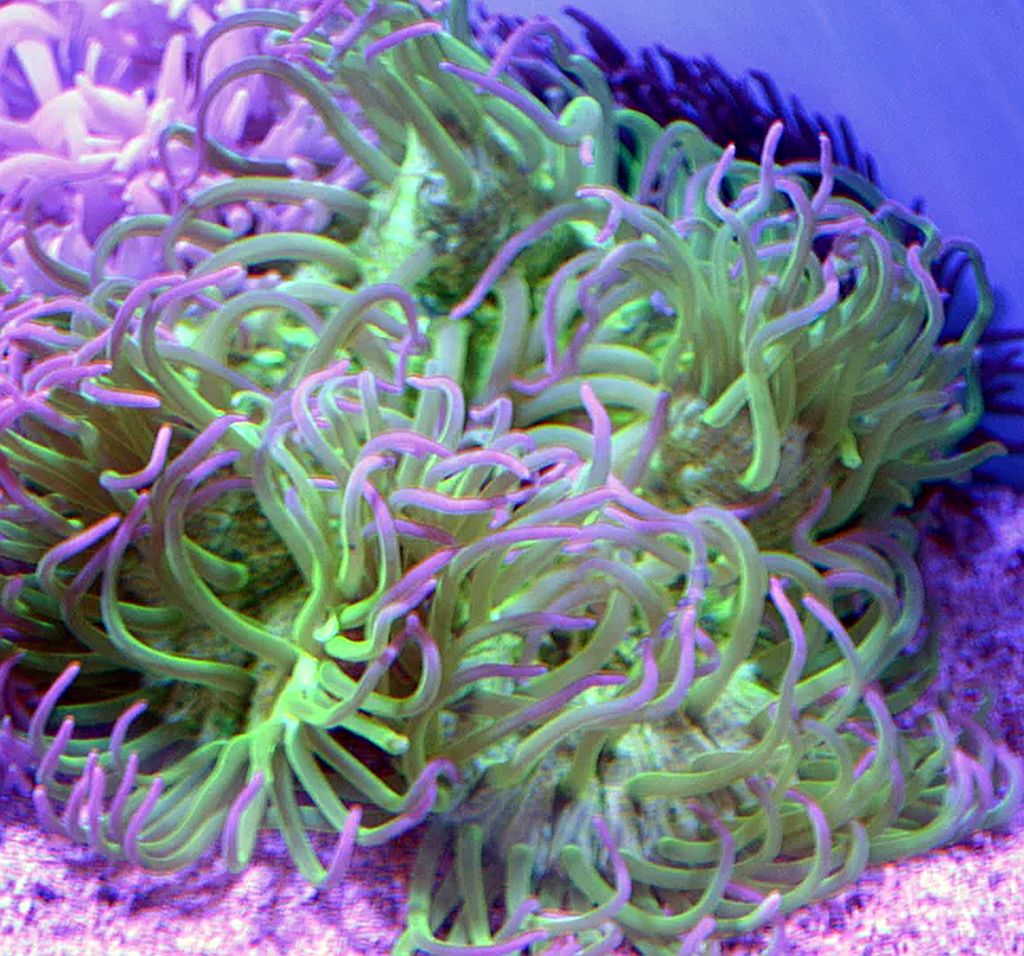
Long Tentacle Anemone (Macrodactyla doreensis)
Minimum Tank Size: 40 – 50 gallons (mature tank running 6+ months with 3–4″ deep sand bed)
Aquarium Type: Mature Reef or Lagoon System
Tank Care Level: Moderate to Difficult
Temperament: Semi-Aggressive
Aquarium Hardiness: Moderately Delicate
Water Conditions: 75–81° F, dKH 8 to 12, pH 8.1 – 8.4, sg 1.025 – 1.026
Max Size: 16″ – 20″
Color Form: Purple, Neon Green, Tan, or Grey Tentacles with Bright Orange-Red Base
Diet: Photosynthetic (Zooxanthellae) / Carnivore
Compatibility: Semi-Reef Safe (With Caution)
Origin: Indo-Pacific (Southeast Asia, Indonesia, Japan, and Australia)
Family: Actiniidae
Lifespan: 20 – 50+ years
Aquarist Experience Level: Intermediate