Sebae Anemone (Heteractis crispa)
The Sebae Anemone (Heteractis crispa), officially reclassified as Radianthus crispa, commonly known to tropical fish keeping enthusiasts as the Leather Anemone, Long-Tentacle Sebae Anemone, Purple-Tipped Sebae Anemone, Leathery Sea Anemone, Malu Sebae, or Crispa Anemone, is found across tropical marine environments throughout the Indo-Pacific.
Heteractis crispa has a broad natural geographic range that extends from the Red Sea and East Africa eastwards to Micronesia and French Polynesia, and from southern Japan southwards to Australia’s Great Barrier Reef.
Wild specimens collected for the marine aquarium hobby originate primarily from the shallow sandy lagoons, coral reef slopes, and mixed sand and rubble zones of their range across the central Indo-Pacific, including Indonesia, Fiji, and the Coral Triangle.
Sebae Anemone are semi-burrowing benthic organisms that commonly occupy depths from the shallow sublittoral zone down to about 100 feet, where they live in close, mutualistic associations with up to 14 different species of anemonefish anywhere they can firmly wedge their muscular pedal disc at the interface between hard rock and soft sand.
Instead of clinging high onto exposed upper rock ledges like Magnificent anemones or burying completely in open sand like Haddoni carpets, Sebae Anemones prefer to anchor their sticky pedal disc onto hard rock or dead coral skeletons buried just beneath the sand line.
Although Sebae Anemones are generally solitary inhabitants of reef margins rather than dense clonal colony builders, they are aggressively territorial toward neighboring corals and competing sessile invertebrates. Their sweeping tentacles pack a potent sting that will injure or kill nearby stony and soft corals.
Sebae Anemones are typically found spaced apart along rubble slopes and lagoon edges rather than in tight clusters or dense clonal colonies. Once they are securely settled with their lower column tucked into the sand-rock border and their broad, dense crown of tapering tentacles spread just above the substrate, they rarely wander.
Living anchored at the base of the reef provides both a solid structural grip against currents and rapid protection when threatened. Unlike stony corals that secrete a rigid calcium carbonate skeleton, the Sebae Anemone lacks a hard protective armor, relying instead on its tough, leathery column skin, potent stinging nematocysts, and rapid deflation against the rockwork to protect itself from diurnal reef predators. When startled by a predator or disturbed, they expel internal water and pull their tentacle crown down tightly against their rocky anchor point until danger passes.
Sebae Anemones commonly reach 12 to 18 inches in oral disc diameter in home aquariums, with mature wild specimens occasionally expanding up to 20 inches across.
Sebae Anemone (Heteractis crispa)
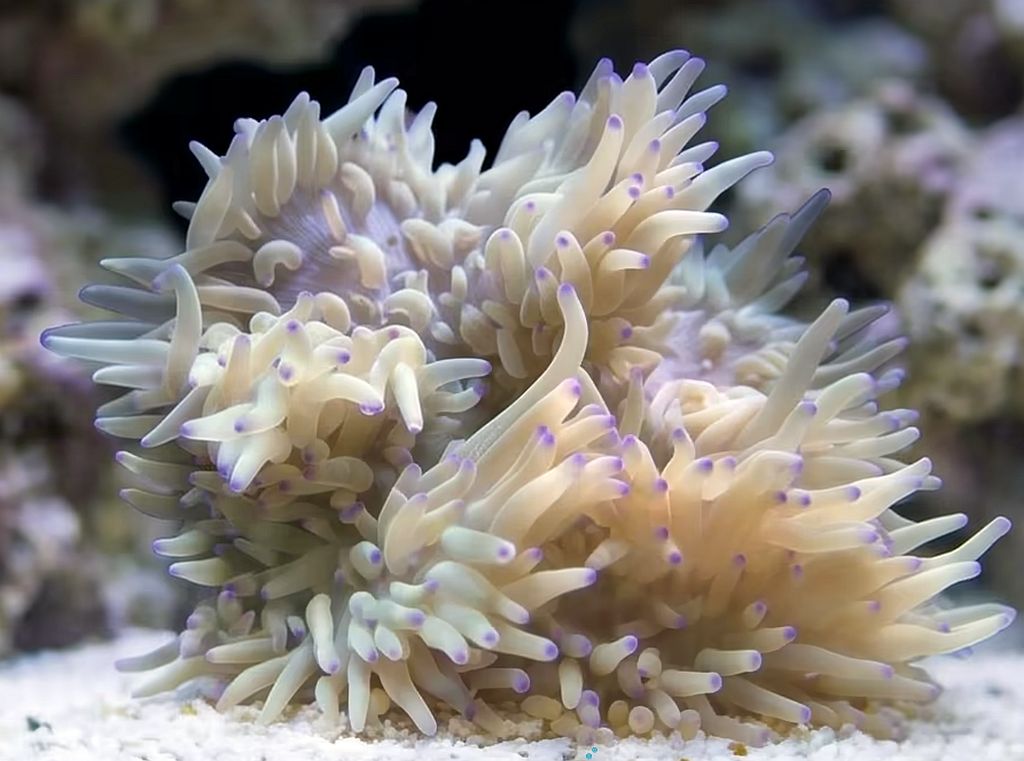
Healthy specimens have a tough, leathery grey-brown or yellowish column covered in prominent, sticky adhesive warts (verrucae) on the upper half, topped by a broad oral disc packed with hundreds of long, tapering tentacles. They have a dense, shaggy tentacle crown frequently tipped with delicate violet, magenta, or bright blue spots measuring up to 4 inches in length that gently twists and undulates in the current.
Healthy Heteractis crispa harbor dense populations of symbiotic photosynthetic algae known as zooxanthellae within their tissues that produce a rich tan, golden-brown, olive-green, or smoky purple coloration. Aquarists should strictly avoid purchasing stark, snow-white or neon-yellow specimens, as bright white Sebae anemones have been bleached of their symbiotic algae due to shipping stress or artificial dyeing and suffer high mortality rates without intensive recovery care.
The Sebae Anemone is semi-reef safe and best housed in a well-established FOWLR, reef, or lagoon aquarium of
Sebae Anemone (Heteractis crispa)
at least 50 gallon capacity with a 2 to 3 inche deep fine aragonite or sand substrate bordering low live rock ledges, a mature biological filter, moderate indirect water flow, and covered wavemaker intakes.
Unprotected powerheads and overflow drains should still be shielded with foam guards or mesh screens during the initial acclimation period while the anemone searches for a secure footing.
Sebae Anemones are peaceful toward agile reef fish and symbiotic clownfish which makes them one of the most versatile anemone hosts in the reefkeeping hobby. Once settled at the sand-rock interface in the tank, they tend to stay put. Their tentacles pack a potent sting that will injure or kill nearby stony and soft corals, so aquarists must leave generous buffer space around the anemone
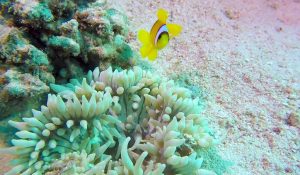
Sebae Anemones readily host Clarkii Clownfish, Sebae Clownfish, Pink Skunk Clownfish, Ocellaris Clownfish, Percula Clownfish, and Maroon Clownfish. Additional tankmates can include Chromis, Dartfish, and peaceful reef-safe Blennies.
Avoid keeping Sebae Anemones with large Angelfish, Butterflyfish, Filefish, Triggerfish, Pufferfish, or aggressive sand-sifting Wrasses. Angelfish and butterflyfish frequently nip at their tentacles and restless diggers can undermine their footing along the sand line.
The Sebae Anemone is an advanced-care species that can be challenging to acclimate and should only be added to a mature, ultra-stable marine system that has been running for at least 6 to 9 months.
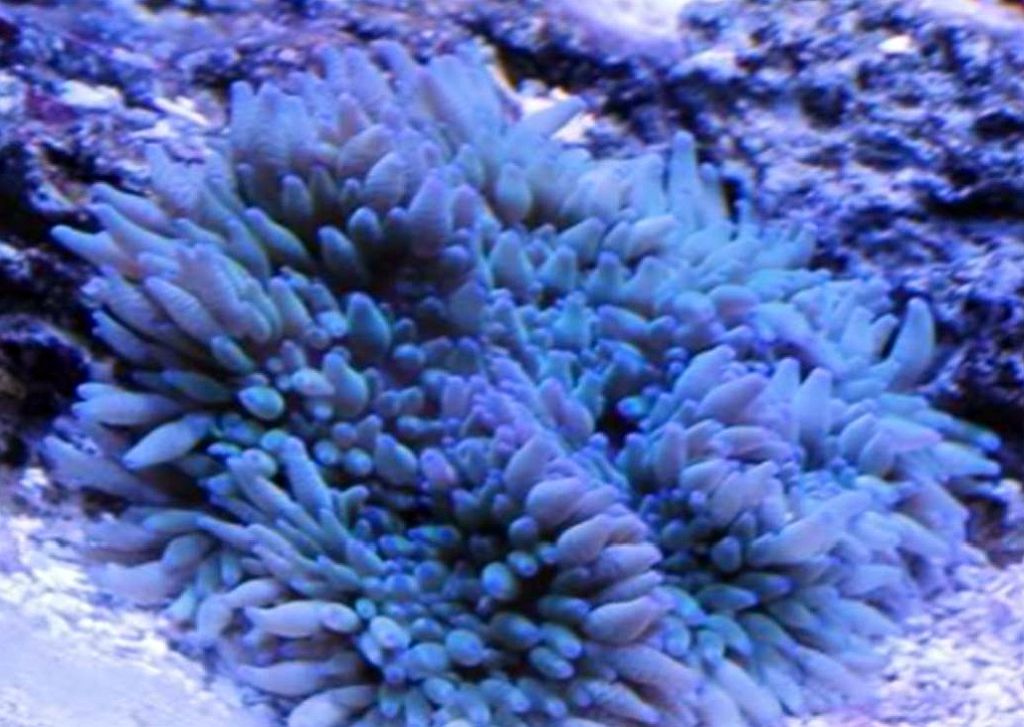
Sebae Anemone (Heteractis crispa)
Like most giant host anemones, they are sensitive to shipping stress, bleaching, and sudden parameter swings in salinity, alkalinity, and temperature, while copper-based medications are immediately fatal to them. To thrive, they require stable tropical temperatures between 75–81°F (24–27°C), a specific gravity of 1.025–1.026, a pH of 8.1–8.4, moderate to high lighting (180–250 PAR), and turbulent, indirect currents that keep their long tentacles swaying gently. Selecting an unbleached, healthy tan or brown specimen with an intact, sticky foot is the single most critical factor for long-term success in captivity.
Sebae Anemones are dioecious, broadcast-spawning cnidarians that lack external sexual dimorphism, making it impossible to visually distinguish males from females in a home aquarium.
In the wild, separate male and female individuals release gametes synchronously into the water column, where fertilized larvae drift as plankton before settling onto rubble slopes.
Unlike Bubble Tip Anemones that divide frequently in an aquarium environment, Heteractis crispa rarely undergoes longitudinal fission or reproduces sexually in captivity, so aquarists should plan on housing a single large specimen with ample space for them to grow.
The Sebae Anemone is primarily photosynthetic and derives the vast majority of its daily energy from its internal zooxanthellae under high-output reef lighting. In their natural environment, they supplement this energy by trapping passing zooplankton, small crustaceans, and tiny fish with their sticky tentacles while absorbing dissolved organic nutrients excreted by their host clownfish.
In an established aquarium environment, Sebae Anemones derive the vast majority of their nutrition directly from high-output reef lighting and waste produced by resident fish. Experienced tropical fish keeping enthusiasts can supplement their diet by target-feeding small portions of finely chopped mysis shrimp, krill, clam, mussel, or squid once every one to two weeks, keeping portions small so the anemone can digest them completely without regurgitating undigested food.
The Sebae Anemone (Heteractis crispa) is a widely available marine invertebrate regularly stocked by online reef retailers and local fish stores for its flowing purple-tipped tentacles, impressive centerpiece size, and broad host compatibility.
Current retail prices typically range from $49.99 to $89.99 for small to medium specimens, while large, healthy, naturally pigmented showpiece individuals generally cost between $99.99 and $149.99 depending on size and vendor.
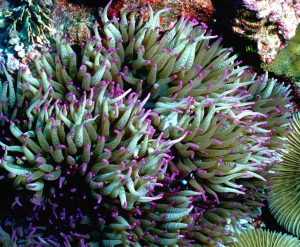
Minimum Tank Size: 50 gallons (mature tank running 6–9+ months with sand/rock interface)
Aquarium Type: Mature Reef or Dedicated Anemone System
Tank Care Level: Difficult
Temperament: Semi-Aggressive (Stings neighboring corals; peaceful with host clownfish)
Aquarium Hardiness: Delicate (Especially if bleached at purchase)
Water Conditions: 75–81°F, dKH 8–12, pH 8.1–8.4, sg 1.025–1.026
Max Size: 18″–20″
Color Form: Tan, Golden-Brown, Olive, or Grey Tentacles with Purple or Blue Tips
Diet: Photosynthetic (Zooxanthellae) / Carnivore
Compatibility: Semi-Reef Safe (With Caution)
Origin: Indo-Pacific (Red Sea to Polynesia and Australia)
Family: Stichodactylidae
Lifespan: 20–60+ years
Aquarist Experience Level: Advanced
Ready to share the next anemone species draft, or would you like any further adjustments to this article?