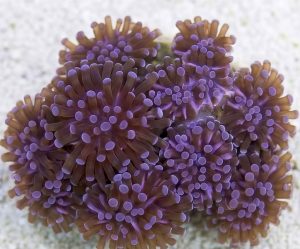
Cristata Coral (Euphyllia cristata)
The Cristata Coral (Euphyllia cristata), known to tropical fish keeping enthusiasts as the Grape Coral, White-Ball Euphyllia, and Knobby Torch Coral, is found throughout the Indo-Pacific with a range that extends from the coast of East Africa to the Western Pacific, including the waters of Indonesia, Australia, the Solomon Islands, and the Great Barrier Reef.
Cristata Coral is native to the warm waters of the Indo-Pacific region, where it is common in relatively shallow coastal reefs, lagoons, and slightly turbid inshore waters. Although the Cristata Coral is generally found along the protected coral reef slopes of its range in clear shallow-to-deeper waters with gentle to moderate currents, it is quite adaptable and is also found in shadier spots closer to shore growing on rocks and coral rubble where gentler water movement shields its delicate tissue from tearing. In general, Euphyllia cristata can typically be found at depths ranging anywhere from 3 to 115 feet.
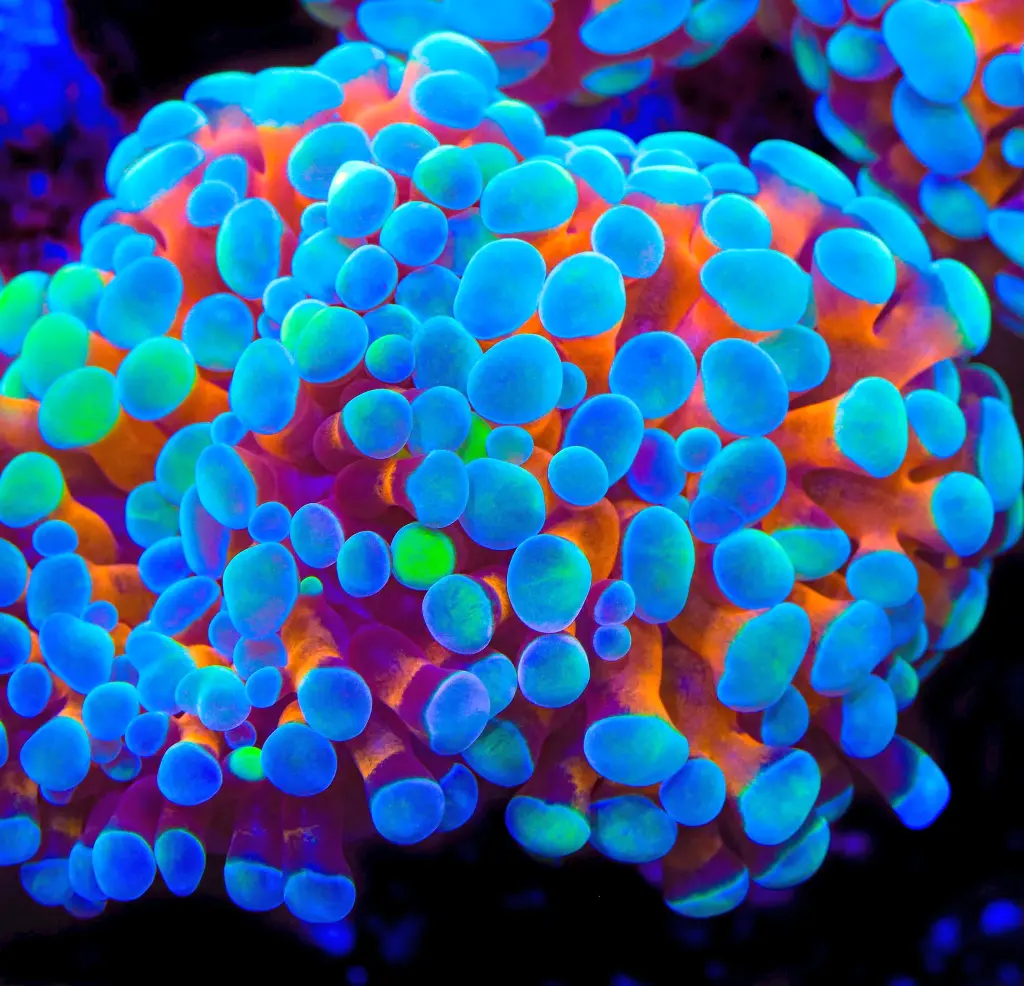
Cristata Coral (Euphyllia cristata)
The Cristata Coral, like other stony corals in the family Euphylliidae, forms a hard, calcified skeleton topped with multi-tipped, flesh-toned tentacles that closely resemble miniature torches with prominent, round, contrasting tips—hence its common name.
Unlike some related reef corals that form solid, wall-like structures, Euphyllia cristata grows exclusively in compact, tightly packed branching (phaceloid) colonies with prominent, blade-like skeletal ridges (septa) that often peek through the base of its tentacles.
While historically grouped in one large genus, modern genetic research has split the family into two distinct genera:
Euphyllia cristata (Chevalier, 1971) – Cristata / Grape Coral
Euphyllia glabrescens (Chamisso & Eysenhardt, 1821) – Torch Coral
Fimbriaphyllia divisa (Veron & Pichon, 1980) – Branching / Wall Frogspawn (formerly Euphyllia)
Fimbriaphyllia ancora (Veron & Pichon, 1980) – Wall Hammer Coral (formerly Euphyllia)
Fimbriaphyllia paraancora (Veron, 1990) – Branching Hammer Coral (formerly Euphyllia)
Fimbriaphyllia paradivisa (Veron, 1990) – Branching Frogspawn Coral (formerly Euphyllia)
Fimbriaphyllia yaeyamensis (Shirai, 1980) – Octospawn Coral (formerly Euphyllia)
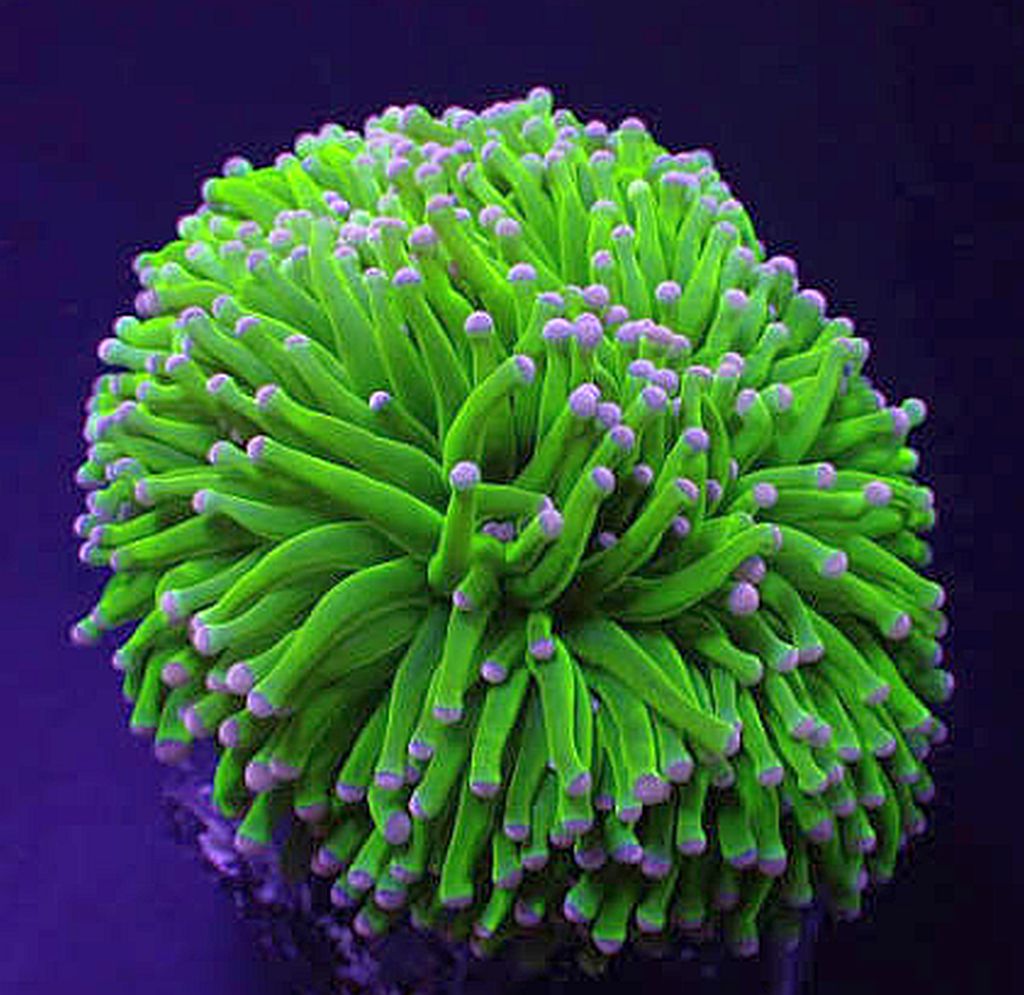
Cristata Coral (Euphyllia cristata)
Euphyllia cristata is generally colored brown, gray, or tan with white, green, pink, or purple tips; however, it is collected in a variety of striking color morphs ranging from Neon Green and Bicolor to Gold, Orange, and Splattered varieties. Its coloration and fluorescence intensity depend heavily on how much light it receives and the presence of blue/actinic lighting—the more balanced the spectrum, the richer the fluorescent coloration of the coral.
Because the Cristata Coral is moderately adaptable and has the ability to thrive in stable reef environments, it is a popular sight in home aquariums.
Although the Cristata Coral can be housed in mature nano reef tanks by experienced aquarists, it is best kept in larger reef tanks of at least 30-gallon capacity with a live sand or fine aragonite substrate and plenty of live rock or aquascape architecture to mount it on. It does best when placed in the bottom to middle of the tank with low to moderate lighting, gentle to moderate indirect water flow, and adequate space to prevent it from stinging neighboring corals.
Euphyllia cristata is aggressive toward other corals and will extend stinging sweeper tentacles at night to ward off nearby competitors. Even though it features much shorter tentacles than a standard Torch Coral, it is still a true Euphyllia and should be given several inches of buffer space—especially away from Hammers and Frogspawns (Fimbriaphyllia), which it can sting and damage.
Compatible tankmates for Cristata Coral include Clownfish, Firefish, Cardinalfish, Gobies, Blennies, Cleaner Shrimp, and other peaceful, reef-safe species.
The Cristata Coral reproduces asexually through a process of intratentacular budding, or longitudinal fission. In branching colonies, a single head will slowly constrict and divide across its center to form two distinct new heads, expanding the skeleton upward and outward. Over time, large branching colonies can be manually fragmented (fragged) by carefully cutting the lower calcium carbonate branches well below the living tissue line to create independent specimens.
In their natural environment, Cristata Corals obtain most of their nutrients from zooxanthellae, the symbiotic photosynthetic algae living within their tissues. Although they rely mostly on photosynthesis and dissolved organics for growth, they are also active predators able to capture and consume larger food particles with their fleshy tentacles.
In an aquarium environment with indirect water flow, Cristata Corals benefit from weekly target feedings of mysis shrimp, enriched brine shrimp, or specialized LPS pellet foods mixed with tank water, which they capture using their sticky nematocysts.
The Cristata Coral (Euphyllia cristata) is readily available to reef-keeping enthusiasts as both wild-caught and captive-bred (aquacultured) specimens from a variety of online retailers at moderate to premium prices depending on the rarity of the color morph.
Cristata Corals (Euphyllia cristata) are among the most popular and vibrant Large Polyp Stony (LPS) corals in the reef hobby, famous for their compact, short tentacles tipped with brightly colored, swollen knobs.
Aquaculture of this coral has been highly successful, leading to increased availability, hardiness, and sustainability in the hobby.
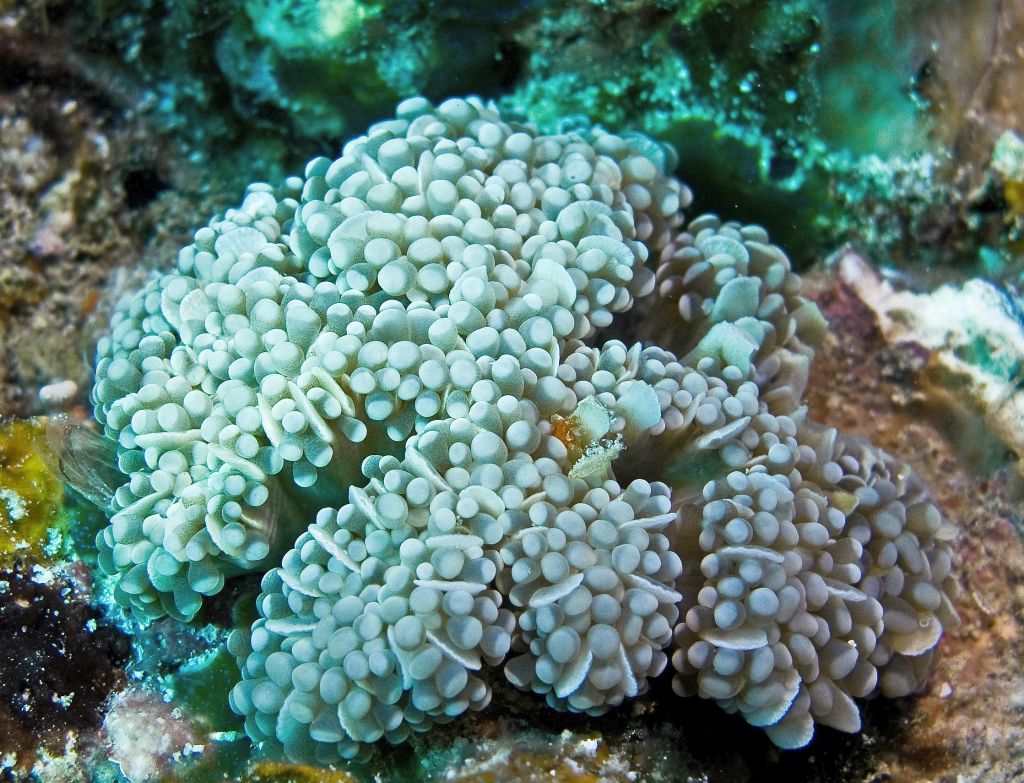
Cristata Coral (Euphyllia cristata)
Minimum Tank Size: 30 gallons
Tank Placement: Bottom to Middle
Water Flow: Gentle to Moderate (Indirect)
Care Level: Moderate
Aquarium Hardiness: Moderately Hardy
Temperament: Aggressive
Toxicity: Yes, strong stinging cells (Sweeper Tentacles)
Invasive: No
Water Conditions: 74–80°F, dKH 8–11, pH 8.1–8.4, SG 1.024–1.026, Nitrate 1–10 ppm, Calcium 400–450 ppm
Lighting: Low to Moderate (100–150 PAR)
Feeding: Mysis shrimp, enriched brine shrimp, LPS pellets
Growth Rate: Slow to Moderate
Color Form: Green, Tan, White, Pink, Purple, Gold, Orange, Bicolor, etc.
Diet: Photosynthetic, Carnivore (Target Feeder)
Origin: Indo-West Pacific, Australia
Family: Euphylliidae
Lifespan: Decades (Under proper care)
Aquarist Experience Level: Intermediate