Author Archives | Fishkeeper

Rasbora borapetensis

Blackline Rasbora (Rasbora borapetensis)

The Blackline Rasbora (Rasbora borapetensis) is found in Asia’s Mekong, Chao Phraya, and Mae Klong river basins as well as the northern Malay Peninsula.

It is a midwater to surface schooling Cyprinid that prefers slow moving water and is collected close to the surface in ponds, ditches, canals and the margins of reservoirs, usually in water less than 6 feet deep.

Blackline Rasboras are also known by tropical fish keeping enthusiasts as the red tailed rasbora, brilliant rasbora, or bora bora rasbora.

The blackline rasbora is a beautiful streamlined fish that grows to almost 2 1/2″ in length.  Their body is silver, with a dark brown or black lateral stripe underneath a gold lateral stripe, that reaches from the gill opening to the front of the base of the caudal fin.  The caudal fin base is bright red and unlike Rasbora einthovenii, it is absent any black pigmentation.

Male and female blackline rasboras are identical except that the females are slightly larger and broader when viewed from above.

Blackline Rasboras are a popular aquarium fish that prefer a densely planted tank with minimal water movement and plenty of space to swim. They are true schooling fish that should be kept in tight schools of at least 8 to 10 fish.   A dark substrate and the addition of some floating plants, driftwood roots or branches to diffuse the light entering the tank is also appreciated by the fish and provides a more natural environment.

Blackline Rasboras are peaceful, active and hardy when housed with other peaceful species like plecos, loaches, large and small tetras, livebearers, or rainbowfish.   They do best in water with a pH range of 6.5 to 7.0, water hardness (dH) of 5 to 12, and temperatures between 71 and 79 °F.

Like many  cyprinids, the Blackline Rasbora is a continuousm, egg scattering,  spawner that exhibits no parental care.  Females will spawn several times scattering 5 to 15 eggs over a period of time until a typical batch of 30 to 50 eggs are deposited.  Eggs typically hatch between 18 and 48 hours after spawning and the young are free swimming 24 to 48 hours later.

Paramecium should be fed initially until the fry are able to accept microworms.

Blackline Rasboras do well on a diet of quality flake food, frozen or freeze dried bloodworms, daphnia, and tubifex.

Blackline rasboras are usually available for purchase when they are 1 1/2″ long.  Wild caught fish are increasingly rare in the hobby and are being produced commercially in several countries.

Rasbora borapetensis

Rasbora borapetensis


Minimum Tank Size: 20 gallons
Care Level: Moderate
Temperament: Peaceful
Hardiness: Very Hardy
Water Conditions: 71-79° F, KH 3-7, pH 6.5-7.0
Color Form: Silver, Black, Gold
Diet: Omnivore
Origin: Asia
Family: Cyprinidae
Life Span: 5 to 7 Years
Aquarist Experience Level: Beginner

Posted in Featured Articles, Freshwater Fish, Rasboras2 Comments

Harlequin Rasboras

Harlequin Rasbora (Rasbora heteromorpha)

The Harlequin Rasbora (Rasbora heteromorpha) is an extremely desirable aquarium fish and no doubt the best known of all the rasboras.

Harlequin Rasboras belong to the Cyprinidae family of carps and was originally given the scientific name Rasbora heteromorpha but is now known to tropical fish keeping enthusiasts as Trigonostigma heteromorpha, or the harlequin fish.  They are sometimes confused with Trigonostigma espei and Trigonostigma hengeli which are more slender and have a broader “lamb chop” like black stripe that tapers towards their caudal peduncle.

The Harlequin Rasbora is native to southern Thailand, Malaysia, Singapore and Sumatra where they are found in the peat swamp forests where the slow moving blackwaters have a low mineral content and  high concentrations of dissolved humic acids.

Harlequin Rasboras are easily identified by their lustrous coppery orange bodies and the characteristic black triangular “pork chop” shaped patch that runs from mid body and comes to a point at the base of the caudal fin.

Female Harlequin Rasboras are larger than the males. The “pork chop” like patch is females is straighter than the more rounded patch and extended tip of the black line that distinguishes the males.

The Harlequin rasbora is an active, peaceful, shoaling fish and should be kept in groups of at least six individuals.

Harlequin rasboras are perfect for a community aquarium setup with other peaceful, similarly sized fish.  They get along well with many of the small characins from South America like small barbs, danios, other small rasboras, Corydoras catfishes, Otocinclus catfishes, etc.

Harlequin rasboras do best in an established, densely planted aquarium with subdued lighting and plenty of open swimming areas with at least 8 to 10 individuals.  Plants such as various species of Cryptocoryne or some Asiatic species of Aponogeton should be used but other bushy plants like Cabomba can be used provided there are places for the rasboras to hide from the intense lighting needed to grow the plant.  A piece of driftwood  or some driftwood roots is perfect for this and will tend to buffer the tank water.

Tank filtration should provide a modest current with just enough turnover to maintain aquarium cleanliness.

Unlike other rasboras that are egg-scattering spawners, the Harlequin rasbora deposits adhesive eggs on the underside broad leaved plants such as Cryptocoryne and Aponogeton.

A shallow, warm (82.4 °F), acidic, soft water breeding tank with broad leaved plants should be set up for breeding. To induce spawning, provide a young 9 to 12 months old female Harlequin Rasbora with a two year old male, and feed them live food such as daphnia or mosquito larvae.

When ready to spawn, the female will swim in an inverted position under a broad leaf and rub her belly on it to prepare an area for spawning.  The male will join the female and as the eggs are deposited on the underside of the leaf, the male will curl his tail around the body of the female and fertilize the eggs.  Normally 6 to 12 eggs at a time are deposited in this manner until spawning is completed, usually over a period of a couple of hours.  The total amount of eggs deposited during a spawn will vary from 80 to as many as 300.

After spawning, remove the parents and keep the breeding tank dark until the eggs hatch (18 – 24 hours).  The three to four millimeters long fry are translucent and will remain attached to the leaf that the eggs were laid on for a another 12 to 24 hours, until the yolk sacs are absorbed.

When the fry are free swimming, feed them live infusoria for the next 7 to 14 days.  They can they be fed newly hatched brine shrimp and finely crushed flake food until fully grown, usually in 8 to 10 weeks.

The Harlequin Rasbora is an omnivore and does well on a diet of prepared flake food, frozen or freeze-dried bloodworms and tubifex.

The approximate size when available for purchase us usually 1/2″ to 1″ in length.

Harlequin Rasbora

Harlequin Rasbora


Minimum Tank Size: 10 gallons
Care Level: Easy
Temperament: Peaceful
Aquarium Hardiness:  Very Hardy
Water Conditions: 72-77° F, KH 6-10, pH 6.0-6.5
Max. Size: 2″
Color Form: Orange/Copper
Diet: Omnivore
Compatibility: Good community fish
Origin: Asia
Family: Cyprinidae
Lifespan:  5 – 7 years
Aquarist Experience Level: Beginner

Posted in Featured Articles, Freshwater Fish, Rasboras1 Comment

Scissortail Rasbora (Rasbora trilineata)

Scissortail Rasbora (Rasbora trilineata)

 Scissortail Rasbora (Rasbora trilineata)


Scissortail Rasbora (Rasbora trilineata)

The Scissortail Rasbora (Rasbora trilineata) is native to the Chao Phraya and lower Mekong river basins in Laos, Thailand and Cambodia and throughout the Malaysia Peninsula.  It is also widely distributed throughout the Greater Sunda Islands of Sumatra and western parts of Borneo including the Malaysian state of Sarawak and Indonesian province of West Kalimantan.

Scissortail Rasboras are a popular species also known as the “Three Lined Rasbora” by tropical fish keeping enthusiasts.

The Scissortail Rasbora has a silver iridescence that shimmers and sparkles as light reflects off the fish. The name “scissortail” is derived from the characteristic twitching motion of the deeply forked caudal fin (that resemble an open pair of scissors) when the fish is resting.

The distinct bar pattern on their caudal fin accentuates the scissor like shape.

The Scissortail (Rasbora trilineata) differs from R. caudimaculata by the lack of red coloration in the caudal fin, and from R. spilocerca by its much larger size.  Some of the wild populations have yellow pigmentation of varying degrees in their caudal fins.

Scissortail Rasboras are extremely adaptable.  They have been found in swift flowing boulder strewn streams with sand or gravel bottoms, as well as in the more sluggish black waters of old peat swamp forests loaded with branches, twigs and decomposing leaves.

They can happily live in the clear waters of streams with a pH of 6.5 to 7.5 as well as the canopy covered tannin stained waters with a pH of 4.0 to 6.0.  During the rainy seasons, they move into flooded areas, lakes and reservoirs.

Scissortail Rasboras are peaceful schooling fish that make them ideal for larger well planted community tanks.  They can be housed with many other popular fish such as rainbowfish, livebearers, tetras, other cyprinids, anabantoids, catfish and loaches.  They require no special water chemistry but do need to be kept in small schools of at least 6 to 8 specimens.

Scissortail Rasboras should be kept in a large densely planted aquarium with a lot of swimming space.  Ideally, it should resemble a flowing river with a substrate of variably sized gravel and small rocks along with a few river rock boulders.  A power head or two should be added to create the needed water movement.

Driftwood branches and some Java Moss, Java Fern, and/or Cryptocoryhnes can be added for cover and aesthetic value.

Scissortail Rasboras are surface dwellers and accomplished jumpers.  They need a tight fitting tank cover to prevent them from escaping.  They also are sensitive to the accumulation of organic waste and need a good filtration system to thrive.

Scissortails are easy to breed and like most cyprinids, they are egg scatterers.  When in condition they will continuously spawn in a densely planted, gravel bottom aquarium and require not special attention.  The parents will eat their eggs so if you plan to keep more of the hatch, remove the parents a couple of days after spawning, switch off the power filter and replace it with a matured sponge type unit.  This stops the fry from being sucked up into the filtration unit.

Eggs will normally hatch with 18 to 48 hours and the fry will be free swimming 24 to 48 hours later.

The fry should be fed baby brine shrimp oruntil they are able to eat flake foods, freeze dried bloodworms and tubifex.

Scissortail Rasboras are usually 2″ to 2-1/2″ long when available for purchase.


 Scissortail Rasbora (Rasbora trilineata)

Scissortail Rasbora (Rasbora trilineata)


Minimum Tank Size: 30 gallons
Care Level: Moderate
Temperament: Peaceful
Aquarium Hardiness:  Very Hardy
Water Conditions: 73-77° F, KH 2-5, pH 6.0-6.5
Max. Size: 6″
Color Form: Black, Gold, Silver
Diet: Omnivore
Compatibility: View Chart
Origin: Vietnam
Family: Cyprinidae
Lifespan:  5 – 7 years
Aquarist Experience Level: Beginner

Posted in Featured Articles, Freshwater Fish, Rasboras0 Comments

Turquoise Danio School (Brachydanio kerri)

Turquoise Danio (Brachydanio kerri) a.k.a. Blue Danio

Turquoise Danio (Brachydanio kerri)

Turquoise Danio (Brachydanio kerri)

The Turquoise Danio or Kerr’s Danio (Brachydanio kerri), is also known by tropical fish keeping enthusiasts as the Blue, or Pearl Danio.

The Turquoise Danio is native to southwest Thailand where it inhabits clear water, rocky, gravel bottomed forest streams, pools and small rivers.

Turquoise Danios have been reported from Koh Yao Noi island, Phang Nga province, south-western Thailand to other islands in the area including Phuket, Ko Lanta and Langkawi.  It is also found in the Krabi and Ranong provinces of mainland southern Thailand (the upper Malay Peninsula).

The Turquoise Danio is an active, slender bodied shoaling fish that is ideal for keeping in peaceful community aquariuims.

Turquoise Danios will readily mingle with other Danio species and similarly sized peaceful fish of other kinds. They are extremely active when housed in small schools of 6 or more fish.

Turquoise or Blue Danios prefer a dark sandy or gravel bottom aquarium with plenty of available swimming space.

A well planted aquarium  set up to resemble a flowing river or stream, with a substrate of variably sized rocks and gravel and some larger water worn boulders is perfect for these fish.  Driftwood roots, some branches and some aquatic plants like Microsorum, Bolbitis or Anubias that attaches to the decor should also be added.

A small powerhead or an additional filter inlet to the tank should be provided to add some flow to the tank but don’t overdo it.  Danios are usually found in the calmer stretches of fast flowing rivers and streams.

Turquoise Danios are accomplished jumpers and can get through some very small spaces, so make sure your tank has a tightly fitting cover.

Like most Danios, they are easy to breed and scatter their eggs in shallow water over a substrate of small rocks or coarse gravel.  The eggs usually hatch out within 36 hours after spawning. The fry can be fed fine pieces of live foods or finely crushed flake food.

Because Turquoise Danios are omnivores, they should be fed a diet of flake foods along with plenty of vegetable matter.  Freeze dried tubifex or bloodworms will also be readily accepted.

The approximate size of Turquoise Danios that are available for purchase is usually from 1″ to 1-3/4″ in length.

Turquoise Danio (Brachydanio kerri)

Turquoise Danio (Brachydanio kerri)


Minimum Tank Size: 10 gallons
Care Level: Easy
Temperament: Peaceful
Aquarium Hardiness: Very Hardy
Water Conditions: 73-77° F, KH 8-12, pH 6.5-7.0
Max. Size: 2″
Color Form: Blue
Diet: Omnivore
Origin: Asia, Malay Peninsula, Thailand
Family: Cyprinidae
Lifespan:  5 – 7 years
Aquarist Experience Level: Beginner

Posted in Danios and Minnows, Featured Articles, Freshwater Fish0 Comments

Zebra Danio School

The Zebra Danio (Danio rerio)

The Zebra Danio (Danio rerio) or Zebrafish s a tropical freshwater fish belonging to the minnow family (Cyprinidae) of the order Cypriniformesi.  They are popular with tropical fish keeping enthusiasts as well as scientific researchers who frequently use them in genetic experiments.

Zebra Danios originated from the Ganges region of eastern India.  They are native to the Himalayan region and inhabit the streams, canals, ponds, ditches, rice fields and slow to faster moving streams of eastern India, Bangladesh, Pakistan, Burma and Nepal.

Zebra Danios have also been introduced into parts of the United States either by escape from fish farms or deliberately.

The Zebra Danio is easily recognized by it’s striped zebra pattern.  Their body color ranges from silver to gold with five uniform horizontal blue to purple stripes that stretch from the gills to the end of their tails.

Being a shoal fish, Zebra Danios are extremely active swimmers especially when housed with others of their kind in small schools.

In the aquarium, they prefer a densely planted tank with a lot of area for them to swim around in.  They do best when housed with other non aggressive members of the Cyprinidae family.

Female Zebra Danios generally have larger bellies than the males, but both are distinctly torpedo shaped.  Male Zebra Danios will normally spawn with one female and remain loyal to that particular fish.

When a breeding pair is placed in an aquarium with a spawning mop or fine leaved plants for them to spawn over, they will usually drop 300-400 eggs which will hatch within a two day period.

Remove the breeding pair immediately after the eggs are laid to minimize losses.  The adults seem to relish eating their own eggs.

After they hatch, the fry can be fed finely crushed flake food and small pieces of live food, such as brine shrimp or daphnia.

Adult Zebra Danios should be fed a varied diet of quality flake and frozen foods.

Zebrafish are usually 1″ to 1-1/2″ long when available for purchase.

Zebra Danio

Zebra Danio


Minimum Tank Size: 10 gallons
Care Level: Easy
Temperament: Peaceful
Aquarium Hardiness: Hardy
Water Conditions: 64-75° F, KH 8-12, pH 6.5-7.0
Max. Size: 3″
Color Form: Blue, Purple, White, Yellow
Diet: Omnivore
Compatibility: Suitable for peaceful community tanks
Origin: India, Farm raised in the USA
Family: Cyprinidae
Lifespan: up to 5 years
Aquarist Experience Level: Beginner

Posted in Danios and Minnows, Featured Articles, Freshwater Fish1 Comment

Celestial Pearl Danio

Tropical Fish Keeping – Danios and Minnows

Danios and Minnows are small, peaceful, active schooling fish that are well suited for housing in community aquariums.

Most of the Danios and minnows kept in tropical fish aquariums are native to the fast moving fresh water rivers and streams of Southeast Asia, and many species are brightly colored.

Danios and minnows are surface feeders and good jumpers.  In an aquarium environment, a tight fitting lid is a must.

Almost all Danios and minnows are hardy fish that are tolerant of a wide range of water conditions.  Because of this, they are often used to cycle newly set up freshwater aquariums.   Because Danios and Minnows are so active, they are often used in aquariums to bring more reclusive species out into the open.

Danios and Minnows are readily available and relatively low cost. For this reason, they are  often recommended as a starter fish for beginning tropical fish keeping enthusiasts.

When keeping Danios and Minnows in a tropical fish aquarium, keep at least 6 to 8 individuals together in a small school.  Most shoaling fish do not do well when kept individually in any size tank, but when housed in small schools, they seem to enjoy each others company and will thrive especially when housed in a well planted aquarium along with a piece of driftwood.

These fish need plenty of room to swim so make sure the plants don’t crowd out their swimming area.

Except for the South American Tetras, nothing presents a more aesthetic scene than a school of long fin Danios or white clouds milling about in a community tank.

Almost all Danios and minnows are egg scatterers and easily bred. Danios in particular spawn with and remain loyal to one female.  Breeding pairs should be placed in a breeding aquarium with fine leaved plants or a “spawning mop” for them to lay their eggs over.

Most Danios will likely produce between 200 and 500 eggs that will hatch within a couple of days but the breeding pair should be removed from the tank as soon as eggs are scattered.  They are voracious egg eaters.

Fry should be fed finely crushed flake food, small pieces of brine shrimp or baby brine shrimp.

Most Danios and minnows are omnivores and are easy to feed. They readily accept a varied diet of high quality flake foods, freeze dried bloodworms, small pieces of brine shrimp, etc.

Danios and minnows are semi-tropical fish and prefer water with a pH between 6.0 and 8.0, hardness of no more than 19.0 dGH, a carbon hardness of 8 to 12 KH, and a temperature range of 68–80°F. They usually prefer the lower end of the temperature range.

There are seven types of common Danios that are readily available to tropical fish keeping enthusiasts as well as a number of tropical minnows, some yet unidentified.

Zebra Danio

Zebra Danio

Zebra Danio


Leopard Danio

Leopard Danio

Leopard Danio


Blue Danio

BlueDanio

BlueDanio


Gold Danio

Gold Danio

Gold Danio


Pearl Danio

Pearl Danio

Pearl Danio


Giant Danio

Giant Danio

Giant Danio


Glo Lite Danio or Glofish

Glofish

Glofish

Posted in Danios and Minnows, Featured Articles, Freshwater Fish0 Comments

VHO Lighting

Tropical Fish Keeping – Pros and Cons of VHO Aquarium Lighting

The pros and cons of VHO (Very High Output) aquarium lighting is similar to those of standard fluorescent lighting systems.

Very High Output bulbs are a type of fluorescent lighting that produces a much more intense light than standard fluorescent lighting systems.

They are similar in appearance to standard fluorescent bulbs in size but require a special ballast and end caps.   VHO bulbs cannot be used with standard fluorescent ballasts.

VHO Lighting

VHO Lighting

The Pros of VHO aquarium lighting are as follows:

  • Light Output
    VHO lamps provide a more intense light output.   In general a VHO lamp is approximately three times more intense that the same size standard fluorescent bulb.  This means you can use one third fewer bulbs to achieve the same desired intensity and save space in your hood or fixture.
  • Relatively Higher Energy Use
    Although VHO bulbs require a bit more energy than standard fluorescent bulbs to operate, they are still much more efficient since only one third as many bulbs are needed to provide the same intensity of lighting over your tank.  The relatively higher energy cost is offset by the amount of bulbs that need to be purchased to achieve the desired result.
  • Higher Kelvin Temperature
    VHO bulbs produce light in the higher Kelvin range.   This makes them a better choice for reef tank applications where an more intense light is required for photosynthesis.  They are usually not a good choice for freshwater fish only tanks or for densely planted freshwater aquariums.
  • VHO Bulbs Offer A Longer Bulb Life.
    Provided electronic ballasts are used, most VHO bulbs will last over a year and a half without any significant reduction of spectral quality or light intensity.  This makes them more cost effective than standard fluorescent bulbs and some metal halides.

Cons Of VHO Aquarium Lighting:

  • VHO bulbs produce significantly more heat than standard fluorescent bulbs.

This can raise water temperatures in your system significantly if precautions are not taken.  When situated in a hood, make sure a ventilating fan is installed at both ends to bring cool air in and force hot air out of the fixture.  If no fan is installed, make sure the lights are at least 12 inches above the tank to provide adequate ventilation.  If water temperatures are still over limits, a water chiller may need to be added to the system.

The other Cons for VHO lighting are essentially the same as for standard fluorescent lighting, but both types are still preferred by the majority of tropical fish keeping enthusiasts.

Posted in Featured Articles, Lighting, Tropical Fish Keeping Equipment3 Comments

Tropical Fish Keeping – Pros and Cons Of Standard Fluorescent Lighting

There are some pros and cons for using standard fluorescent lighting systems over your aquarium that you need to know about before selecting the type of lighting for your tank.

The primary role of aquarium lightning is to allow tropical fish keeping enthusiasts the ability to easily watch their fish.  But more importantly, it also provides energy to  photosynthetic plants and animals housed in the system.

Normally, the aquarium lighting system you provide is the only source of light for photosynthetic plants, corals or anemones that are living in your tank.   The behavior, health and psychology of your fish is also influenced by the source of lightning you provide and in fact, the well being of the entire tank depends on lightning.

Common output fluorescent lightning systems or standard fluorescent lightning is the easiest to provide illumination for an aquarium.   This type of lightning is recognized as the best for marine, fish only tanks and most freshwater aquariums.

Standard fluorescent lighting is available in a variety of wattage s, sizes and spectrum ranges and because of this it is generally considered to be the most popular type system used by tropical fish keeping enthusiasts for freshwater, brackish water, and marine tank applications.

Some of the Pros for using standard fluorescent bulbs are as follows:

  • Low Initial Cost
    Depending on what type ballast is used, the initial cost of purchasing a standard fluorescent lighting systems is considered low to moderate. Even with the cost of the more expensive ballasts, fluorescent lighting systems are much less expensive than metal halide, VHO, HO or combination systems.
  • Light Spectrum Availability
    Fluorescent light bulbs are produced in a variety of spectrum ranges. Since fish, invertebrates, plants and corals all have different spectral requirements; fluorescent lights are the “go to” light source for most freshwater and marine aquariums. Except for some of the most difficult to keep clams and deep water corals, standard fluorescent bulbs can provide a light spectrum suitable for every type of freshwater or marine aquarium.
  • Heat Output
    The amount of heat generated by standard fluorescent lighting systems is extremely low compared to metal halide and incandescent lighting systems. Standard fluorescent bulbs produce very little heat. This eliminates the need for cooling fans or adding chillers to a marine system.
  • Energy Efficiency
    The operating costs associated with using standard fluorescent lighting is extremely low compared to metal halide, HO, VHO and incandescent lighting systems. Depending on what type ballast is used, the cost of operating a fluorescent light 10 to 12 hours a day is much less than that of operating an incandescent light bulb of the same wattage.

There are also some Cons to using standard fluorescent bulbs, some of which are noted below:

  • Lower Intensity
    Most standard fluorescent bulbs used in aquarium applications are 15 to 40 watts. This means that for most applications you will need to use more than one fluorescent bulb to keep the inhabitants of your aquarium healthy and happy. Multiple bulbs are usually required to achieve the necessary intensity that plants, fish, inverts and corals require.
  • Relatively Short Bulb Life
    Fluorescent light bulbs are made from gas filled tubes.   The inside of the tubes are coated with blends of phosphors that based on their chemical makeup, produce different spectrum’s of light.  When electricity passes through the tube, the gasses heat up and at the proper temperature, emit light.The main Con with fluorescent light bulbs is that they do not last long when in continuous use.

    Extended use degrades the coating on the inside of the bulb as well as the gas.  When this happens, light is still produced but the light spectrum and intensity diminishes.

    A standard fluorescent bulb will last about 6 to 8 months before they begin to lose intensity and their spectral properties. The bulb life can be increased by a few months by using more expensive electronic ballasts, but the additional cost may be prohibitive.

Despite the Cons to using standard fluorescent bulbs, most tropical fish keeping enthusiasts prefer them over all other types except for use in reef tanks, where even then, they are used in conjunction with metal halide bulbs.

Posted in Lighting, Tropical Fish Keeping Equipment0 Comments

Freshwater Tank Lighting

Tropical Fish Keeping – Aquarium Lighting Basics

IMG_0437-fixed

Aquarium lighting is necessary for maintaining fish health and illuminating all types of tropical fish keeping aquariums.

Some types of marine reef aquariums or densely planted freshwater aquariums need specialized lighting to support the photosynthetic life forms that are housed in the tank.

Densely planted freshwater aquariums may also require a more specialized light source for plants to thrive.

To really encourage plant growth, densely planted freshwater aquariums should be provided with either high intensity compact fluorescent bulbs, high output fluorescent bulbs, or metal halide lamps.

Using high intensity lighting does have its cons.  Most high intensity aquarium lighting systems produce much more heat than standard light sources and use more electricity.

  • Freshwater Tanks:

Almost all freshwater aquarium lighting is now provided by either the screw in incandescent bulbs, clip in fluorescent tubes, or LED (Light Emitting Diode) lamps.

Until recently, incandescent lighting was used for many years in the tropical fish keeping hobby but has become less popular with the advent of lower heat producing and less energy consuming types of lighting.


Freshwater Tank Lighting

Freshwater Tank Lighting

Many hobbyists who still have the outdated incandescent light screw in bases in their tank hoods usually replace the incandescent bulbs with a compatible screw in base CFL (Compact Fluorescent Light) bulb.

The newer T2, T5, SHO, and LED bulbs produce even less heat and use considerably less electricity.

LED aquarium lighting systems are the most efficient for use in densely planted freshwater aquariums however, the T2, T5 and SHO are close second choices.

  • Brackish Water Tanks:

Brackish water aquarium lighting is similar to that used in freshwater and densely planted tanks.  Depending on the species that is being housed, brackish water aquariums may require UVB or infrared bulbs in addition to or separate from the above mentioned light sources.

Some brackish water nocturnal species and basking animals like turtles require infrared lighting to remain healthy.

  • Marine Fish Only Tanks:

In most marine fish only aquariums, less intense lighting is used to illuminate the subjects in the tank, usually for aesthetics.

In addition for optimal viewing of the fish, the lower intensity lighting limits the growth of unwanted algae in the tank.  In tropical reef aquariums, the opposite is true.

  • Reef Tanks:

Reef tanks require the highest intensity lighting for the well being of photosynthetic corals, inverts, clams, etc.   Aquarium lighting for reef tanks includes LED, fluorescent, metal halide lamps, plasma lamps and/or combinations of these types.

The most simple lighting setups use only a single lamp or lamps of one type.  The more advanced reef lighting arrays include several types of lamps in several color and light spectrum.

Sunlight All In One

Sunlight All In One

Unlike fish only tanks, the color of the lamp used is extremely important in maintaining the photosynthetic life in the tank.  Corals in particular require a deep blue or actinic light spectrum in order to survive and continue growing.

The thinner T5 High Output fluorescent bulbs provide a much brighter and more powerful light source than the older, more commonly used VHO (Very High Output) fluorescent and CFL (Compact Fluorescent Lighting) lighting.

Metal halide bulbs are the most commonly used in reef aquariums today but they do not have the overall balanced effect of other types of lighting.  Many halide lights replicate the intense shimmering bright tropical sun light that is found over natural coral reefs.

Metal halide lighting is available in a variety of light spectrum from 5,000k all the way up to 20,000k.  This allows the tropical fish keeping enthusiast the ability to duplicate the requirements of a variety of corals and photosynthetic clams.

Because metal halide lighting does not have the overall spectrum of other types of lighting, many tropical fish keeping enthusiasts frequently use metal halide bulbs in conjunction with either compact fluorescent or T5 fluorescent bulbs.

The cons to using metal halide lighting is the fact that they use a lot of electricity and produce a great deal of heat.

In order to keep the reef tank water cool, most reef keepers will mount their metal halide lights at least a foot or so above the water surface or add chillers to their systems.

Modern reef light fixtures are now available with timers in “all in one” configurations for both daylight and nighttime viewing.  These systems mimic daylight and lunar lighting for truly realistic displays.  In order to keep these systems cool and maintain optimum efficiency, single or multiple fans are often built into the fixtures.

Usually LED lamps of up to 2 watts are used to replicate the glow of moonlight over the tank and recently, LED lamps in higher wattage s are being used to simulate daylight conditions.

LED Aquarium Lighting

LED Aquarium Lighting

LED lighting is more expensive initially, but use much less energy than other light sources.  In addition, they are dimmable.

Because LED lights are limited to a narrow band of wave lengths, different colored LED lights must be used in an array to simulate the spectral range needed for the growth of corals.

Posted in Lighting, Tropical Fish Keeping Equipment0 Comments

built-in-aquarium-tropical-fish-tank

Choosing The Right Aquarium Stand


55 gal tank stand

55 gal tank stand

Choosing the right Aquarium stand is important, and although an aquarium stand is simply a place to locate your tropical fish aquarium,  it is also an integral part of the aquarium system.  In addition to the basic function of the aquarium stand (safely holding the aquarium in place) it can be used to conceal equipment and hold aquarium supplies such as fish food, nets, filter media cartridges, gravel vac, etc. below the
tank.

Aquarium stands come in as many shapes and sizes as there are fish tanks and are constructed from a variety of materials.

Existing pieces of furniture such as old dressers, desks, tables, etc. are often used as aquarium stands but they must be able to sustain the weight of the filled aquarium.

Apart from their aesthetic value, weight is the most important factor you need to consider when selecting or fabricating an aquarium stand.

Aside from the empty weight of the actual aquarium, you will also need to consider the weight of the substrate, rocks, driftwood, ornaments and most importantly, the weight of the water in your tank.

Freshwater weighs 3.7854 Kilos or 8.3454 pounds per gallon.

The weight of the water required to fill a 55 gallon aquarium is approximately 459 pounds.  This does not include the weight of the tank and misc. accessories.

As you can see, a sturdy aquarium stand is required to sustain the weight of a filled 55 gallon aquarium.  A flimsy table would probably not be a great candidate.

Fortunately there are a substantial number of companies who manufacture aquarium stands for tropical fish keeping enthusiasts for almost any size of fresh or saltwater aquarium on the market.

Three types of aquarium stands are commonly available in the marketplace today:

  • Iron or steel
  • Wood
  • Coated particleboard

Iron or steel aquarium stands are usually the least expensive, however they do not offer any cabinetry for concealing additional equipment.

Decorative Iron Aquarium Stand

Decorative Iron Aquarium Stand

Custom Metal Stand

Custom Metal Stand

Aside from the lack of concealed storage space, Iron aquarium stands are often not constructed very sturdily.

Even though Iron stands are powder coated to resist moisture and painted with durable moisture resistant paint to prevent rust; they will eventually rust, especially when exposed to saltwater.


Wood aquarium stands are fabricated from treated plywood and/or hardwood.   They are available in a variety of styles and finishes that make it easy to find one that will match any decor in your home or business.

Retro Wood Aquarium Stand

Retro Wood Aquarium Stand

Custom Wood Aquarium Stand

Custom Wood Aquarium Stand

Many wood aquarium stands are of furniture quality construction.


Both types of these aquarium stands can add a touch of elegance to your home or office and both types are available in a variety of styles, sizes, and finishes to suit your needs.


Coated particle board aquarium stands are occasionally used for smaller aquariums but in general, unless they are of superior quality construction, aquarium stands that are primarily made from particle board should be avoided.

Coated Particle Board Aquarium Stand

Coated Particle Board Aquarium Stand

When a cheap grade of coating is used on the particle board it can chip or wear away leaving the particle board susceptible to moisture.

Un-coated particle board will not hold up in high moisture conditions and when allowed to repeatedly get wet, it will end up disintegrating.

Regardless of what type aquarium stand you decide on, take some time to critically survey the craftsmanship.

Stability is also an extremely important factor, especially if you have animals or small children in your home.

A fully filled aquarium is top heavy and a poorly constructed aquarium stand that is not perfectly level can be unstable.

Place the stand on a level surface and test it for stability before you begin to fill up your tank.   An unstable aquarium setup poses a definite risk of injury to anyone in the area if it is inadvertently knocked over.

Some do it yourselfers enjoy making their own aquarium stands.

Although many different materials can be used, decorative concrete blocks are probably the most common.  They are cheap, they come in different patterns, colors, and textures and they are readily available.

Concrete Block Tank Stand

Concrete Block Tank Stand

Concrete blocks can be incorporated into many interior designs and have the added advantage of providing strength and durability.  The only drawback is their weight.  The weight of the filled tank and the weight of the block must always be considered when choosing a suitable location for this type aquarium stand.

Many homes have aquariums built into an existing wall of a den, dining room partition, kitchen, or living area by the building contractor when the home is being built.

An aquarium built into a wall is unique to each home and can be a spectacular display.   Normally a closet is constructed  behind the aquarium to house filtration equipment and store accessories.

Custom Wall Aquarium

Custom Wall Aquarium

When a wide wall is used as a room divider like in the above picture, filtration and storage is provided under the aquarium in the wall.  In essence, the wall becomes the aquarium stand.

Unless you are an experienced carpenter, you should probably consult a contractor before undertaking this type of display.

Regardless of what type aquarium stand you choose, it is essential that it has good craftsmanship,  is structurally sound and has a good warranty if you are purchasing it from a tropical fish keeping shop.

Posted in Aquarium Stands, Featured Articles, Tropical Fish Keeping, Tropical Fish Keeping Equipment1 Comment

Guppy Types

The “Un” Common Guppy (Poecilia reticulata)

The common Guppy (Poecilia reticulata), is also known as the millionfish, mosquito fish, or rainbow fish by tropical fish keeping enthusiasts.  They are a highly adaptable species that can survive and even thrive in environments that many other tropical fish species would be unable to tolerate.

Although the natural range of Poecilia reticulata is in northeast South America; they have been introduced into habitats around the world for various purposes, primarily mosquito control.  Guppies are native to Antigua and Barbuda, Barbados, Brazil, Guyana, Jamaica, the Netherlands Antilles, Trinidad and Tobago, the U.S. Virgin Islands and Venezuela.

Many countries have introduced guppies into their environment to slow down the spread of Malaria by controlling mosquito populations, however in many instances, guppies negatively impacted the native fish populations.

Because of their hardiness and tolerance to salt water, they have populated not only their natural range but also many brackish water rivers and streams.  Wild guppies tend to be more abundant in the pools of smaller streams than in the larger, deeper water, fast flowing rivers of their range.

Wild Guppies are generally grey in body coloration however,  wild males can have spots, stripes, or splashes of different colors over their grey bodies.

Male guppies are much smaller than females; however their dorsal and caudal fins are always much longer and more colorful.  Female guppies are larger, more drab in color, and do not possess the ornamental fins of males.

In the wild, guppies feed on both animal and vegetable matter; primarily benthic algae, small crustaceans and insect larvae.  In an aquarium environment, guppies should be fed an algae based flake food along with some freeze dried bloodworms, tubifex, brine shrimp and micro pellets.  They need both algae based and meaty foods for proper nutrition.

Through selective breeding, literally hundreds of unique color strains of guppies have been developed over the years.  These “Fancy Guppies” are bred to exhibit a plethora of colors, unique body color patterns, different shapes, body markings and sizes of caudal fins.

Some of these strains are listed below along with categories that distinguish them from each other:


Albino Guppies

Albino guppies exhibit the recessive albino phenotype trait (red eyes and the absence of black melanin) and appear in numerous color varieties.

Albino Neon Endler X Double Swordtail Guppy

Albino Neon Endler X Double Swordtail Guppy

Albino-Blue-Ribbon-fin-Female-Guppy

Albino-Blue-Ribbon-fin-Female-Guppy

Albino Snakeskin Guppy

Albino Snakeskin Guppy

Albino Red Grass Ribbon Fin Guppy

Albino Red Grass Ribbon Fin Guppy

Any Other Color (AOC)

Any other color guppies is a class of guppies that the International Fancy Guppy Association has set up to cover all color types that do not fit into any of their other delta color classes.

AOC BiColor Guppies

To be considered a BiColor guppy, the fish must have a distinct base color and a distinct secondary color that is at least 25% of the tail color.   If a third color that is over 15% is present, the guppy is considered a multi colored guppy.  Also, the dorsal fin in a BiColor guppy should have the same color and pattern in the tail of the fish.   The AOC Bicolor class covers all BiColor types that do not fit in Blue, Green, or Red BiColor classes.

AOC BiColor

AOC BiColor


AOC Half Black

AOC Half Black


AOC Half Black

AOC Half Black

Black Guppies

The goal for breeders of Black guppies is for the fish to be completely black, with no secondary color.

Most Black guppies are either medium or small in size.  When breeders attempt to breed larger sized Black guppies, the results are often the loss of the deep black color in the body and matching dorsal fin of the fish.   Below are some examples of Black guppies.

Black Guppy

Black Guppy

Black Guppy

Black Guppy

Black Guppy Pair

Black Guppy Pair


Blue Guppies

Blue guppies as the name implies can range in color from a deep dark blue to a sky blue color.  Males continue the blue body color into their fins but female blue guppies only show blue highlights in their fins.

Moscow Blue Guppy

Moscow Blue Guppy

Dark Blue Moscow Guppies

Dark Blue Moscow Guppies


German Moscow Blue Guppy

German Moscow Blue Guppy


Blue Green BiColor Guppies

Blue Green BiColor guppies are available in many types.   The Blue Green, Blue, or Green color must be the dominate color over any secondary color in the fish’s tail.  The color and pattern of the dorsal fin should be the same as the caudal fin in the fish.

A Blue Green BiColor guppy must have a base color of blue/green/ blue green with a secondary color that is at least 25% of the color of the fish’s tail.  Both of the colors in a BiColor guppy must be distinct, and no other color that is more than 15%  should be present or the fish is considered a multi colored guppy.  Below are some typical examples of  Blue Green BiColor Guppies.

Blue Green Moscow BiColor Guppy

Blue Green Moscow BiColor Guppy

Neon Blue Green BiColor Guppy

Neon Blue Green BiColor Guppy

Blue Green BiColors

Blue Green BiColors


Bronze Guppies

The Bronze Guppy is a genetic gold guppy with more than 25% of the gold color on the body with scales outlined in black.

Most Bronze Guppies have Green or Red BiColor tails.  IFGA standards state that a Gold guppy must have at least 25% of its body showing the color of real gold metal on the body. The recessive bronze trait that edge scales in black make it eligible in the Bronze class.  Below are some examples.

BronzeDelta Guppy

BronzeDelta Guppy

bronze japanese tiger variegated lace snake skin guppy

bronze Japanese tiger variegated lace snake skin guppy

Bronze Guppies

Bronze Guppies

Green Guppies

True Green Guppies are a much sought after color strain.  A true Green show quality guppy is extremely difficult to develop, consequently most Green guppies on the show circuit are green mixed with blue iridescence.  These can actually be disqualified because the type of light and/or the angle of the light that may turn the fish blue, green, or purple.  The females of true Green Guppy strains have green highlights in their fins.  Below are some examples of true Green Guppies.

Green Guppy

Green Guppy

Green-Moscow-Guppy

Green-Moscow-Guppy

Moscow Green Guppy

Moscow Green Guppy

Half Black AOC

The is any half black body guppy that cannot be entered into the black class, or any other half black color class.  The examples below are typical of Half Black AOC guppies.

Half Black AOC

Half Black AOC


Half Black AOC Guppy

Half Black AOC Guppy

Half Black AOC

Half Black AOC

Half Black Blue Guppy

The Half Black Blue guppy is a blue guppy with the half black body trait.  Below are a few examples.

Half Black Blue Guppies

Half Black Blue Guppies

Half Black Blue Guppy

Half Black Blue Guppy

Half Black Blue Guppy

Half Black Blue Guppy

Half Black Green Guppies

The Half Black Green guppy is a Green guppy with the Half Black body trait.  A difficult strain to maintain a dark half black body with good green colored fins.

Half-Black-Green

Half-Black-Green

Half Black Green Female

Half Black Green Female

Half Black Green

Half Black Green

Half Black Purple Guppies

The Half Black Purple guppy is a purple bodied guppy with the half black body trait.  See the examples below.

Half Black Purple Guppy

Half Black Purple Guppy

Half Black Purple

Half Black Purple

Half Black Purple

Half Black Purple

Half Black Red Guppies

A Red Guppy with the Half Black trait is considered to be a Half Black Red guppy by the International Fancy Guppy Association.  Some of these guppies are genetically gold in order to have a cleaner red tail but this degrades the desired dark Half Black body.  The 1:1 proportion of body to tail length is also more difficult to retain with this type of guppy.    Below are some examples of Half Black Red Guppies.

Half Black Red Moscow Fire Tail Guppy

Half Black Red Moscow Fire Tail Guppy

Half Black Red

Half Black Red

Half Black Red

Half Black Red

Half Black Pastel Guppies

Half Black Pastel Guppies have a half black body and any other solid pastel colored tail except yellow.    Most fancy show guppies that are labeled Half Black Pastel are white pastel colored fish.  The type of food fed to guppies can affect their color and this is especially true with the Half Black White Pastel guppy.  The pure white color of their tails are definitely effected by the food they eat.

Half Black Pastel Guppy

Half Black Pastel Guppy

Half Black Pastels Pink

Half Black Pastels Pink

Half Black Pastel Guppy

Half Black Pastel Guppy

Half Black Yellow Guppies

The Half Black Yellow Guppy strain is a difficult line to maintain.  They are strikingly beautiful fish that have a bright yellow tail and a contrasting Half Black body coloration.   Here are a few examples of show quality Half Black Yellow Guppies.

Half Black Yellow Guppies

Half Black Yellow Guppies

Half Black Yellow

Half Black Yellow

Half Black Yellows

Half Black Yellows

Multicolor Guppies

Multicolor guppies ideally have three or more distinct colors that are equally distributed throughout the tail.   To be considered a tail color, a true Multicolor Guppy must have at least 15% or more of the tail area that color and the dorsal fin should match the pattern and color of the caudal fin.  Below are some typical examples of Multicolor Guppies.

Multicolor Guppy

Multicolor Guppy

Multicolor Guppy

Multicolor Guppy

Multicolor Guppy

Multicolor Guppies

Multicolor Guppy

Multicolor Guppy

Multicolor Guppy

Multicolor Guppy

Purple Guppies

Purple Guppies have a solid purple color in bvoth their caudal and dorsal fins.

Purple Guppy

Purple Guppy

Purple Guppy

Purple Guppy

Purple Moscow Guppy

Purple Moscow Guppy

Purple Guppy

Purple Guppy

Red Guppies

Red guppies come in a variety of body color types such as gold, gray, or albino.   They generally have larger bodies and are slow in the development of fin growth.

The Gold and Albino body types of Red Guppy are the most popular because the black melanin is minimized or totally eliminated.  This creates a cleaner red color strain.   Color quality depends on the combination of basic red with background colors of blue, lavender, or yellow.  Fancy Red Guppies on the show circuit range in color from orange to deep maroon.   Below are some examples.

Albino Red Guppy

Albino Red Guppy

Vivid Red Guppy

Vivid Red Guppy

Red Guppy

Red Guppy

Red Guppy

Red Guppy

Red Bi Color Guppies

The Red Bi Color Guppy must have a base color of Red and a secondary color that is at least 25% of the tail color.

Both colors in the fish must be distinct.   If another third color is present that is more than 15% of the total color, the guppy would be considered a Multi Colored guppy; not a Red Bi Color Guppy.   The dorsal and caudal fins in the guppy should also be the same color and pattern.

Red BiColor Guppy

Red BiColor Guppy

RedBiDeltaGuppy

RedBiDeltaGuppy

Red Mosaic BiColor Guppy

Red Mosaic BiColor Guppy

RedBicolor

RedBicolor

Yellow Guppies

Yellow guppies are a striking strain that are genetically gold.  The intense yellow color of these fish is difficult to maintain, as are their fins.  Yellow Guppies are a medium size fish.

Tuxedo Yellow Platinum

Tuxedo Yellow Platinum

Tuxedo Yellow

Tuxedo Yellow

Yellow Guppy

Yellow Guppy

Yellow Guppy

Yellow Guppy

Female Show Guppies

Female show guppies frequently have large fins and bright fin coloration similar to those of wild male guppy stocks.   To qualify for competition in an IFGA class, Female Guppies must show a gravid spot.

Albino snakeskin red lace female guppy

Albino snakeskin red lace female guppy

Neon Blue Metallic Female Guppy

Neon Blue Metallic Female Guppy

Blue Female Guppy

Blue Female Guppy

Guppy Female

Guppy Female

Because breeders have been so successful with breeding almost any color into guppies, it is virtually impossible to limit any strain of guppy to a single color type.   Fancy Guppies are also differentiated by their fin and body markings,  some of which are listed below.

    • Snakeskin guppies have a chain like pattern on at least 90% of their body and fins.
    • Grass guppies have fine black dots on their caudal and dorsal fins that look like grass seeds.
    • Lace guppies have a finer, web like pattern similar to snakeskin guppies.
    • Leopard guppies  have rosette looking spots that can cover the tail and/or the body.
    • Mosaic guppies have interconnecting spots/chain patterning on their tails that form an irregular pattern on the fish.
    • Round Tail guppies have existed as one of the first guppy tail types to come from the wild type guppy.
    • Swordtail guppies are bred in single or double sword tails.  Ideally only the sword portion of the tail should be colored with 5 to 1 proportioned dorsal.
    • Moscow guppies are also known as “chameleon guppies” in the hobby because of their ability to change color shades according to the mood of the fish.  A defining characteristic of Moscow guppies is whether or not the color going through the body also reaches the fish’s head.   Moscow guppies can be many colors (including red, black, blue, green, and purple) and they can be combined with other guppy strains.  The Moscow gene is X linked.

Round Tail Guppies

The Round tail guppy is one of the first guppy tail types to come from the wild strains of guppy.   It was first accepted into the IFGA as a guppy class in 2005 but was removed from available classes in 2007.  It is still a popular type guppy with tropical fish keeping enthusiasts as you can see from the examples below.

Medusa Roundtail Guppy

Medusa Roundtail Guppy

Round Tail Guppy

Round Tail Guppy

Round Tail Snakeskin

Round Tail Snakeskin

European Cobra Metalhead Roundtail Guppy

European Cobra Metalhead Roundtail Guppy

Snakeskin Guppies

These pictures show guppies that carry the snakeskin genetic trait with a rosette pattern on the body.

The snakeskin trait is generally dominant and Y-linked, but some strains can be X-linked.   Many strains also carry the dominant zebrinous trait that causes vertical bars on the peduncle area.

Snakeskin Guppy

Snakeskin Guppy

Red Snakeskin

Red Snakeskin

Snakeskin Guppy

Snakeskin Guppy

Snakeskin Guppy

Snakeskin Guppy

Swordtail Guppies

Swordtail Guppies are bred with single or double sword tails. They are relatively long lived compared to Delta Tailed guppies.  The ideal show fish has only the sword portion of the tail colored with a 5 to 1 proportioned dorsal.

Double Swordtail Endler Cross Guppy

Double Swordtail Endler Cross Guppy

Neon Endler X Double Swordtail Male Guppy

Neon Endler X Double Swordtail Male Guppy

Green Vienna Lower Swordtail with Asian Blau & Yellow Fins

Green Vienna Lower Swordtail with Asian Blau & Yellow Fins

Albino Neon Endler X Double Swordtail Guppy

Albino Neon Endler X Double Swordtail Guppy

Grey Emerald with Zebrinus

Grey Emerald with Zebrinus

Guppies vary in size depending on the strain but males are typically 1/2″ to 1.5″ long and females slightly larger at 1 1/4″ to 2 1/2″ long.

All domestically bred Guppies are hardy, colorful, and will add a degree of brilliance and excitement to any peaceful community aquarium.  Because of their hardiness, peaceful nature, and rapid growth, Guppies make an excellent starter fish for beginning tropical fish keeping enthusiasts.

Guppies are highly prolific live bearers and are easy to breed in an aquarium environment.  The gestation period of female guppies is anywhere from 21 to 30 days. Once inseminated, the females can store sperm in their ovaries and gonoducts, and if necessary will continue to fertilize their eggs for up to eight months without having another male present.

Guppies have been hybridized with various Sailfin Molly species and with Endler’s live bearer (Poecilia wingei).

In an aquarium environment, Guppies prefer hard water with a temperature between 78 and 82 °F and salt levels equivalent to one tablespoon for every 5 gallons of tank water.  Guppies can easily tolerate salinity levels of up to 150% of normal seawater, which is why they are occasionally housed in marine community tanks.

Although nipping behavior is occasionally observed between male guppies and other fast swimming species, Guppies are generally a peaceful fish preferring to shoal with others of their own species.  They should never be kept alone in a tropical fish tank.

Posted in Featured Articles, Freshwater Fish, Guppies, Tropical Fish Keeping5 Comments

Panda Oto

Tropical Fish Keeping – Otocinclus Catfish

School Of Peppered Oto (Otocinclus flexilis)

School Of Peppered Oto (Otocinclus flexilis)

Otocinclus Catfish (Otocinclus sp.) are a popular tropical species of algae eating catfish that is considered by many tropical fish keeping enthusiasts to be the best algae cleaner of all time.

All Otocinclus spp. species are super efficient algae eaters that are usually purchased by tropical fish keeping enthusiasts to help clean up undesirable algae from community tanks, particularly from grasses.  They are very small, only reaching a maximum length of 2 inches, which allows them to eat micro algae without damaging the leaves of aquarium plants.    They do a far superior job than the various species of Plecostomus that most tropical fish shops sell for this purpose.

Otocinclus Catfish (Otocinclus sp.) are widely distributed east of the Andes in South America and throughout the lowlands from northern Venezuela to northern Argentina.     They are generally absent from the Amazon and the Orinoco lowlands.

Like other loricariids, Otocinclus have an underslung sucker mouth with rows of amour plating covering their bodies. They are some of the smallest loricariids; the smallest being Otocinclus tapirape at only 15/16 “, with Otocinclus flexilis being the largest at 2 11/64″.

Otocinclus spp. have adaptations that allow them to breathe atmospheric air.   They have a duct at the junction between the esophagus and the stomach that expands into an enlarged, ring like diverticulum, that gives them the ability to breathe air when needed and absorb oxygen from what they swallow. Prior to surfacing they release air through their mouth and gills.

Otocinclus are an active species that are usually found in small streams or along the margins of larger rivers clinging to rocks and other substrates with their sucker like mouths.

They live in shoals or large schools and feed on algae, small animals and detritus adhering to roots, stones, macrophytes, and broad leaved grasses in the mid to upper water column.

Otocinclus prefer well oxygenated, moderate to slow flowing environments, closer to the river banks where they spend most of their time near the surface of the water.

Unlike many other loricariid species where the males build a nest and guards the eggs until hatching; Otocinclus are egg scatters and lay adhesive eggs on broad leaved grasses, river rock, roots, etc.  The leave their offspring to fend for themselves.

Three Otocinclus species are believed to be Batesian mimics of certain Corydora Species.

Otocinclus mimulus, Otocinclus flexilis,  and Otocinclus xakriaba are considered to be Batesian mimics of C. diphyes, C. paleatus, C. nattereri, and C. garbei, respectively.

These Corydoras species have bony armor plates and strong, sometimes venomous spines that are used as a defense mechanism and that make them less palatable to other predatory fish.

It is believed that by mimicking these species in size and coloration; Otocinclus spp. avoid predation in their natural environment.

Otocinclus Catfish should be housed in a well aerated, highly filtered aquarium of at least 30 gallon capacity with good water movement.   A densely planted tank with rocks and driftwood roots will provide plenty of hiding spaces to prevent the fish from being stressed.  Water parameters vary slightly with species location but  are generally:  74-79° F, KH 6-10, pH 6.8-7.5

All Otocinclus Catfish are social, peaceful catfish that prefer being kept in small schools of at least 6 to 8 specimens.  They can be kept in community aquariums with smaller non aggressive species but should never be housed in immature aquarium setups.  Under no circumstance should they ever be used to cycle a new aquarium setup.

A densely planted mature aquarium with a good growth of algae will sustain Otocinclus however, if no algae is present in the tank,  they must be fed a supplement of a vegetable based flake food and sinking algae wafers.

There are currently 18 recognized species in this genus that are listed below:

Otocinclus macrospilus Eigenmann & Allen, 1942

Otocinclus huaorani Schaefer, 1997

Otocinclus hoppei Miranda-Ribeiro, 1939

Otocinclus hasemani Steindachner, 1915

Otocinclus flexilis Cope, 1894 (peppered oto)

Otocinclus cocama Reis, 2004 (zebra oto)

Otocinclus caxarari Schaefer, 1997

Otocinclus bororo Schaefer, 1997

Otocinclus batmani Lehmann A., 2006

Otocinclus arnoldi Regan, 1909

Otocinclus mangaba Lehmann A., Mayer & Reis, 2010

Otocinclus mariae Fowler, 1940

Otocinclus mimulus Axenrot & Kullander, 2003

Otocinclus mura Schaefer, 1997

Otocinclus tapirape Britto & Moreira, 2002

Otocinclus vestitus Cope, 1872

Otocinclus vittatus Regan, 1904

Otocinclus xakriaba Schaefer, 1997

Of all the above, there are only two commonly imported species of Otocinclus catfish;  Otocinclus vestitus and Otocinclus mariae.

Frequently other rare and uncommon varieties are mixed together with O. vestitus and O. mariae in shipments made to wholesalers.   All are excellent algae removers.

Posted in Catfish, Featured Articles, Freshwater Fish0 Comments

Zebra Otocinclus Catfish (Otocinclus cocama)

Zebra Otocinclus Catfish (Otocinclus cocama) a.k.a. Tiger Oto

Zebra Otocinclus Catfish (Otocinclus cocama)

Zebra Otocinclus Catfish (Otocinclus cocama)

The Zebra Otocinclus (Otocinclus cocama) is one of the smallest catfish in the Loricariidae family and is a voracious algae eating machine.
Named for the Cocama-Cocamilla Indian tribes that used to be dominant in the lower Ucayali and lower Marañon region of Peru, Otocinclus cocama is also referred to as the Tiger oto or Zebra oto by tropical fish keeping enthusiasts.

The Zebra or Tiger oto (Otocinclus cocama) was originally discovered in a tributary of the Rio Ucayali in Peru.

The fish is found in small to mid size tributaries and in the slow flowing marginal zones of larger rivers, clear water creeks of the Ucayali River and possibly the Marañón River.  They occur in large numbers in areas with aquatic vegetation or grasses growning in the water, usually near the surface among the vegetation in the upper part of the water column.

The Zebra oto has the same general body shape as other Otocinclus species.   They are all small, have sucker mouths, and armored bodies.

The Zebra oto can be distinguished from other members of Otocinclus by its blotchy vertical stripes and its complete lateral line.  The Zebra oto has the most number of teeth of any species of Otocinclus, and except for Otocinclus batmani, the “W” looking mark on its caudal fin distinguishes the Zebra oto from all other species of Otocinclus.

The Zebra Otocinclus Catfish is an attractive and useful addition to any freshwater aquarium. Because they come from fast moving rivers and creeks in Peru; the Zebra Otocinclus Catfish should be housed in at least a 30 gallon aquarium with good filtration, good water movement, and moderate aeration.  They do well in a densely planted community aquarium with rocks and driftwood to give them plenty of hiding places from other fish.  Dried leaf litter is sometimes added to the tank for the fish to graze on as it decomposes.

Although Zebra otos are peaceful with other species, they do not make an ideal community fish due to their small size and rather timid nature.

Ideally they should be kept alone in small groups, with other small non aggressive tetras, smaller loricariid catfishes, or with freshwater shrimp.

The Zebra Otocinclus Catfish is a very peaceful and social species that prefers being kept in small schools of at least 6 specimens.  Place five or six Zebra Cats together in an algae coated aquarium and in a few weeks you will be able to see through the glass.  In a few months it will be spotless.  They should never be placed in an immature aquarium.

If algae is not present in your tank, the Zebra Oto’s diet must be supplemented with a vegetable-based flake food or sinking algae wafers.

The Zebra oto grows to a max length of about 1.7″ but males are smaller.


Zebra Otocinclus Catfish (Otocinclus cocama)

Zebra Otocinclus Catfish (Otocinclus cocama)


Minimum Tank Size: 30 gallons
Care Level: Easy
Temperament: Peaceful, timid
Aquarium Hardiness: Hardy
Water Conditions: 74-79° F, KH 6-10, pH 6.8-7.5
Max. Size: 2″
Color Form: Tan, White
Diet: Herbivore
Compatibility: Good in peaceful tanks
Origin: South America
Family: Loricariidae
Life Span: 5 – 9  years
Aquarist Experience Level: Beginner

Posted in Catfish, Featured Articles, Freshwater Fish2 Comments

Discus-Symphysodon-spp

Tropical Fish Keeping – Discus (Syhmphysodon) ‘King Of Aquarium Tropical Fish’

Symphysodon Discu

Symphysodon Discu

Discus (Symphysodon) is a regal genus of Cichlids that is native to the Amazon River basin of South America. Tropical fish keeping enthusiasts also refer to Discus as the Pompadour Fish because of their distinctive shape and bright colors.

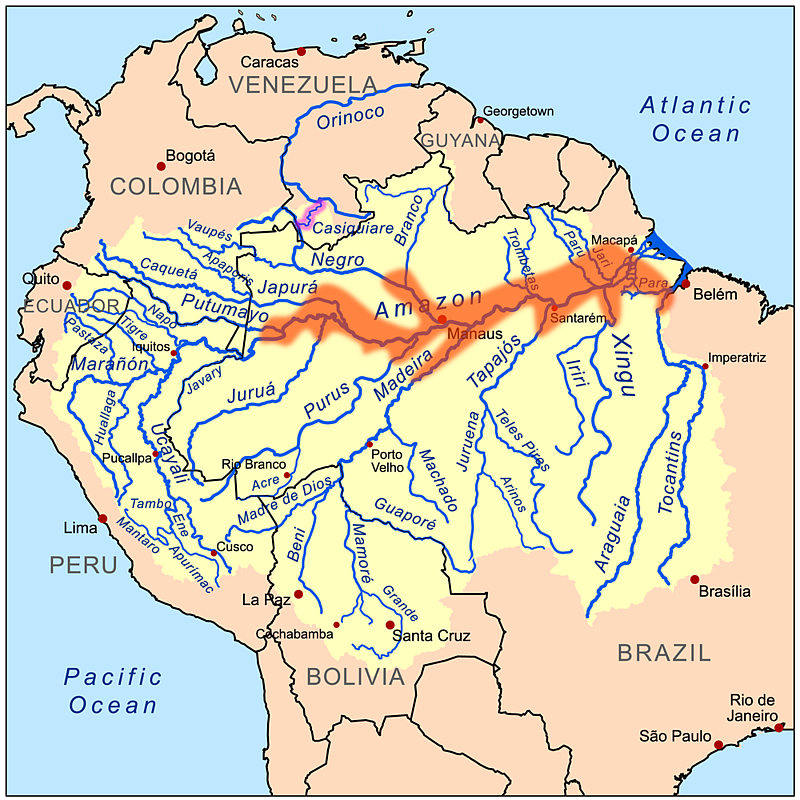
There are three Symphysodon species that inhabit the margins of the floodplain lakes and rivers in the Amazon basin in different geographic locations.

Distribution Of_Symphysodon Discus

Distribution Of_Symphysodon Discus

Symphysodon aeuifasciatus are found in the Rio Solimões, Rio Amazonas, and Río Putumayo-Içá in Brazil, Colombia and Peru.

Symphysodon Discus are found in the lower sections of the Abacaxis, Rio Negro and Trombetas rivers, and Symphysodon tarzoo are found upstream of Manaus in the western Amazon.

The natural habitat for Discus is the shallow streams, creeks, and small lakes running off the Amazon River and it’s tributaries.

Wild Symphysodon like to school with others of their kind and live among submerged tree roots, close to shore.

All Discus species living in “mixed” tropical water areas of the Brazilian Amazon and are considered Neotropical.

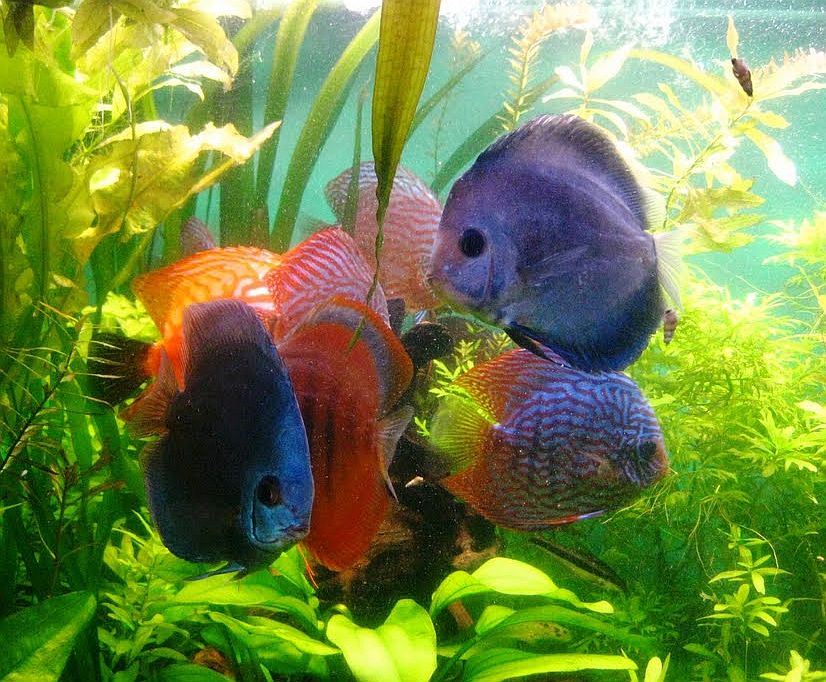
All three species of Symphysodon are highly favored among experienced tropical fish keeping enthusiasts and do quite well in densely planted aquariums.

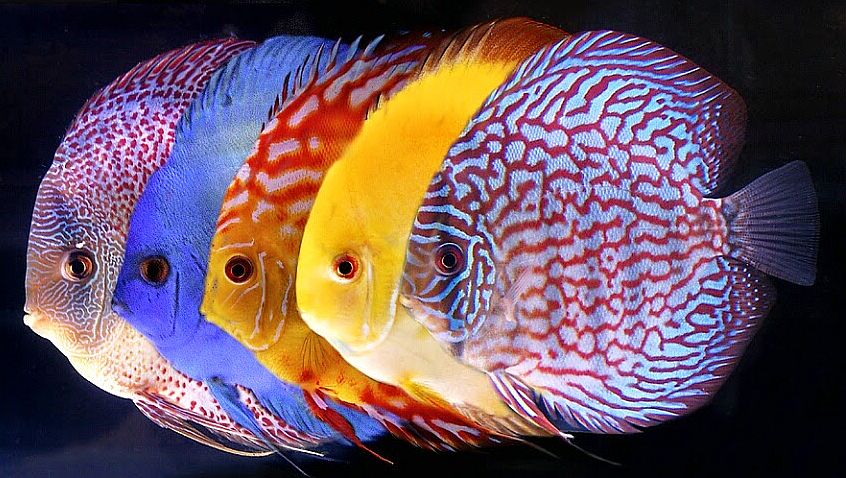
Discus (Symphysodon) have a round, laterally compressed body shape and are absent any extended fins; hence the name “Discus”.   The sides of these fish are frequently patterned in different shades of green, brown, blue, and red. Adult Discus are approximately the same height and length of about 8″ to 10″. There is no real sexual dimorphism for this fish although, in some solid colored (red cover or red melon) varieties, the females are more deeply colored red than males.

Discus require a large, deep aquarium of at least 55 gallons. Since most species originate from shaded, deeper water areas that are densely overgrown

Symphysodon Discus

Symphysodon Discus

with vegetation, their aquarium environment should duplicate these requirements as closely as possible. A layer of floating plants will provide the subdued lighting they need.  Discus also need soft, well filtered water with a pH level of 6 and the water temperature maintained at a constant 82 to 86 degrees F. to keep them happy.

Discus tanks should be densely planted and aquascaped with a sand or fine gravel substrate, rocks, and bogwood roots strategically placed around the tank. Discus are easily frightened and will remain more comfortable in these surroundings when they have a place to hide.

Discus are quite peaceful and can be kept with other peaceful, heat-loving species, such as cardinal tetras, clown loaches and rasboras. They should not be kept with angelfish which are prone to parasitic infestations and other diseases that may be fatal to Discus.

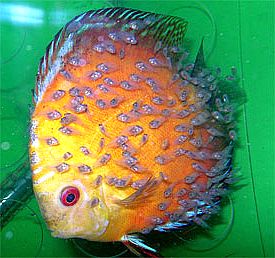
Symphysodon Discus and Young

Symphysodon Discus and Young

One interesting characteristic of Discus is their care for their young. Like most cichlids, brood care is highly developed. Discus become somewhat territorial when breeding.

Although it’s best to breed an established pair, you can keep a group of young Discus together until a pair break out and pairs off.

In preparation for mating, the pair will start cleaning off a flat surface in the tank, usually the side of the aquarium, a piece of slate, or a large broad leaf plant (Amazon Sword). The female deposits her eggs and both parents tend to them until hatched.

Adult Discus produce a mucus secretion from their skin that the larvae live off during the first few days, to weeks, after hatching so it is imperative that the parents remain with the fry until the fry are able to eat crushed flake food on their own.

Discus are largely carnivorous and prefer freeze dried bloodworms, tubifex, discus pellets, high quality flake foods and other meaty frozen foods.

When available for purchase Discus can be anywhere from  2″ to 6″ in length.

The follow is only a partial list of Discus Varieties that are available to tropical fish keeping enthusiasts.

Posted in Discus, Featured Articles, Freshwater Fish0 Comments

Twin Tail Betta Splendens

Twin Tail Betta (Betta splendens) a.k.a. Double Tail (DT) Betta

twin tail betta

twin tail betta

The Twin Tail variety of Betta splendens is also called the Double Tail (DT) Betta and has an unusually striking tail that immediately differentiates it from other Betta types.

Double Tail Betta

Double Tail Betta (Betta splendens)

The Twin Tail or Double Tail Betta, as you can surmise from its name, has a caudal tail that is split into two equal lobes rather than one.   They also have shorter, more compact bodies than other tail types which leaves them more susceptible to having swim bladder problems; a common disease for these types.

Because the Twin Tail Betta have such beautiful dorsal fins, they are frequently crossed with other Betta strains.

Over the years, male Siamese Fighting Fish (Betta splendens) have been bred to enhance the type and length of their fins, their remarkable colors, and variations of both.

Male Twin Tail Bettas are relatively peaceful when kept alone but cannot be housed with other males.  In Thailand where they are specifically bred to be combative

Double Tail Betta

Double Tail Betta (Betta splendens)

for betting purposes, two males are placed together in a single small tank until one fish incapacitates or kills the other.  Unfortunately, this combative trait has not yet been bred out of males.

Female Betta splendens are often as colorful as the males but they do not possess the long varied fin types that the male Bettas are adorned with.

A male and female Betta splendens can be temporarily kept together for breeding purposes.  After the eggs have been dropped by the female, fertilized, and placed into the bubble nest, the female should be removed from the breeding tank.   The male Betta will tend to the eggs until they hatch, usually hatch within 24 hours.   After hatching, the fry should be fed infusoria, finely crushed or powdered flakes, and newly hatched brine shrimp.

Bettas should never be kept in the small bowls you often seem them in at department stores or discount chain tropical fish shops.  They do best in a well filtered tank of at least 1 gallon capacity, at a temperature between 75° and 86°F.   They also appreciate some freshwater plants or driftwood roots in their tank for them to hide in.

Adult Twin Tail Bettas need a carnivore diet of flake food, frozen or freeze dried bloodworms, tubifex, and brine shrimp.

Twin Tail Betta Splendens are usually around 1-3/4″ to 2-1/2″ long when offered for sale.

Double Tail Halfmoon Betta

Double Tail Halfmoon Betta (Betta splendens)


Minimum Tank Size: 1 gallon
Care Level: Easy
Temperament: Peaceful
Aquarium Hardiness: Hardy
Water Conditions: 75-86° F, KH 0-25, pH 6.0-8.0
Max. Size: 3″
Color Form: Assorted, Blue, Red
Diet: Carnivore
Compatibility: Suitable for some community tanks
Origin: Farm Raised – Thailand
Family: Belontiidae
Life Span: 6 – 7 Years in tanks
Aquarist Experience Level: Beginner

Posted in Bettas, Featured Articles, Freshwater Fish1 Comment

Royal Farlowella Whiptail Catfish (Sturisoma sp.)

Royal Farlowella Whiptail Catfish (Sturisoma sp.)

Royal Farlowella Whiptail Catfish (Sturisoma sp.)

Royal Farlowella Whiptail Catfish (Sturisoma sp.)

The Royal Farlowella Catfish (Sturisoma sp.) is a sucker mouth catfish that is found in the fast flowing rivers and streams of South America and referred to by many tropical fish keeping enthusiasts as the Panama Sturisoma, Royal Whiptail Farlowella, or Royal Whiptail Catfish.

The first dorsal fin of the male Royal Farlowella Catfish is extremely long.   Adults have odontodes, which are bristle like extensions, that look like whiskers on their cheeks.  Female Sturisoma sp. lack this feature.

Royal Farlowella Catfish are a peaceful, inactive, bottom dwelling species that seldom if ever bother their tank mates.  This makes them perfect community fish for a peaceful South American tropical fish keeping setup.

The Royal Farlowella Cat should be housed in at least a 30 gallon tank that is densely planted and aquascaped with rocks, driftwood, and numerous caves for them to hide in.   both Farlowella and Sturisoma catfish appreciate twiggy branches and bogwood in their tanks where they can spend their time resting and grazing.  They are “plant friendly” and will not destroy or move around plants in a densely planted tank with a sandy or extremely fine gravel substrate.

Hemiloricaria will spend most of their time on the sandy substrate, but appreciate a scattering of bogwood pieces and twiggy branches on the bottom of the tank for them to hide.

Royal Farlowellas require high degree of aeration and adequate filtration to stay healthy and active.

The Royal Whiptail Farlowella has been successfully bread in aquariums.  The female will lay up to 60 brown to yellowish brown eggs on any clean flat surface.   The male guards the eggs until they hatch; which is in approximately one week.   After hatching, the fry should be feed softened spinach, kale, and small bits of pellet food.

Adult Royal Farlowella Cats eat a wide range of foods and should have their diets augmented with sinking algae wafers, sinking catfish pellets, live or frozen bloodworms, crushed fish flakes, or a piece of blanched zucchini now and then.

Although they grow to almost 10″ in length, Royal Farlowella Catfish are usually around 2″ to 4″ long when available for purchase.  These are not commonly available in tropical fish shops and are often misnamed when offered for sale.

Royal Farlowella Whiptail Catfish (Sturisoma sp.)

Royal Farlowella Whiptail Catfish (Sturisoma sp.)

Minimum Tank Size: 30 gallons
Care Level: Easy
Temperament: Peaceful
Aquarium Hardiness: Hardy
Water Conditions: 70-78° F, KH 8-10, pH 6.8-7.4
Max. Size: 6 – 10″
Color Form: Green, Yellow
Diet: Herbivore
Compatibility: Excellent in community tanks
Origin: South America
Family: Loricariidae
Life Span 8-12 years
Aquarist Experience Level: Beginner

Posted in Featured Articles, Freshwater Fish, Whiptail Catfish6 Comments

Whiptail Catfish (Farlowella acus) a.k.a. Farlowella Cat

Whiptail Catfish (Farlowella acus) a.k.a. Farlowella Cat

Whiptail Catfish (Farlowella acus) a.k.a. Farlowella Cat

Whiptail Catfish (Farlowella acus) a.k.a. Farlowella Cat

The Whiptail Catfish (Farlowella acus)  is also known as the Twig Catfish, Stick Catfish, Farlowella or Whiptail Catfish by tropical fish keeping enthusiasts.

They are found in slow moving rivers and lakes and are broadly distributed in the Amazon, Orinoco, Paraná, and coastal rivers of the Guyana Shield  in South America.

Whiptail Catfish (Farlowella acus) a.k.a. Farlowella Cat

Whiptail Catfish (Farlowella acus) a.k.a. Farlowella Cat

Farlowella acus is an armored catfish that has a very long and slender body.   They are  brown and black in coloration, and have an elongated nose.

Like many other fish in the Loricariidae family, they have a sucker mouth that is designed to aid them in feeding on algae from the plants and decorations in the aquarium and rooting around bottom debris.

The Whiptail Farlowella Catfish makes a wonderful addition to any peaceful freshwater community aquarium.

The Whiptail Farlowella catfish should be housed in a densely planted, sand or fine gravel aquarium with high aeration and moderate water movement.  The should be provided rocks and driftwood to mimic their natural environment and for them to hide.  Farlowella cats prefer dimly lit conditions and need a 55 gallon aquarium or larger if housed with other species.

Because they are not picky eaters, feeding the Whiptail Catfish is not difficult.   They generally feed what is left on the bottom of the tank and they get most of their nutrition from left over food and algae.

In newer aquarium setups with little or no algae present, supplement their diet with algae wafers, sinking herbivore pellets, a high quality flake food or freeze-dried bloodworms.

Refer to the article on Whiptail Catfish for additional information on breeding the Farlowella acus.

The Whiptail Catfish is not readily available for purchase but when available they are approximately 3″ to 5″ in length.

Whiptail Catfish (Farlowella acus) a.k.a. Farlowella Cat

Whiptail Catfish (Farlowella acus) a.k.a. Farlowella Cat


Minimum Tank Size: 30 gallons
Care Level: Easy
Temperament: Peaceful
Water Conditions: 71-82° F, KH 8-10, pH 6.8-7.2
Max. Size: 3½”
Color Form: Clear, Green, White
Diet: Omnivore
Compatibility: Great in community tanks
Origin: South America
Family: Callichthyidae, Sub-Family Corydoradinae
Lifespan: 8 – 12 Years or more
Aquarist Experience Lever: Beginner

Posted in Featured Articles, Freshwater Fish, Whiptail Catfish0 Comments

Whiptail Catfish (Rineloricaria)..

Tropical Fish Keeping – Whiptail Catfish (Rineloricaria) a.k.a. Twig Catfish

Whiptail Catfish (Rineloricaria)..

Whiptail Catfish (Rineloricaria)..

The Whiptail Catfish (Rineloricaria) is popular with tropical fish keeping enthusiasts, and is one of the most peaceful catfish available for populating community tanks.  Currently, there are 63 recognized species in this genus which makes it the most populated of the Loricariinae family.

The Whiptail Catfish is native to the rivers and lakes of northern and central South America and is usually found around leaf littered, sandy bottoms, in clear water and in water with a lot of dissolved sediment.

Rineloricaria lanceolata is widely distributed on nearly the entire subcontinent from Costa Rica to Argentina, and on both slopes of the Andes.

The Rineloricaria species are found in a variety of habitats that includes large rivers, streams, and lagoons with sandy or rocky bottoms.  They are sometimes found in marginal vegetation and can tolerate a wide temperature range in their environment.  Rineloricaria are extremely adaptive and have been collected in highly polluted bodies of water.

All Whiptail Catfish are members of the armored catfish family and have long, slender, brown and black colored bodies with elongated noses and a narrow face.  They have a sucker mouth with no visible barbels for feeding on algae and other plant matter that they scrounge from sandy bottoms. They have an erect dorsal fin and a very thin caudal peduncle.  The average length of adult Rineloricaria catfish is about 5″ long and they are relatively long lived (8 to 12 years).

By nature, the Whiptail is a social catfish that enjoys living in small groups and prefer the subdued lighting of their natural jungle environment.

Whiptail Catfish are an active species that can be housed with many other peaceful species in a natural community tank environment.  They make a wonderful addition to any peaceful, freshwater community aquarium and get along well with Apistogramma, Corydoras, small Characins, other Loricariids, and many other non-aggressive species that will not out compete them for food.

Rineloricaria lanceolata

Rineloricaria lanceolata

Rineloricaria lanceolata is one of the most common of the species sold as “Whiptail Catfish” and are a great choice for introducing new tropical fish keeping enthusiasts to catfish breeding.

The Whiptail Catfish should be given a “biotope” setup with a sandy bottom and a layer of Oak, Beech or other type of non-toxic dried leaves spread over the bottom of the tank.  Provide them with some smooth river rock, bogwood roots, artificial caves or pieces of PVC pipe for them to hide and spawn in.

Whiptail Cats also do well in a densely planted sandy bottom tank with driftwood and caves for them to hide in.  They become retiring with bright lighting and should be provided plenty of shade plants and cover.  They do well in well filtered water at temperatures of  77-82°F, a pH of 6.0-8.0, and a water hardness of 5-20°H.

When they are well fed  and kept in suitable water conditions, the Whiptail Cat is easily bred.   To identify a pair, place a small group of 6 or more juveniles together in a tank as described above with several lengths of 1 1/2″ PVC pipe to act as spawning caves.  The water in the breeding tank should be soft and slightly acidic.  The breeding pair should be conditioned on a diet of fresh spinach, kale, or other greenery and some live or frozen bloodworms.  If no pairs show any sign of spawning, conduct a 50%-70% water change with cooler water every few days to simulate the rainy season that they encounter in their natural habitat.

When the pair is ready to spawn, the male will carefully choose and clean a “cave” where the eggs will be deposited. When the eggs are deposited and fertilized by the male, the female takes no farther responsibility for their care.  The male guards the eggs from intruders and fans them until they hatch.  You should remove all other fish from the breeding tank or remove the PVC pipe that the eggs were laid in to a nursery tank with the same tank water.

When the fry hatch in 4 or 5 days and are free swimming 2 to 3 days later, remove the male from the tank and start feeding the fry water soaked spinach or kale, fresh slices of cucumber, and baby brine shrimp.  The fry starve easily and should always have access to pre-softened vegetable matter or algae covered rocks for them to graze on.  The delicate fry are also sensitive to water quality and should be given daily partial water changes until they are large enough to be transferred to a larger community tank.

Feeding adult Whiptail Catfish is not difficult.  The are not picky eaters and will get most of their nutrition from left over food and algae at the bottom of the tank.  Their diet should be supplemented with sinking herbivore pellets, freeze dried or frozen bloodworms, spinach or a high quality flake food.

Posted in Featured Articles, Freshwater Fish, Whiptail Catfish1 Comment

Emerald Green “Cory” Cat (Brochis splendens) a.k.a. Emerald Green Cat

Emerald Green “Cory” Cat (Brochis splendens) a.k.a. Emerald Green Cat

Emerald Green “Cory” Cat (Brochis splendens) a.k.a. Emerald Green Cat

Emerald Green “Cory” Cat (Brochis splendens) a.k.a. Emerald Green Cat

The Emerald Green “Cory” Cat (Brochis splendens) is also known by tropical fish keeping enthusiasts as the Emerald Brochis, Emerald Catfish, Green Cory, or Emerald Cory and comes from the upper reaches of the Amazon, Rio Ucayali, Rio Ambiyacu, Rio Tocantins, within the countries of Brazil, Columbia, Peru and Ecuador.

These catfish are not Corydoras, even though they do bear a striking resemblance to C. aeneus.

The Corydoradinae sub-family contains the Aspidoras, Brochis, and Corydoras genra which are all closely related and nearly identical in their behaviour and housing requirements.  Brochis splendens is the most common in the aquarium trade.

Emerald Green Cats live in sluggish water and slow moving streams that have a great deal of vegetation.  They prefer a neutral to slightly acidic pH low light environment, and should be kept in groups of at least 6 or more specimens.

Brochis splendens have a striking iridescent emerald green body with a pinkish underbelly.  The dorsal, pectoral and adipose fins of these fish are each preceded by a spine which is actually a hardened and modified ray.  As a defense mechanism, the pectoral fin spine can be locked into position and is capable of causing a nasty “sting” when improperly handled.

Emerald Green Cats are a popular and efficient scavenger that will add interest and an ornamental presence to any peaceful community tank.

To replicate their natural habitat, the Emerald Green Cat should be housed in at least a 30 gallon tank with a sand substrate, densely planted and aquascaped with driftwood, roots, rocks and other objects for them to hide in.  They require soft to moderately hard water (to 30 dGH), an acidic to neutral pH, water temperatures of 71-82° F and strong filtration to remain healthy.

Like Corydoras, the Emerald Green “Cory” Cat will collect eggs in a basket made with the female’s pelvic fins and deposit them individually on rocks, plant stalks, driftwood or the aquarium glass.   Females are prolific egg layers and can produce over 1,000 eggs.

The Emerald Green “Cory” Cat will eat any food that settles to the bottom of the aquarium, but their diets should be supplemented with a quality flake food, bloodworms, tubifex, shrimp pellets
or sinking carnivore pellets.  They feed on worms, insect larvae and small crustaceans in their natural habitat and or live tubifex will get them into breeding condition.

When available for purchase, Emerald Green Cats can be anywhere from 1″ to over 2″ in size.


Emerald Green “Cory” Cat (Brochis splendens) a.k.a. Emerald Green Cat

Emerald Green “Cory” Cat (Brochis splendens) a.k.a. Emerald Green Cat


Minimum Tank Size: 30 gallons
Care Level: Easy
Temperament: Peaceful
Water Conditions: 71-82° F, KH 8-10, pH 6.8-7.2
Max. Size: 3½”
Color Form: Clear, Green, White
Diet: Omnivore
Compatibility: Great in community tanks
Origin: South America
Family: Callichthyidae, Sub-Family Corydoradinae
Lifespan: 8 – 10 Years or more
Aquarist Experience Lever: Intermediate

Posted in Catfish, Corydoras, Featured Articles, Freshwater Fish1 Comment

Skunk Cory Cat (Corydoras arcuatus)

Skunk Cory Cat (Corydoras arcuatus)

Skunk Cory Cat (Corydoras arcuatus)

Skunk Cory Cat (Corydoras arcuatus)

Skunk Cory Cat (Corydoras arcuatus) is native to the Rio Unini, a whitewater area of the Rio Negro River in Brazil,generally considered to occur throughout the upper Amazon region in Brazil, Peru, Ecuador, and Colombia.

The Skunk Cory is also known by tropical fish keeping enthusiasts in the aquarium trade as the Arched Cory or Sands’ Cory Cat.

Whatever name you call them, the Corydoras arcuatus is a peaceful, interesting, active, shoaling species that prefers living among other Corys of their own size.

The Skunk Cory Cat is a popular community tank species that can be identified by the black stripe that runs over their eyes, down their back to just before the tail where it splits and trails down to color the lower edge of the caudal fin.   In most other Cory species, the black stripe does not split but continues along the upper edge of the caudal fin.   They have stiffened pectoral fin spines that are capable of piercing human skin and causing a painful “sting” from their mildly toxic secretions that are produced by the axillary glands at the base of each spine.   Exercise care when handling these Corys.

Skunk Corys are peaceful bottom dweller that get along well with other like sized fish, especially when kept in small schools of 6 to 8 specimens.  They are efficient cleaners of excess food from the aquarium substrate.

The Skunk or Sands’ Cory appreciates stronger water currents than other members of the Corydoras genus. They will thrive in a densely planted aquarium with a sandy substrate surrounded by Java Moss, Java Fern and driftwood areas for them to hide.

Like other Corydoras, this species will spawn eggs on either the aquariums glass, driftwood, or among the plants. Female Skunk Corys are noticeably wider and broader than males when viewed from above; especially when full of eggs.

Though this is one of the more difficult Corys to breed; breeding is similar to other Corys.   The female carries a few eggs between her pelvic fins while the male fertilizes them.  She then selects a safe spot to hide the eggs, usually near dense vegetation, and continues the process until all the eggs have been placed.  Usually the female will lay around 100 eggs in several “safe” locations. After hatching, the fry should be removed from the tank and after 3 to 4 days fed a diet of until they are able to accept flake and frozen foods.

Feeding the pair a diet of live foods, keeping the pH at 6.5 to 7.0 and dropping the water temperature to 60 F. for water changes will usually induce spawning in this species.

Skunk Corys are omnivores and should be fed a mixed diet of good quality flake food, shrimp pellets, tubifex, and other freeze dried or frozen foods.

When available for purchase the Skunk Cory is usually 3/4″ to 1-1/4″ long.

Skunk Cory Cat (Corydoras arcuatus)

Skunk Cory Cat (Corydoras arcuatus)


Minimum Tank Size: 20 gallons
Care Level: Moderate
Temperament: Peaceful
Aquarium Hardiness: Hardy
Water Conditions: 68-77° F, KH 2-12, pH 6.2-7.2
Max. Size: 2½”
Color Form: Black, White
Diet: Omnivore
Compatibility: Great in community tanks
Origin: Brazil
Family: Callichthyidae
Lifespan: 3 – 5 Years or more
Aquarist Experience Lever: Beginner to Intermediate

Posted in Catfish, Corydoras, Featured Articles, Freshwater Fish0 Comments

Saltwater Fish

Featuring Clownfish

Aquarium Supplies

On-Sale Aquarium Supplies!

Saltwater Specials

Categories