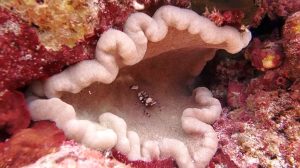
Adhesive Sea Anemone (Cryptodendrum adhaesivum)
The Adhesive Sea Anemone (Cryptodendrum adhaesivum), commonly sold in the aquarium hobby as the Pizza Anemone, Sticky Carpet Anemone, or Adhesive Carpet Anemone, known to tropical fish keeping enthusiasts as the Pizza Sea Anemone, Napkin Anemone, or Multi-Color Adhesive Anemone, is a striking, brightly colored cnidarian species—and the sole member of its genus.
Found across tropical marine environments throughout the Indo-Pacific, their range extends from the Red Sea and East Africa to Micronesia, Polynesia, southern Japan, and northern Australia.
Adhesive Sea Anemones are most commonly found among shallow coral reef flats, rocky surge zones, and rubble-strewn lagoon slopes of their range in warm coastal waters, from just below the low-tide line down to depths of 65 feet where they live anchored into rocky crevices and occasionally serve as a natural host for Clarkii clownfish (Amphiprion clarkii).
Cryptodendrum adhaesivum have been recorded from shallow sublittoral reef tops down to roughly 65 feet among hard limestone crevices, dead coral skeletons, and rocky ledges where deep holes allow them to anchor their pedal disc firmly while spreading their flattened oral disc flush across the rock surface.
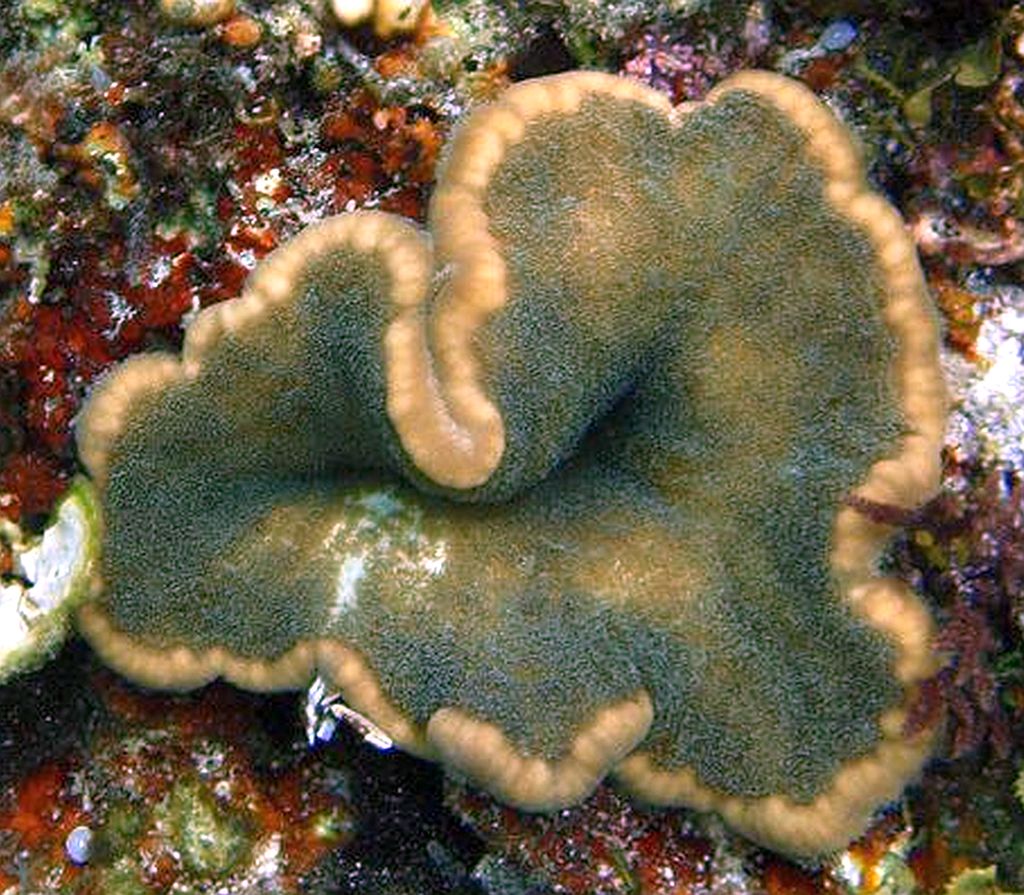
Adhesive Sea Anemone (Cryptodendrum adhaesivum)
Adhesive Sea Anemone are true rock-anchoring benthic organisms rather than sand burrowers. Instead of digging into loose lagoon sediment, Cryptodendrum adhaesivum wedge their muscular pedal disc deep inside narrow rocky crevices or coral holes while draping their broad, flattened oral disc tightly across the surrounding rockwork like a colorful crust.
Throughout the day and night, Adhesive Sea Anemones remain firmly rooted in solid rockwork, using their extraordinarily sticky tentacles to hold fast against reef currents and trap passing prey. Living anchored inside narrow rock holes provides solid structural security, allowing the anemone to rapidly deflate and pull its expansive oral disc tightly back into its rocky crevice when startled or threatened by diurnal reef predators.
Although Adhesive Sea Anemones are peaceful toward their symbiotic Clarkii clownfish and porcelain crabs, they are aggressively predatory and territorial toward neighboring corals and unwary reef fish. Adhesive Sea Anemones are typically found as solitary individuals spaced across shallow reef ledges rather than in dense clonal clusters. Once they are securely settled into the rockwork, they rarely wander, though their intensely sticky oral disc will severely sting neighboring corals and instantly ensnare careless fish or crustaceans that brush too close.
Cryptodendrum adhaesivum are medium to large marine invertebrates that commonly reach 8 to 12 inches in oral disc diameter in home aquariums, with mature wild specimens occasionally expanding up to 14 to 16 inches across.
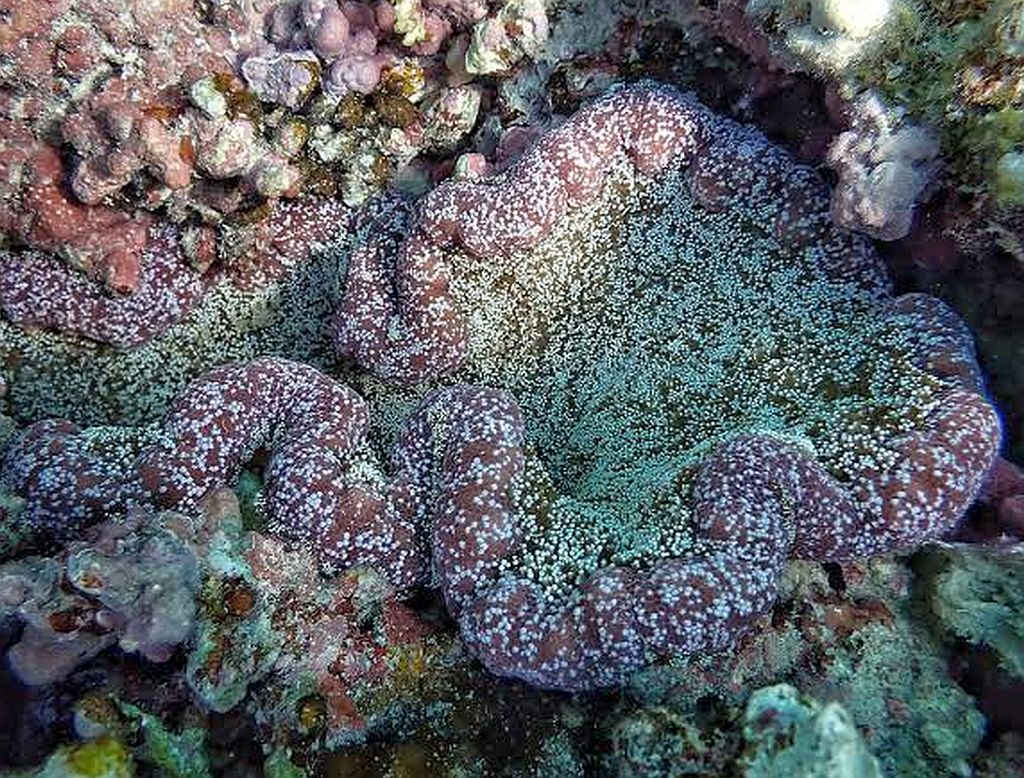
Adhesive Sea Anemone (Cryptodendrum adhaesivum)
True Adhesive Sea Anemones display a flat, unmistakable pizza-like silhouette that features a broad, circular oral disc divided into two distinct concentric tentacle zones which gives them the appearance of a pie topped with contrasting crust and center ingredients.
The inner central disc is densely packed with thousands of tiny, branched, granular tentacles, while the outer rim is bordered by a distinct band of short, bulbous, berry-like marginal tentacles in sharply contrasting colors.
Adhesive Sea Anemones harbor dense populations of symbiotic photosynthetic algae known as zooxanthellae within their tissues, which fuel their high metabolism and produce dazzling, multi-toned fluorescent pigments under reef lighting. Popular color varieties include vivid combinations of neon green, bright yellow, fiery orange, crimson red, royal purple, hot pink, and creamy white across their smooth, pale grey or pinkish-white column and two-toned disc.
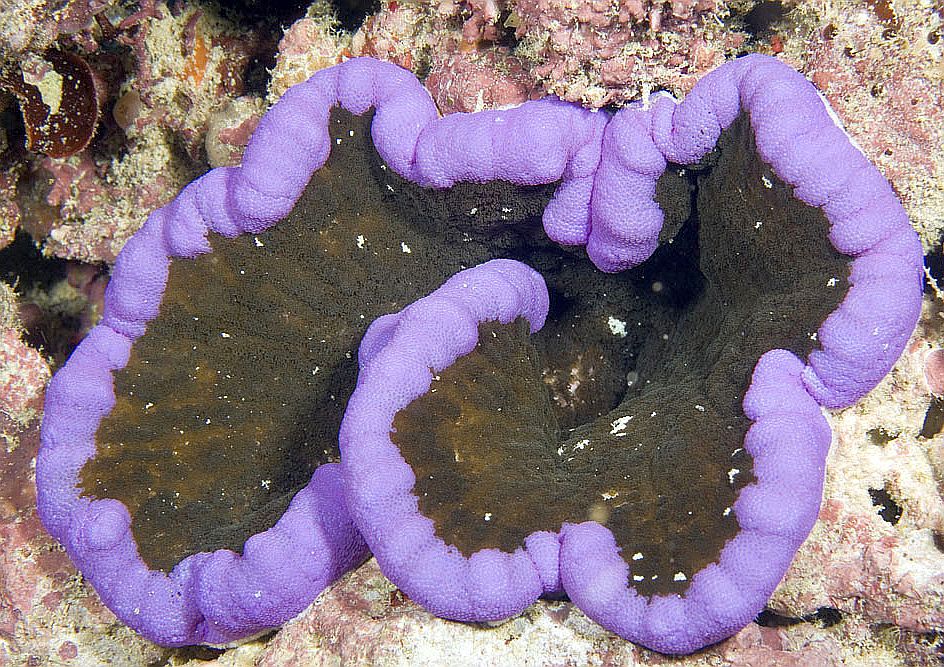
Adhesive Sea Anemone (Cryptodendrum adhaesivum)
Adhesive Sea Anemones are broadcast-spawning cnidarians that lack external sexual dimorphism, making it impossible to visually distinguish males from females in a home aquarium. Unlike Bubble Tip Anemones that split frequently in captivity, Cryptodendrum adhaesivum reproduces almost exclusively via sexual broadcast spawning in the wild and rarely divides asexually in home aquariums.
Unlike stony corals that secrete a rigid calcium carbonate skeleton, the Adhesive Sea Anemone lacks any hard protective armor. Instead, they rely on an extraordinarily potent, Velcro-like nematocyst sting—famous for clinging so tightly to skin or prey that tentacles often tear off before letting go—along with rapid contraction into rocky crevices for survival. When startled by a predator or disturbed, they rapidly expel internal water and pull their flattened oral disc tightly down into their rocky shelter until danger passes.
The Adhesive Sea Anemone is semi-reef safe with extreme caution and is best housed in a well-established reef or species-specific aquarium of at least 40 to 50 gallon capacity with a mature biological filter, stable porous live rock with deep crevices, moderate to high reef lighting, moderate to strong turbulent water flow, and thoroughly covered wavemaker intakes.
Adhesive Sea Anemones are peaceful toward symbiotic Clarkii clownfish and anemone crabs, making them an unforgettable, vibrant centerpiece for dedicated host or anemone displays. However, their ultra-sticky tentacles pack one of the strongest stings in the aquarium hobby—capable of capturing and consuming expensive reef fish and clinging painfully to bare hands—so aquarists should leave generous open space around them and wear protective gloves during tank maintenance.
Unprotected powerheads and overflow drains must be strictly shielded with foam guards or mesh screens during initial acclimation until the anemone securely wedges its pedal disc into a rocky crevice. They rarely remain where originally placed in the tank.
Adhesive Sea Anemones are aggressive predators toward unwary tank mates and do best in a spacious, mature reef or dedicated anemone system with compatible host clownfish and alert mid-water swimmers.
Good tank mates include Clarkii Clownfish (the only species known to naturally host in C. adhaesivum in the wild), Porcelain Anemone Crabs, Sexy Anemone Shrimp, and alert mid-water swimmers like Chromis, Damselfish, or Anthias.
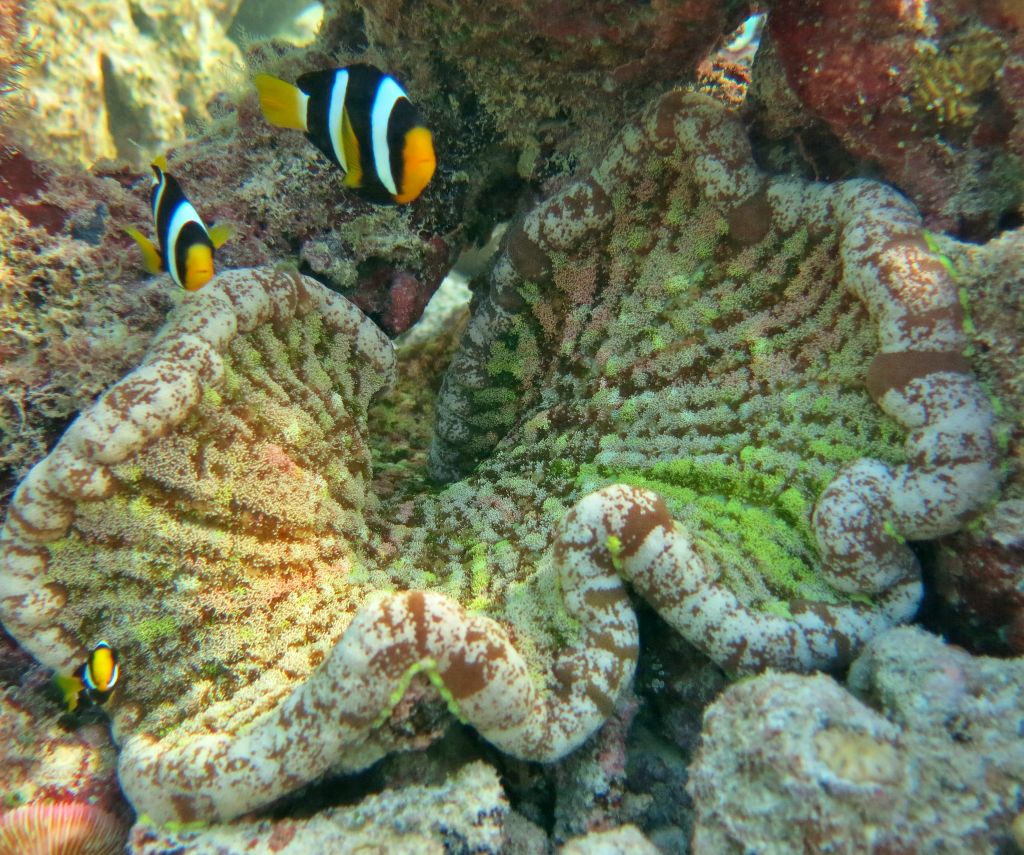
Adhesive Sea Anemone (Cryptodendrum adhaesivum)
Avoid keeping them with Ocellaris or Percula Clownfish (which often get stung or eaten rather than hosted), slow-moving bottom dwellers, Mandarin Dragonets, Hawkfish, Blennies, Gobies, Tangs, Angelfish, Butterflyfish, or Triggerfish, as bottom-perching and grazing fish frequently blunder into the anemone’s sticky surface and are rapidly paralyzed and consumed.
The Adhesive Sea Anemone is an advanced-care species that requires a mature, stable marine system running for at least 6 to 9 months. While slightly hardier once settled than Magnificent or Giant Carpet anemones, Cryptodendrum adhaesivum is highly sensitive to pedal disc tears during collection and sudden parameter swings in salinity, alkalinity, and temperature, while copper-based medications are immediately fatal to them. To thrive, they require stable tropical temperatures between 75–81°F (24–27°C), a specific gravity of 1.025–1.026, a pH of 8.1–8.4, moderate to high lighting (200–300 PAR), and turbulent, indirect currents. Pristine water quality, intense reef illumination, and an undamaged foot at purchase are essential for keeping this striking anemone alive in captivity.
Although Adhesive Sea Anemones reproduce via seasonal broadcast spawning in their natural coastal habitats, they almost never reproduce sexually or asexually in standard home aquariums.
In the wild, separate male and female individuals release eggs and sperm synchronously into the water column, where fertilized larvae drift as plankton before settling onto shallow rocky reef flats.
Because Cryptodendrum adhaesivum very rarely undergoes longitudinal fission in captivity, aquarists should plan around housing a single showpiece specimen with ample space to expand.
Unlike passive filter feeders, the Adhesive Sea Anemone (Cryptodendrum adhaesivum) is a powerful photosynthetic carnivore that pairs energy from its internal zooxanthellae with active predation on reef fauna. In their natural environment, their intensely adhesive tentacles instantly snare passing crustaceans, shrimp, sea urchins, and small to medium-sized fish that brush against their oral disc, folding inward to draw prey into the central mouth.
In an established aquarium environment, Adhesive Sea Anemones obtain much of their baseline energy from high-output reef lighting and waste produced by fish in the tank.
Experienced tropical fish keeping enthusiasts can supplement their diet by target-feeding small portions of finely chopped mysis shrimp, krill, clam, mussel, or squid once every one to two weeks. Ensure that the food pieces are modest in size so the anemone can digest them cleanly without regurgitating undigested matter into the system.
The Adhesive Sea Anemone (Cryptodendrum adhaesivum) is an uncommon, eye-catching specialty invertebrate that can be purchased occasionally from online marine retailers and specialized coral vendors at moderate to high prices depending on size and color contrast.
They are highly prized by advanced reef and anemone collectors for their vivid two-toned “pizza” coloration, flattened rock-hugging silhouette, and unique status as the tenth natural clownfish host anemone.
Current retail prices for the Adhesive Sea Anemone range from $89.99 to $159.99 for classic green, tan, or yellow-rimmed specimens, while vibrant multicolor, neon green, fiery orange, or bright pink-and-purple showpiece morphs typically cost between $179.99 and $349.99 depending on size and vendor.
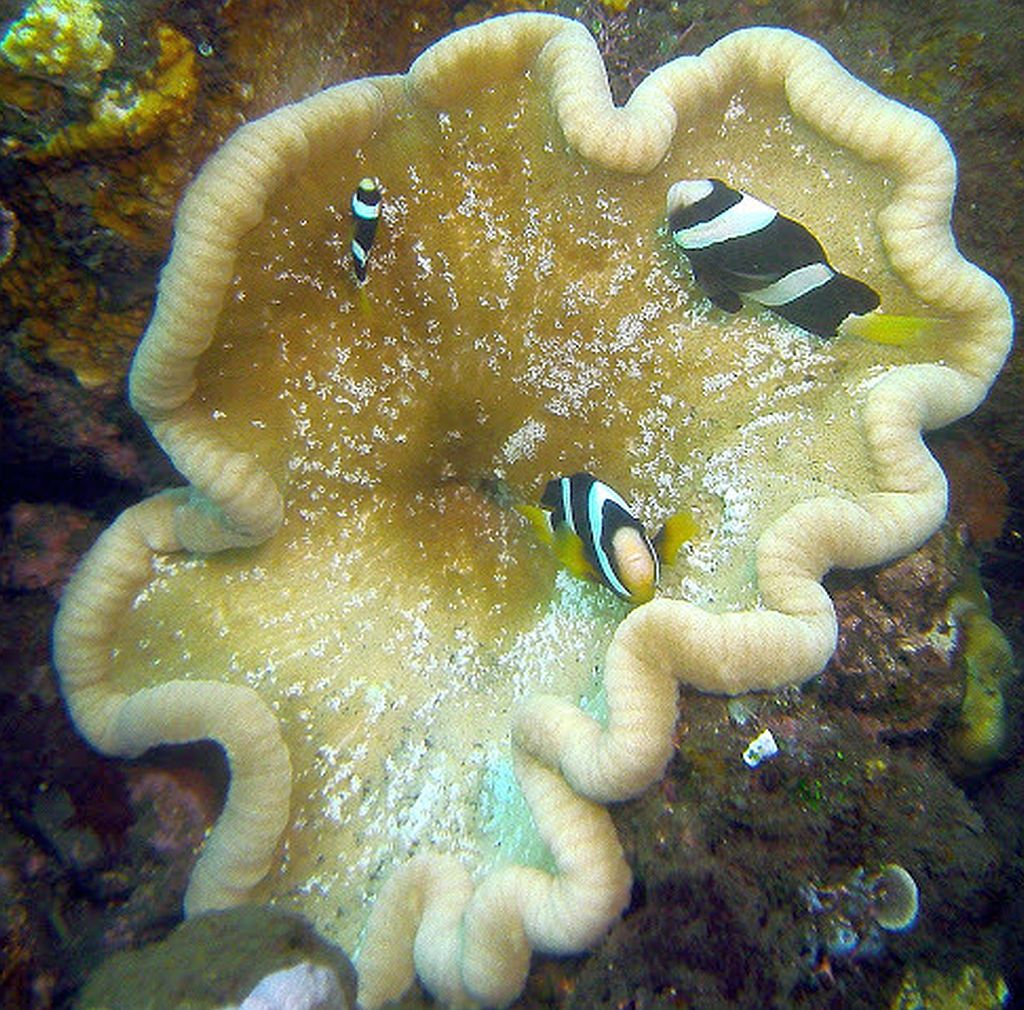
Adhesive Sea Anemone (Cryptodendrum adhaesivum) & Clarkii Clownfish
Minimum Tank Size: 40 – 50 gallons (mature tank running 6–9+ months)
Aquarium Type: Mature Reef or Dedicated Anemone System
Tank Care Level: Difficult
Temperament: Aggressive (Eats unwary fish; peaceful with Clarkii clownfish)
Aquarium Hardiness: Moderately Delicate
Water Conditions: 75–81° F, dKH 8 to 12, pH 8.1 – 8.4, sg 1.025 – 1.026
Max Size: 12″ – 16″
Color Form: Two-Toned Green, Yellow, Orange, Red, Pink, or Purple Disc with Contrasting Rim
Diet: Photosynthetic (Zooxanthellae) / Carnivore
Compatibility: Semi-Reef Safe (With Caution — Fish Eater / Clarkii Clownfish Host)
Origin: Indo-Pacific (Red Sea to Polynesia, Japan, and Australia)
Family: Thalassianthidae
Lifespan: 20 – 60+ years
Aquarist Experience Level: Advanced