Pederson Cleaner Shrimp (Periclimenes pedersoni)
The Pederson Cleaner Shrimp (Anemonefera pedersoni / Periclimenes pedersoni), known to tropical fish keeping enthusiasts as the Pederson Anemone Shrimp or Caribbean Cleaner Shrimp, is a marine decapod crustacean species that is found throughout the western Atlantic Ocean, from the waters of North Carolina and Bermuda, through the Caribbean Sea and Gulf of Mexico, down to northern South America.
Pederson Cleaner Shrimp are normally found among shallow coral reefs and clear lagoons of their range at depths from 3 feet to over 100 feet where they live in strict, obligate commensal relationships with large sea anemones.
Periclimenes pedersoni are not natural diggers. They are an active species that seem to be constantly on the
Pederson Cleaner Shrimp (Periclimenes pedersoni)
move throughout the day and night, spending their entire lives directly on or within the immediate perimeter of their host anemone.
Substantial numbers of Pederson Cleaner Shrimp can typically be found clustered around the column or clinging directly to the stinging tentacles of the Corkscrew Anemone (Bartholomea annulata) or the Giant Caribbean Anemone (Condylactis gigantea). Apparently, the potent venom of these host tentacles provides the tiny Pederson Cleaner Shrimp a safe haven from benthic predators that hunt them from the reef, especially small crabs.
Although Pederson Cleaner Shrimp are frequently found together in large numbers sharing the exact same host anemone, they are not necessarily social animals in a coordinated school. They are a docile, completely non-aggressive species that readily associate with conspecifics, forming small cleaning stations of 1 to 5 individuals that safely share the host’s protection without any territorial infighting.
Periclimenes pedersoni are exceptionally miniature marine crustaceans that seldom exceed 1 inch in body length.
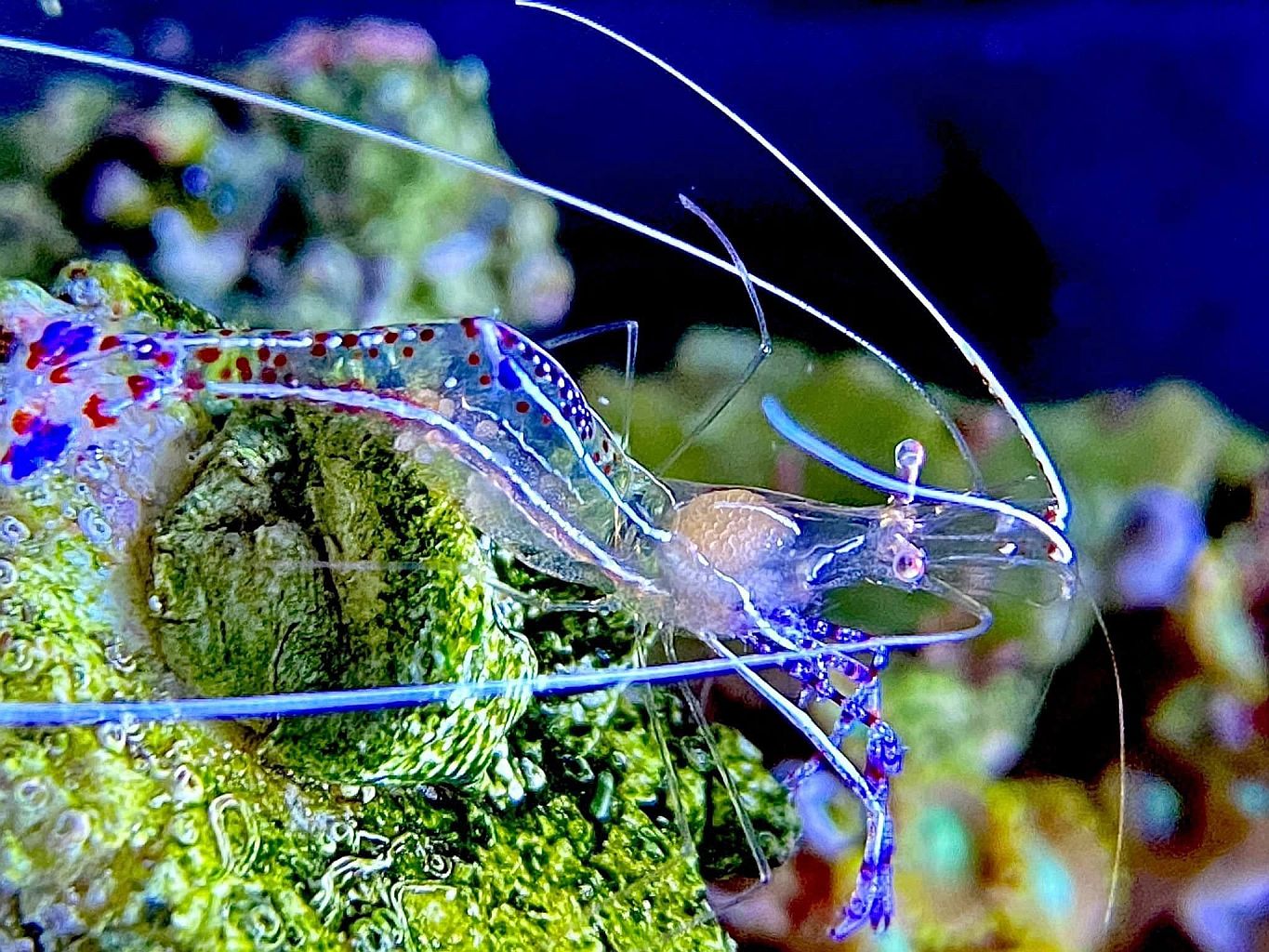
Pederson Cleaner Shrimp (Periclimenes pedersoni)
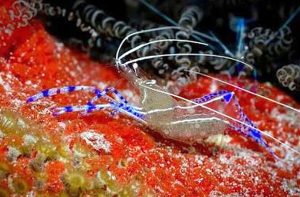
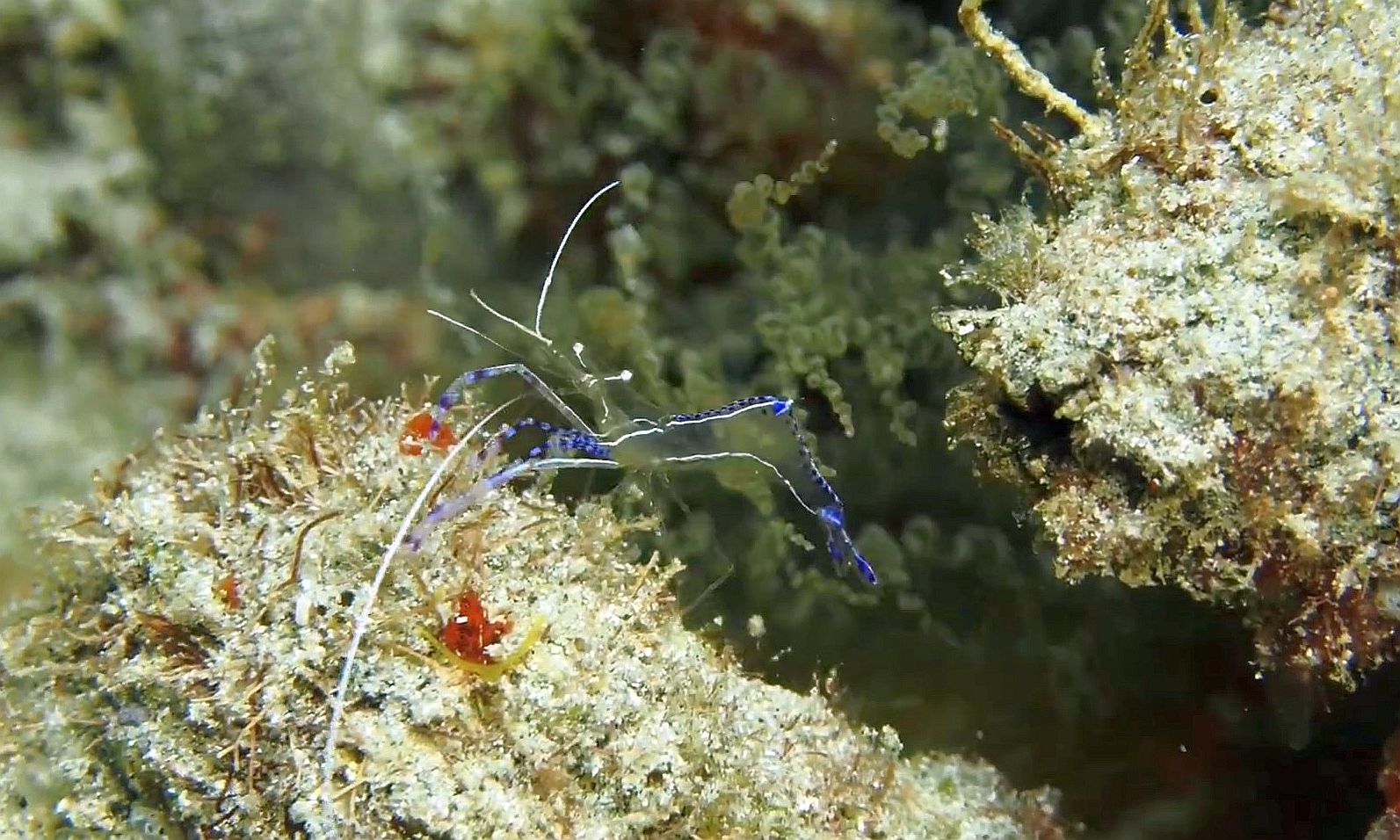
True Pederson Cleaner Shrimp have a highly transparent, see-through body adorned with a striking pattern of brilliant purple and white spots, lines, and chevrons on the abdomen and tail fan. They possess two pairs of long, fine, completely white antennae that they wave vigorously back and forth while performing a rocking, sway-dance body movement to signal passing reef fish that their specialized cleaning station is open for business.
Pederson Cleaner Shrimp are gonochoric (separate male and female individuals), displaying moderate external sexual dimorphism. Mature females grow noticeably larger and develop a much broader, deeper abdominal cavity than males to comfortably hold and protect their developing egg clutches.
Unlike many marine creatures that can retreat into a heavy shell, the Pederson Cleaner Shrimp does not have a specialized defensive mechanism. Instead, they rely almost entirely on their near-total glass transparency and the chemical shield of their host anemone for protection. When a bad intentioned predatory fish approaches, the shrimp uses its pleopods (swimmerets) to rapidly flick backward into the protective, stinging folds of the host’s tentacles, out of harm’s way.
The Pederson Cleaner Shrimp is completely reef safe and is best housed in a well-established nano or pico reef
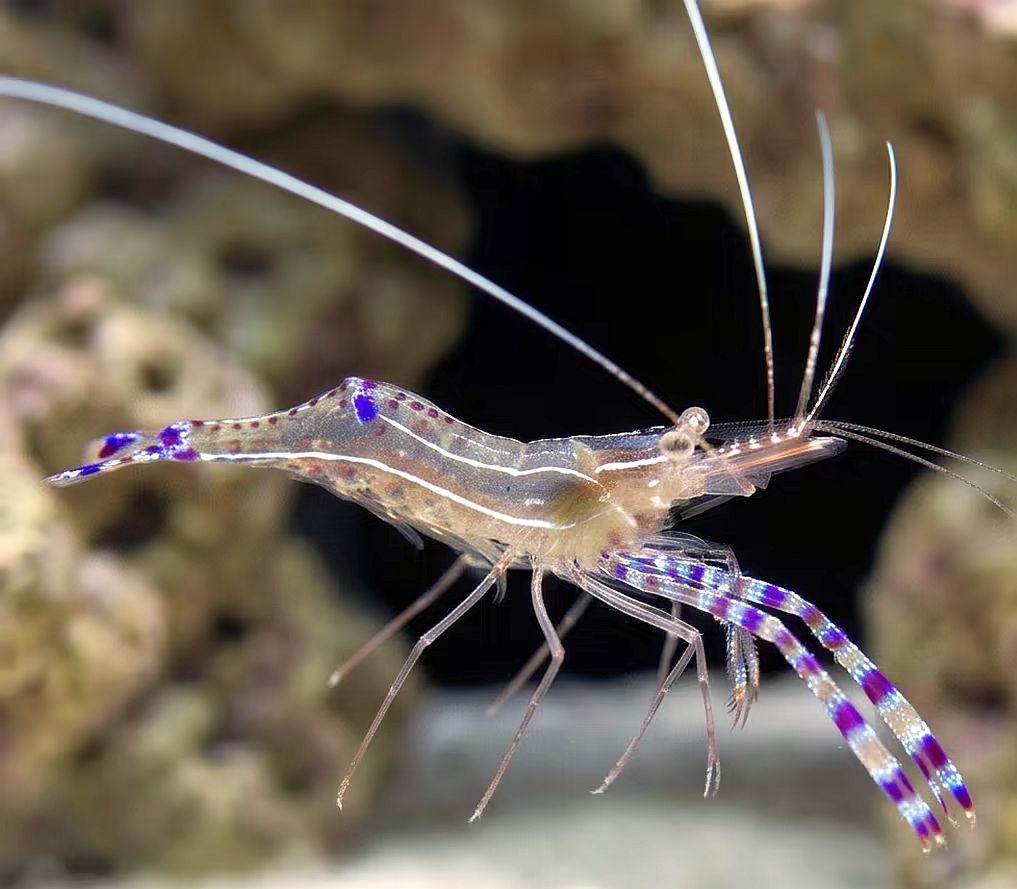
Pederson Cleaner Shrimp (Periclimenes pedersoni)
aquarium with plenty of live rock arranged into stable structures, a smooth sandy substrate, and a mandatory host anemone (such as a Bartholomea or Condylactis species) to inhabit. The Pederson Cleaner Shrimp is far too small to cause any physical damage to decor in a reef tank and will not bother corals, though they will occasionally walk over adjacent polyps to greet client fish.
Pederson Cleaner Shrimp are non-aggressive, exceptionally docile by nature, and do best in a dedicated small aquarium with peaceful, tiny tank mates like Neon Gobies, Clown Gobies, Sexy Shrimp, and peaceful snails. Avoid keeping them with large or aggressive fish, Coral Banded Shrimp, Hawkfish, Dottybacks, most crab species, and all species of predatory wrasses or carnivorous fish. Their minuscule size makes them an instant, easy snack if they wander even a few inches away from their host anemone.
Like their larger relatives the Skunk Cleaner Shrimp (Lysmata amboinensis), the Pederson Cleaner Shrimp (Periclimenes pedersoni) has a ravenous appetite for parasites and dead tissue, which makes them excellent candidates for a nano tank, health clean-up crew. In the aquarium, they are great scavengers and dedicated cleaners that thrive on fish parasites, microscopic debris, mucus, and dead skin scraped from cooperating fish clients that actively visit their anemone cleaning station.
The Pederson Cleaner Shrimp is relatively easy to keep, provided they are given a host anemone and are kept away from predatory tank mates. They are very sensitive to sudden changes in water values, especially rapid drops in salinity and pH, and copper medications are lethal to them. In addition to pristine water quality, they require a constant food source, a stable tropical water temperature between 72–78°F, and adequate iodine levels to support their frequent molting process. An excellent filtration system and regular partial water changes are recommended to maintain this tiny species.
Though mature pairs frequently mate and produce eggs in an aquarium environment, Pederson Cleaner Shrimp do not generally reproduce successfully, mainly due to their complex planktonic larval stages.
Mating takes place immediately following a female’s molt, and the female carries a small cluster of translucent, fertilized eggs under her abdomen attached to her pleopods for roughly 10 to 14 days.
The tiny larvae hatch and are released into the water column after dark. In a standard reef aquarium, the water may briefly trigger a minor feeding response from corals and other filter feeders, as the microscopic free-swimming larvae are treated as immediate planktonic food and are quickly eaten by fish long before they can metamorphose into crawling juveniles.
In their natural environment, the Pederson Cleaner Shrimp feeds on tissue parasites, mucus, and dead skin scraped from client reef fish like tangs, parrotfish, and damselfish. Their primary wild food consists of these parasitic organisms, supplemented by small organic detrital elements caught on the mucus of their host anemone.
In an established aquarium environment, they feed on the parasites of their small tank mates along with any leftover shrimp or fish foods, such as crushed flakes, small pellets, powdered coral foods, mysis shrimp, and frozen brine shrimp. Pederson Cleaner Shrimp are bold cleaners and will frequently walk right out onto the lips of visiting fish to pick at food, or swim to the surface to take micro-pellets directly from the aquarist’s hand.
The Pederson Cleaner Shrimp (Periclimenes pedersoni) is a popular and relatively common saltwater species that can be purchased from online retailers, local fish stores, and wholesalers at reasonable prices. They are frequently sold online to tropical fish keeping enthusiasts as specialized biological parasite controllers and fascinating symbiotic additions for nano reef aquariums.
The current prices for a Pederson cleaner shrimp (commonly misspelled as Peterson) generally ranges from $22.95 to over $52.99 heavily depending on the shrimp’s size, origin, and whether the vendor provides quarantined livestock.
Because captive breeding is not yet widely viable, all Pederson Cleaner Shrimp are wild caught.
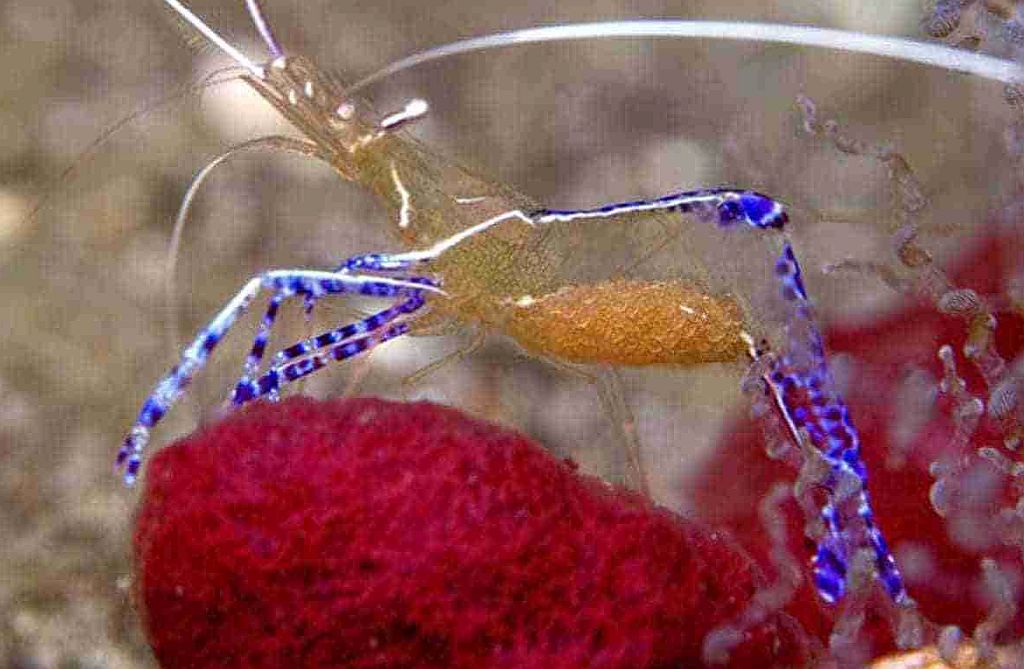
Pederson Cleaner Shrimp (Periclimenes pedersoni)
Minimum Tank Size: 5 gallons
Aquarium Type: Nano Reef or Dedicated Invertebrate Tank
Care Level: Easy to Moderate
Temperament: Peaceful
Aquarium Hardiness: Semi-Hardy
Water Conditions: 72–78°F, dKH 8 to 12, pH 8.1–8.4, sg 1.023–1.025
Max. Size: 1″
Color Form: Transparent with Purple and White Spots
Diet: Omnivore/cleaner
Compatibility: Reef Compatible
Origin: Western Atlantic (North Carolina to Caribbean)
Family: Palaemonidae
Lifespan: 1 – 2 years
Aquarist Experience Level: Beginner to Intermediate