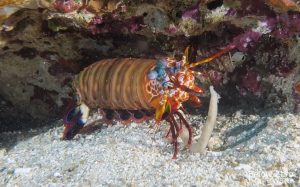
Peacock Mantis Shrimp (Odontodactylus scyllarus)
The Peacock Mantis Shrimp (Odontodactylus scyllarus), known to tropical fish keeping enthusiasts as the Harlequin Mantis Shrimp, Painted Mantis Shrimp, Clown Mantis Shrimp, Rainbow Mantis Shrimp, or Thumb Splitter, is a large marine stomatopod crustacean species that is found across the Indo-Pacific Ocean. Its range extends from the Marianas to East Africa and as far south as Northern KwaZulu-Natal in South Africa.
Peacock Mantis Shrimp are most commonly found on the epipelagic seabed near the bases of coral reefs in the intertidal and sub-intertidal zones, at depths ranging from 10 to 130 feet where they inhabit loose sandy or rubble-strewn substrates.
Odontodactylus scyllarus are consummate natural burrowers. While they are active and agile daytime predators, they spend considerable time excavating and maintaining deep, U-shaped tunnels in loose sand, crushed coral, and rubble fields near reef bases. These sturdy underground burrows provide a secure home base from which they can ambush passing prey and retreat when molting or resting.
Although Peacock Mantis Shrimp can sometimes be found sharing the same large reef flats in the wild, they are strictly solitary and fiercely territorial animals. They do not generally associate with conspecifics outside of brief mating encounters and will aggressively attack or kill other mantis shrimp placed in the same enclosure. Because of their strength and predatory nature, they must always be housed alone as single specimens.
Peacock Mantis Shrimp is one of roughly 480 species of mantis shrimp, which are well known for their raptorial claws, exceptional vision, and their unique way of interacting with other marine species. Odontodactylus scyllarus are one of the larger, more colorful mantis shrimp species commonly seen in the marine trade, typically growing to between 1.2 and 7.1 inches.
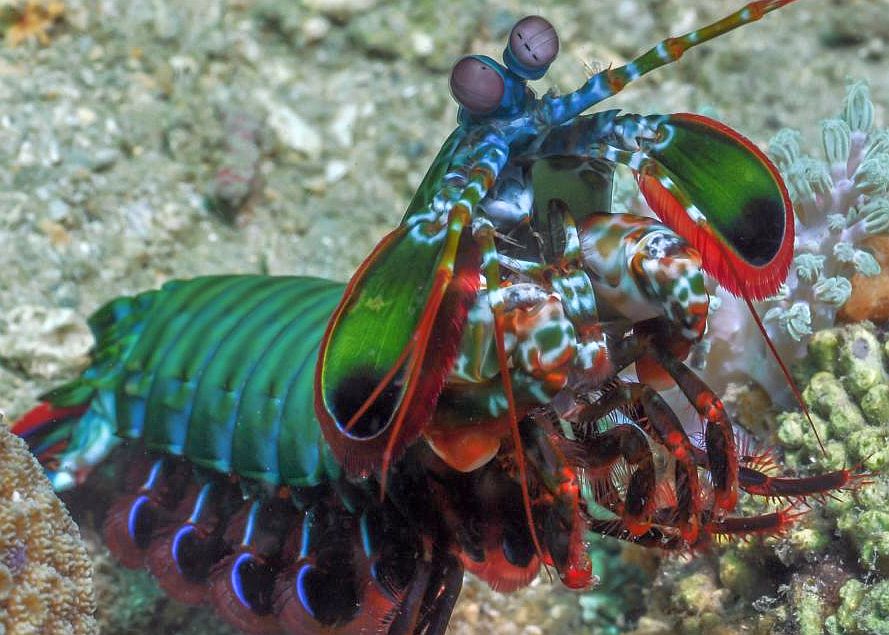
Peacock Mantis Shrimp (Odontodactylus scyllarus)
True Peacock Mantis Shrimp have a striking, highly distinct coloration that features a vibrant olive-to-emerald green or reddish body, bright orange-red walking legs and swimmerets, and bold leopard-like spots along the front sides of their carapace. Their raptorial appendages and antennae are often accented with hues of blue, purple, and magenta.
Peacock Mantis Shrimp are gonochoric (separate male and female individuals), displaying subtle external sexual dimorphism. Adult males typically display a brighter emerald-green body and possess a pair of small, V-shaped clasping appendages (gonopods) near the base of their last pair of walking legs. Females generally exhibit a more reddish or orange-red overall coloration and lack those V-shaped appendages, instead having a pair of small circular gonopores on the underside of their sixth thoracic segment.
Unlike many crustaceans that rely on passive defense, the Peacock Mantis Shrimp is equipped with specialized, spring-loaded raptorial appendages known as dactyl clubs. This hammer-like weapon has an impact surface composed of extremely dense hydroxyapatite—five times thicker than other parts of its exoskeleton—allowing it to strike at speeds exceeding 50 miles per hour with the acceleration of a .22 caliber bullet.
In addition to this devastating physical weapon, they have some of the most complex eyes in the animal kingdom, featuring 12 types of photoreceptors capable of processing full color as well as linear and circular polarized light, giving them unmatched spatial awareness on the reef.
The Peacock Mantis Shrimp is not reef safe with invertebrates or small fish and is best housed in an established dedicated species only aquarium of at least 20 to 30 gallons capacity with a deep 3-to-4-inch sand bed mixed with crushed coral and live rock rubble for burrowing, and a buried length of curved PVC pipe to serve as an instant, collapse-proof tunnel.
Because a full-grown adult can deliver up to 1,500 Newtons of force, which is capable of cracking thin glass, an acrylic aquarium or a thick-walled glass tank with a protective acrylic sheet placed on the bottom beneath the substrate is strongly recommended.
While Peacock Mantis Shrimp will not eat corals, they frequently rearrange their surroundings by dragging loose coral frags and small rocks into their burrows to fortify the entrance.
Peacock Mantis Shrimp are highly aggressive, intelligent predators by nature and will hunt almost any animal sharing their aquarium.
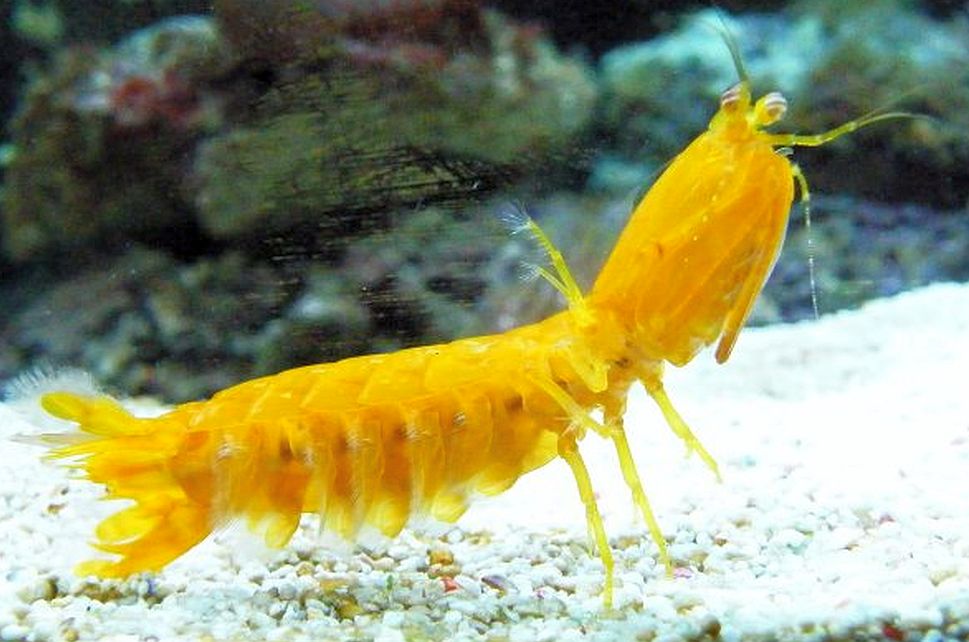
Peacock Mantis Shrimp (Odontodactylus scyllarus)
Avoid keeping them with ornamental shrimp, hermit crabs, snails, crabs, sea stars, and small or bottom-dwelling fish, as these will quickly be smashed and consumed. If a tropical fish keeping enthusiast chooses to risk tank mates in a larger system, only fast-swimming, mid-to-top-water fish like Damselfish or Chromis have a chance of surviving, though even they may be ambushed at night while sleeping.
The Peacock Mantis Shrimp is moderately easy to care for in a dedicated, mature saltwater aquarium, provided its physical housing needs are met. Like other marine crustaceans, they are sensitive to sudden swings in water chemistry—especially salinity and nitrates—and copper-based medications that are fatal to them. To thrive, they need stable temperatures between 72–78°F, clean filtration, and trace iodine from routine water changes to prevent fatal molting issues. Because intense reef lighting is believed to stress Odontodactylus scyllarus and contribute to shell rot, their tank lighting should be kept moderate.
Although they can mate in captivity, Peacock Mantis Shrimp do not generally reproduce successfully in a home aquarium due to their territorial aggression and complex, multi-stage planktonic larvae.
When mating does occur, the female lays a dense, ribbon-like mass of fertilized eggs that she carries and cleans constantly with her front appendages for up to 40 days until they hatch into free-swimming larvae, which are quickly swept into filtration or starve without specialized microscopic live foods.
In the wild the free-swimming larval stage lasts roughly 3 to 4 months before the young settle onto the seafloor as juveniles. Their breeding season is year-round in tropical waters, with their peak reproductive activity occurring during the warmer summer months when planktonic food for the larvae is most abundant.
In their natural environment, Odontodactylus scyllarus is an active “smasher” predator that hunts hard-shelled benthic invertebrates, preferring gastropods (snails), crustaceans (especially crabs), and bivalves such as scallops and clams. They repeatedly strike the shells of their prey with their dactyl clubs—generating cavitation bubbles that collapse with intense heat and shockwaves—until the armor shatters and exposes the soft meat inside.
In an established aquarium environment, Peacock Mantis Shrimp are enthusiastic eaters that thrive on a varied diet of both live hard-shelled prey and meaty frozen foods. Live snails, hermit crabs, fiddler crabs, and live clams should be offered regularly to provide enrichment and keep their raptorial clubs properly worn down and healthy.
Their diet should be supplemented every two to three days with meaty frozen foods such as krill, silversides, squid, scallops, and raw table shrimp. Using long feeding tongs to protect your fingers from accidental strikes is a very good idea.
The Peacock Mantis Shrimp (Odontodactylus scyllarus) is a well known but specialized saltwater species that can occasionally be purchased from online marine retailers, specialty local fish stores, and occasionally acquired accidentally as a hitchhiker inside wild Maricultured live rock.
Current pricing ranges from $89.99 to over $179.99 per individual depending on size, coloration, shipping restrictions, and quarantine status, excluding overnight live arrival shipping costs.
Because Odontodactylus scyllarus is not commercially aquacultured, 100% of individuals are wild caught from the Indo-Pacific with most specimens collected in Indonesia, the Philippines, and surrounding Indo-Pacific reefs.
Heavy seasonal monsoons from Nov through March restrict collection activities and because divers must extract them one by one from their burrows, availability fluctuates seasonally.
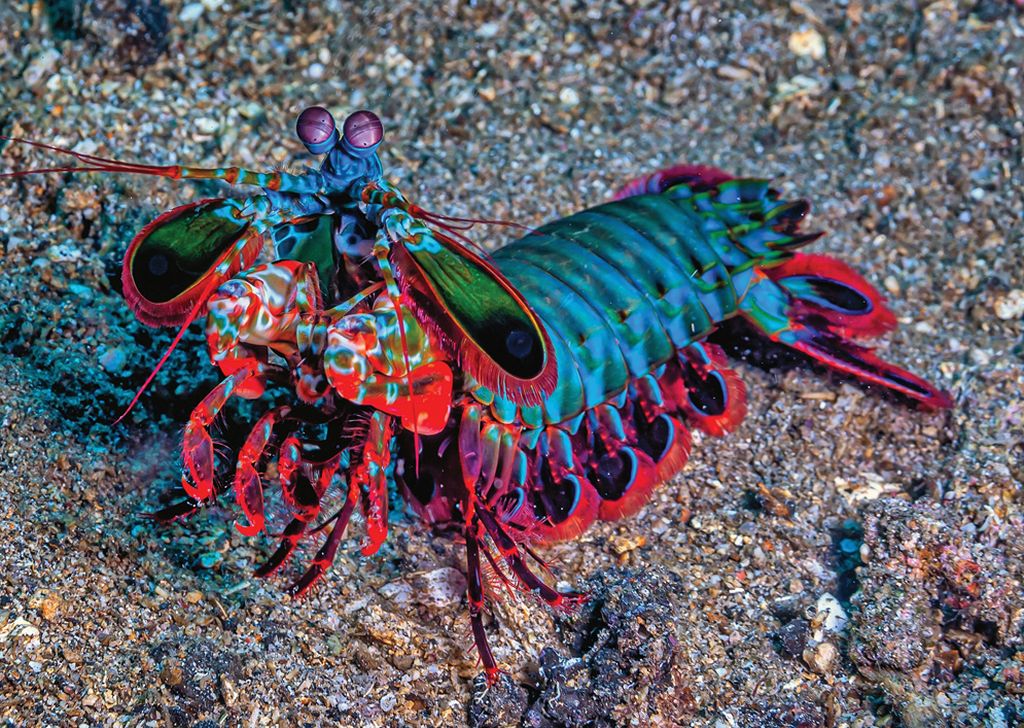
Peacock Mantis Shrimp (Odontodactylus scyllarus)
Aquarium Type: Species-Only, Acrylic or Thick-Glass Tank
Care Level: Moderate
Temperament: Aggressive
Aquarium Hardiness: Hardy
Water Conditions: 72–78°F, dKH 8 to 12, pH 8.1–8.4, sg 1.023–1.025
Max. Size: 7.1″
Color Form: Bright Emerald Green or Reddish-Orange, with Leopard Spots
Diet: Carnivore
Compatibility: Not Reef Safe (Eats Invertebrates & Small Fish)
Origin: Indo-Pacific (Marianas to East Africa & South Africa)
Family: Odontodactylidae
Lifespan: 3 – 6 years (2 – 4 years typical in captivity as wild-caught adults)
Aquarist Experience Level: Intermediate to Advanced