Coral Banded Shrimp (Stenopus hispidus)
The Coral Banded Shrimp (Stenopus hispidus), known to tropical fish keeping enthusiasts as the Banded Boxer Shrimp, Banded Cleaner Shrimp, or Barber-Pole Shrimp, is a marine decapod crustacean species that is found globally throughout circumtropical marine reef habitats across both the Indo-Pacific and the western Atlantic Ocean.
Coral Banded Shrimp are normally found among shallow to deep coral reefs, ledges, and rocky crevices of their range at depths from 6 feet to over 680 feet where they often establish stable home territories.
Unlike Pistol Shrimp, Stenopus hispidus are not natural diggers. They are constantly on the move and though they remain visible during the day, they are largely nocturnal, with their peak foraging activity beginning at dusk.
Substantial numbers of Coral Banded Shrimp can typically be found hanging upside down on the roofs of caves or deep inside dark rocky crevices. The protected overhangs provide the Coral Banded Shrimp with a safe haven from groupers and other large pelagic predators that actively hunt them from the open water column.
Although Coral Banded Shrimp are frequently found in close proximity to one another on the reef; they are not necessarily social animals.
Coral Banded Shrimp are a highly territorial, semi-aggressive species that can be fiercely intolerant of conspecifics. They do not usually associate with members of their own kind unless they form a lifelong, monogamous mated pair, occupying a strict territory that can span 3 to 10 feet in diameter.
Coral Banded Shrimp are medium sized marine crustaceans that can grow up to 2 to 3 inches in body length, excluding their exceptionally long appendages.
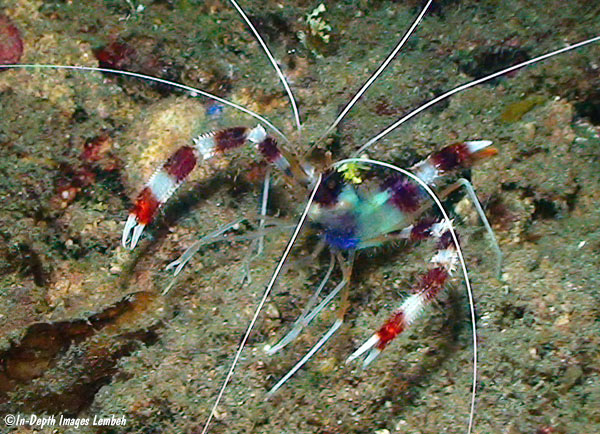
Coral Banded Shrimp (Stenopus hispidus)
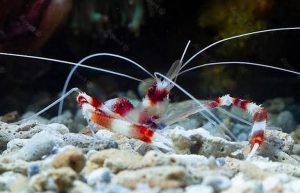
True Coral Banded Shrimp have vibrantly colored alternating bands of bright red and snow white across their carapace, abdomen, and large third pair of legs. They have a spiny, prickly textured body and two pairs of long, hair like white antennae that they wave continuously to signal passing fish. Their third pair of walking legs supports a massive, muscular set of pincers that gives them their distinct “boxer” like appearance.
Coral banded shrimp are gonochoric (separate male and female individuals), that display mild external sexual dimorphism. Mature females are typically larger than males, and frequently have a blue-green coloration on their underbelly due to their developing ovaries.
Unlike many marine invertebrates that can retreat fully into a thick, heavy shell for protection; the Coral Banded Shrimp relies on its imposing claws and chemical signals for it’s primary defense. When a predator approaches, they will aggressively raise their large pincers to ward off the threat. In the event that fails, they utilize an autotomizing mechanism to break off a claw to escape, which will safely regenerate during subsequent molts. When outmatched, their swift reaction time allows them to rapidly flick backward into the safety of their crevice or cave structures.
Coral Banded Shrimp are best housed in a well established FOWLR or reef aquarium of at least 30 gallon capacity with a fine argonite sand substrate, plenty of live rock arranged into large caves, dark overhangs, and deep hiding places, and sufficient room for them to claim a territory.
The Coral Banded Shrimp is completely reef safe with caution. They are too small to cause any real structural damage to the decor in the tank, but they need to be monitored around delicate polyped corals that they may occasionally pick at or steal food from. Large Stenopus hispidus should not be housed with small, delicate shrimp species like the Peppermint Shrimp (Lysmata wurdemanni) or Sexy Shrimp (Thor amboinensis) as they will aggresively hunt them down and consume them.
Coral Banded Shrimp are naturally semi-aggressive toward other crustaceans and are best housed individually or as a strict, verified mated pair, especially in a smaller tank.
They do exceptionally well in a large FOWLR tank with peaceful to semi-aggressive tank mates like Tangs, Clownfish, Angelfish, and robust snails.
Avoid keeping them with large, aggressive predatory fish like Lionfish, Groupers, or large Triggers that will view them as food.
Like other large cleaner species, the Coral Banded Shrimp (Stenopus hispidus) has a ravenous appetite for organic material
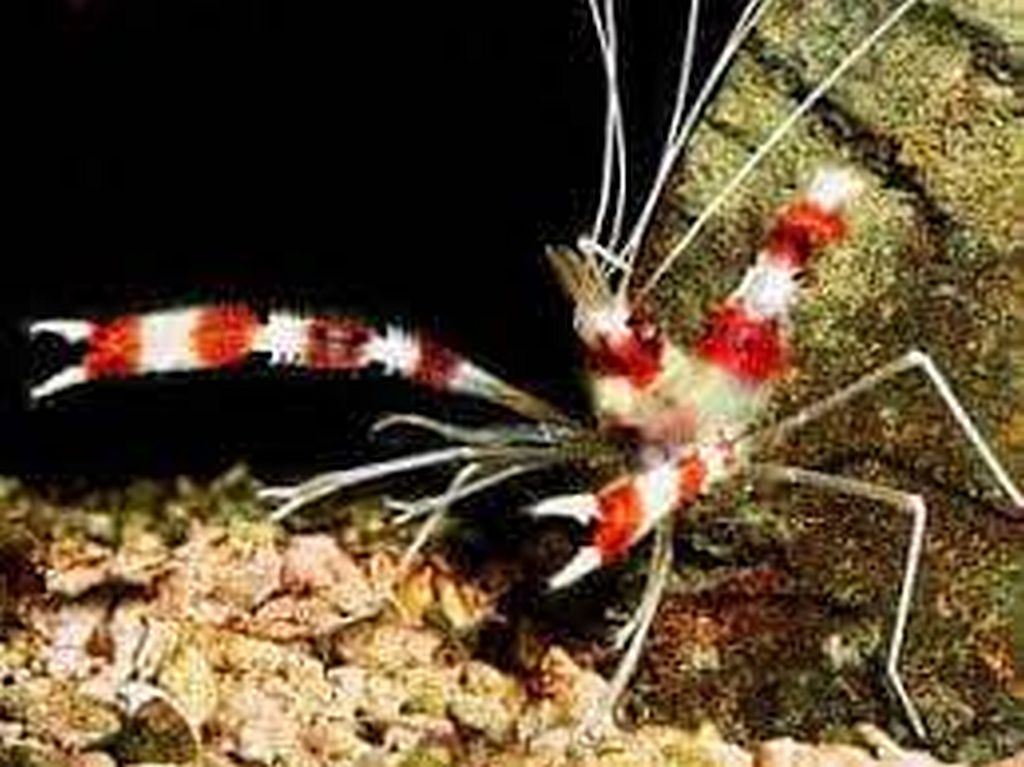
Coral Banded Shrimp (Stenopus hispidus)
and fish pests, which makes them excellent candidates for a utility cleanup crew. In a FOWLR or reef aquarium, they are great scavengers and discretionary cleaners that thrive on fish parasites, dead tissue, unwanted bristleworms, detritus, and leftover fish waste.
Although the Coral Banded Shrimp is relatively easy to keep and very hardy once acclimated; they are extremely sensitive to sudden changes in water values, rapid fluctuations in salinity and pH, and copper-based medications that are lethal to them.
An efficient, high quality filtration system and protein skimmer is highly recommended to maintain the pristine water quality and stable water conditions they require. Adequate concentrations of calcium, magnesium, and iodine are also essential to properly support their 3 to 8 week molting and skeletal regeneration cycle.
Though Coral Banded Shrimp pairs often produce eggs and spawn in captivity, they do not generally yield surviving offspring in a home aquarium environment.
Coral Banded Shrimp are dedicated oviparous breeders. The male courts the female sequentially after she molts. The female carries the fertilized, color-shifting eggs directly under her abdomen, attached to her swimming legs for roughly 16 days until the microscopic larvae hatch out.
The microscopic free swimming larvae normally undergo a long 210 day pelagic stage when released into the water column as dark plankton, however, in a standard reef aquarium the release will usually trigger a feeding frenzy from corals and fish. Few if any free swimming larvae escape from being quickly consumed by tankmates before they can metamorphose into crawling juveniles.
In their natural environment, the Coral Banded Shrimp feeds on tissue parasites, fungi, and damaged skin cells picked from cooperative reef fish; along with small arthropods and benthic detrital elements. Their primary wild food consists of scavenging organic matter and operating cleaning stations for large reef species like moray eels and tangs.
In an established reef aquarium environment, Coral Banded Shrimp will aggressively feed on bristleworms and natural tank detritus along with any leftover shrimp or fish foods, such as meaty sinking pellets, flakes, mysis shrimp, brine shrimp, and chopped frozen seafood.
The Coral Banded Shrimp (Stenopus hispidus) is a very common saltwater species that that is available to tropical fish keeping enthusiasts from a variety of online retailers, local fish shops, and wholesalers at very reasonable prices that range from $14.00 to $64.99 per individual; depending size, quantity, variety, area of collection and vendor.
Because these shrimp are highly aggressive toward their own kind and must be housed singly or as a true male-female pair a certified mated pair generally costs around $39.69.
The multi month larval stage makes commercial captive breeding exceptionally challenging which is why the majority of specimens are wild caught. Captive bred specimens are more costly but are said to be less likely to nip at corals or soft polyps in a reef tank.
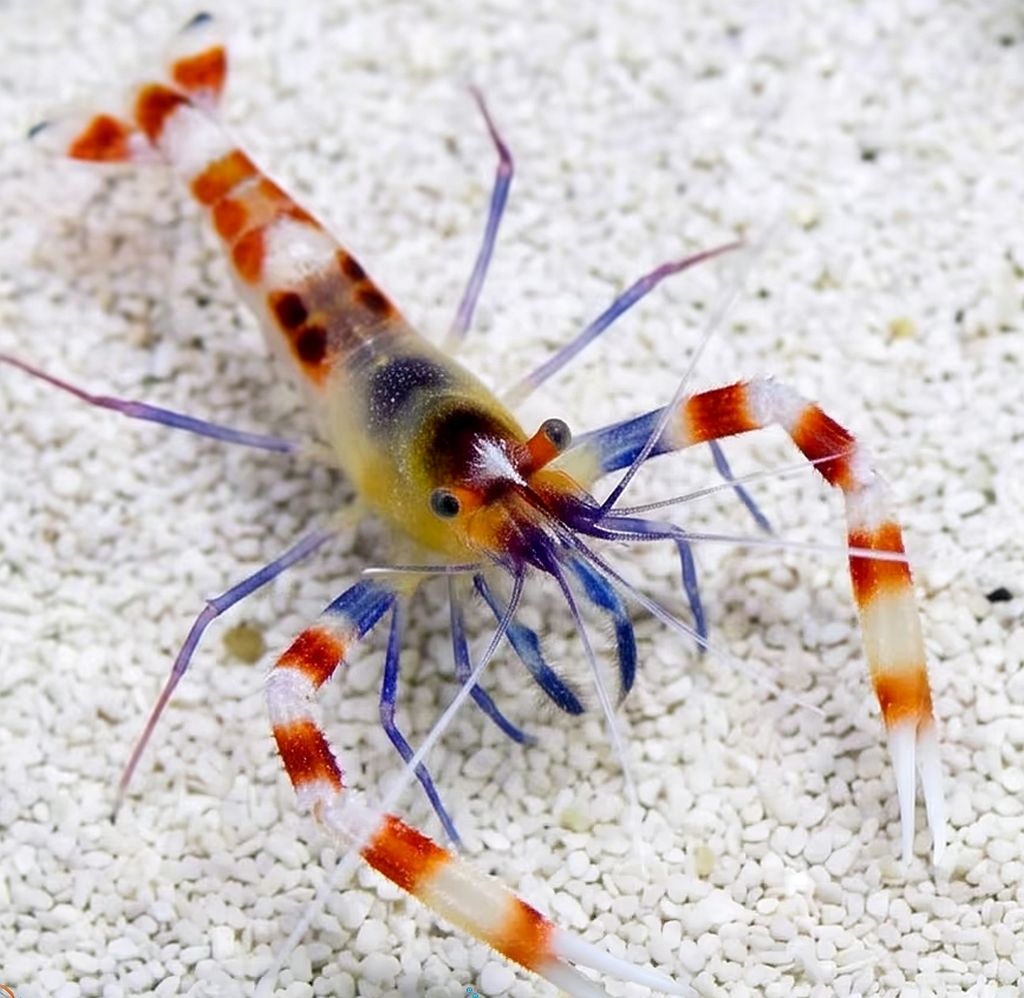
Coral Banded Shrimp (Stenopus hispidus)
Minimum Tank Size: 30 gallons
Aquarium Type: Established Reef or FOWLR
Care Level: Easy
Temperament: Semi-aggressive (Territorial with other shrimp)
Aquarium Hardiness: Hardy
Water Conditions: 72–78°F, dKH 8 to 12, pH 8.1–8.4, sg 1.023–1.025
Max. Size: 3″
Color Form: Red and White Banded
Diet: Carnivore/scavenger
Compatibility: Reef Compatible With Caution
Origin: Indo-Pacific, Caribbean
Family: Stenopodidae
Lifespan: 3 – 5 years
Aquarist Experience Level: Beginner