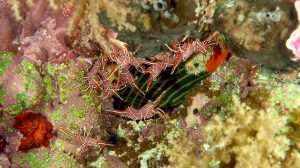
Camelback Shrimp (Rhynchocinetas durbanensis)
The Camelback Shrimp (Rhynchocinetas durbanensis), known to tropical fish keeping enthusiasts as the Hinge-beak Shrimp, Dancing Shrimp, or Durban Hinge-beak Shrimp, is a marine decapod crustacean species that is found throughout the Indo-West Pacific, from South Africa and the Red Sea to Indonesia, the Philippines, and southern Japan.
Camelback Shrimp are normally found among shallow coral reefs, rocky overhangs, and seawalls of their range at depths from 10 to over 110 feet where they aggregate in large, dramatic numbers.
Rhynchocinetas durbanensis are not natural diggers. They are constantly on the move and are primarily considered nocturnal animals, with the peak of their activity beginning at dusk, though they will readily venture out during the day if kept in a shadowed environment.
Substantial numbers of Camelback Shrimp can typically be found crowded together on the roofs of caves, beneath large table corals, or wedged deeply into rocky fissures. Apparently, these dark structures provide the Camelback Shrimp a safe haven from pelagic predators that hunt them from the open water, especially large wrasses and groupers.
Although Camelback Shrimp are frequently found together in large numbers sharing the exact same cave system, they are highly social animals that thrive in large colonies like the one below.
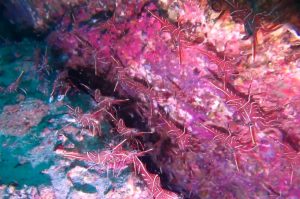
Camelback Shrimp (Rhynchocinetas durbanensis)
They are a docile, non-aggressive species that actively seek out the company of conspecifics, forming massive aggregates that safely move and “dance” together without exhibiting the territorial aggression commonlseen in other ornamental shrimp species.
Rhynchocinetas durbanensis are small marine crustaceans that seldom exceed 1.5 to 2 inches in body length.
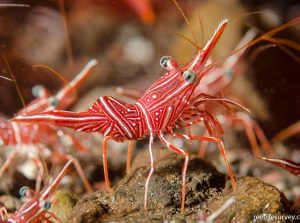
Camelback Shrimp (Rhynchocinetas durbanensis)
True Camelback Shrimp have a striking, highly intricatly colored semi-translucent body that is covered in a network of brilliant red lines and brilliant white stripes, interspersed with small white spots. They possess a characteristic humped back (carapace) and a unique, highly specialized upward-curving rostrum (beak) that is hinged, allowing the shrimp to swing its beak up and down in a mechanical nodding fashion.
Camelback Shrimp are gonochoric (separate male and female individuals), displaying pronounced external sexual dimorphism. Dominant mature males are easily distinguished from females by their massively enlarged, elongated third pair of maxillipeds (pincers), which they use to establish dominance within the colony hierarchies and display during courtship.
Unlike true cleaner shrimp that rely on symbiotic immunity for defense, the Camelback Shrimp does not have a proper individual defensive mechanism against predators. Instead, they rely strictly on safety in numbers, cryptic coloration, and agility.
When threatened, the entire colony will utilize a rapid backward tail-flick to simultaneously scatter into the deepest, darkest cracks of the live rock.
The Camelback Shrimp is reef safe with caution and is best housed in a well-established FOWLR or reef aquarium of at least 10 gallon capacity with a fine coralline gravel or live sand substrate decorated with plenty of live rock arranged into large caves, dark overhangs, and hiding places, and sufficient room for a small group to colonize. The shrimp are too small to cause structural damage to tank decor, but they must be monitored closely around corals.
Unlike true Skunk Cleaner Shrimp (Lysmata amboinensis), Camelback Shrimp are notorious for nipping at colonial zoanthids, soft leather corals, disc anemones, and the delicate polyps of large polyp stony (LPS) corals, especially if they are underfed.
Camelback Shrimp are non-aggressive, docile by nature, and do exceptionally well in a FOWLR tank with peaceful tank mates like small, non-carnivorous reef fish. Good tankmates include Firefish, Gobies, Blennies, Cardinalfish, and peaceful snails like Trochus or Cerith snails.
Avoid keeping them with large and/or aggressive fish, Hawkfish, Dottybacks, Coral Banded Shrimp, and all species of large predatory wrasses or triggers that will quickly view these small colonial shrimp as a primary food source.
Unlike other cleanup crew members, the Camelback Shrimp (Rhynchocinetas durbanensis) has a ravenous appetite for micro-fauna and organic debris rather than fish parasites, which makes them excellent candidates for a general tank cleanup crew. In the aquarium, they are great scavengers that thrive on detritus, debris, uneaten fish food, and organic waste that settles into the shadows of the aquarium rockwork.
The Camelback Shrimp is relatively easy to keep and quite hardy compared to other delicate cleaner species. They are very sensitive to sudden changes in water values, especially rapid drops in salinity, and copper medications that are completely lethal to them.
In addition to clean water quality, they require a constant food source to keep them from picking at corals, a stable tropical water temperature between 72–78°F, and adequate iodine levels to support their frequent molting process. An excellent filtration system and a protein skimmer are recommended to maintain this species.
Though Camelback Shrimp frequently form pairs and produce eggs within a colony, they do not generally reproduce successfully in a standard home aquarium environment due to their complex planktonic larval stages.
Mating occurs right after a female molts, and the female carries a cluster of bright fertilized eggs under her abdomen attached to her pleopods for roughly 10 to 14 days. The microscopic larvae hatch and are released into the water column after dark. In a standard aquarium, the water may briefly trigger a feeding frenzy among corals and other filter feeders, as the microscopic free-swimming larvae are treated as immediate planktonic food and are quickly eaten by fish before they can ever complete their development.
In their natural environment, the Camelback Shrimp feeds on detrital elements, micro-invertebrates, algae biofilm, and organic debris found within reef crevices. Their primary wild food consists of scavenging organic waste from the seafloor and opportunistically picking at sedentary colonial invertebrates.
In an established aquarium environment, Camelback Shrimp feed on the natural detritus in the tank along with any leftover shrimp or fish foods, such as flakes, pellets, algae wafers, frozen mysis, and brine shrimp. They are highly enthusiastic feeders that will quickly swarm any food that lands near their chosen cave or overhang during feeding time.
The Camelback Shrimp (Rhynchocinetas durbanensis) is a very common saltwater species that can be purchased from online retailers, local fish stores, and wholesalers at very reasonable, inexpensive prices. They are frequently sold online to tropical fish keeping enthusiasts in small groups as active, colorful utility additions to community tanks.
Because commercial captive breeding is not yet widely established, the majority of Camelback Shrimp sold are wild caught.
Current retail prices for the Camelback Shrimp generally range between $12.48 to over $29.99, depending on the sizing, variant, area of collection, and vendor. This makes them significantly more budget-friendly than standard Skunk Cleaner or Fire Shrimp species.
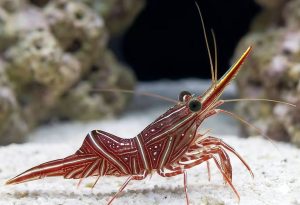
Camelback Shrimp (Rhynchocinetas durbanensis)
Minimum Tank Size: 10 gallons
Aquarium Type: FOWLR or Reef with Caution
Care Level: Easy
Temperament: Peaceful
Aquarium Hardiness: Hardy
Water Conditions: 72–78°F, dKH 8 to 12, pH 8.1-8.4, sg 1.023-1.025
Max. Size: 2″
Color Form: Red and White Patterned
Diet: Omnivore/scavenger
Compatibility: Reef Compatible (With Caution)
Origin: Indo-West Pacific
Family: Rhynchocinetidae
Lifespan: 1 – 3 years
Aquarist Experience Level: Beginner