Author Archives | Fishkeeper

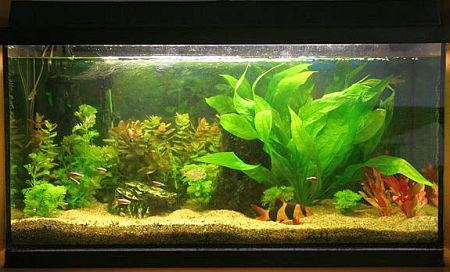
Well Planted Angelfish Tank

Angelfish – Care

Tropical fish keeping enthusiasts the world over covet freshwater angelfish as “the fish to have” in their aquariums.

Freshwater Angelfish are cichlids common to the Amazon region of South America and are one of the more popular species used in starting up new single species aquariums.

Although they add a lot of grace and beauty to a new tank,  they are not the easiest fish to care for unless you have already educated yourself about their needs.

Because they grow up to be over 6 inches in length,  Angelfish require a large tank preferably planted with live plants and furnished with a piece of driftwood to maintain the soft, slightly acidic water they require.

Angelfish thrive in soft (0.6 to 1.2 dH), slightly acid (pH 6.5 to 6.9) water but have successfully bred in water with a pH of 6.8.  Their preferred temperature range is between 74 F to  78 F,  but for spawning the water temperatures should be raised to 80 degrees.

  • Tank Size

If you plan on breeding angelfish, the minimum size tank needed is 20 gallons, but if you plan to leave the fry with the parents after a successful hatching, you should up-size to a 30 gallon, or better yet a 55 gallon tank setup.   A mature breeding pair of angels with several hundred fry to care for would be severely cramped in anything less than a 55 gallon tank, so get the largest tank you can afford.   A large tank also provides a sense of security to the fish and minimizes the possibility of the parents eating their offspring.
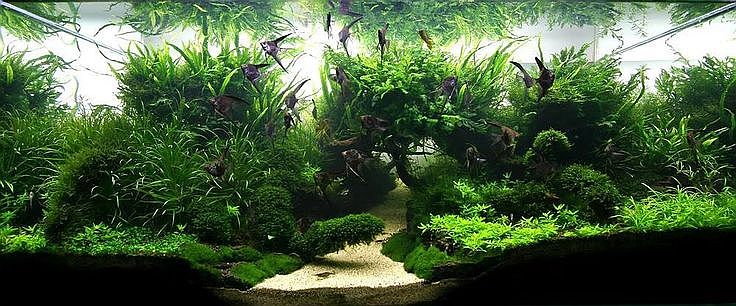
Well Planted Angelfish Tank

Well Planted Angelfish Tank

  • Live Plants

Whenever possible, live plants should be included in all freshwater tanks except for those housing African cichlids.   Live plants act like a canary that miners used to bring into a mineshaft.  They monitor water quality and will die before the fish become ill and when the water quality in the tank becomes inferior.   Live plants also help keep the water clear, hinder the growth of unwanted algae and add Oxygen to the water.

Angelfish love to swim around and lay their eggs on Amazon Sword Plants but any broad leaf aquatic plant will do.   Amazon Sword Plants (Echinodorus) are indigenous to the flood plains of South America and are in a genus that includes more than fifty hardy and adaptable species.  They do well in soft, neutral to slightly acidic water which is what your angelfish require.

Java Moss (Vesicularia dubyana), Water Sprite (Ceratopteris) and Java Fern (Polypodium pteropus) are some other beautiful plants that adapt well to aquaculture and compatible with South American Angelfish.

  • Diet

Angelfish are naturally carnivorous in the wild and should be fed protein rich foods to help them grow to optimum size and stay healthy, especially if you plan to breed them.    Angelfish can survive on a diet of flake food but will reach breeding condition more quickly if you supplement their diet with bloodworms (tubifex), daphnia,  or newly hatched brine shrimp.   An occasional sprinkling of shrimp pellets, mosquito larvae, chopped beef heart or earth worms will also be appreciated.   Most pet shops sell frozen tropical fish foods for saltwater fish that you can also feed to your freshwater angels.  Most commercial breeders are set up to hatch out brine shrimp eggs to feed the parents along with live baby guppies.

  • Compatibility

Being a cichlid, angelfish are naturally aggressive to other fish and even their own kind.

When starting a new aquarium, most people will begin with a “community” tank of more than one species.  Although angelfish are sometimes included in the mix, they grow quite large and will usually start picking on their tank mates causing other problems.   Angelfish are more suited to a single species tank or to a tank with other species (such as Discus) that coexist with them in their natural habitat.

In a community tank it is true that almost any species can adjust to their environment and to their tank mates if they are introduced together, but unless you are accustomed to caring for their special needs, angelfish are one species  that should be housed by themselves.

  • Breeding

Many varieties of angelfish are now being bred in captivity in several new color variations.   If you get the urge to breed angelfish, the most economical way of assuring that you get at least one mated pair is to buy at least six specimens from a tank of young angels.   Choose your fish carefully and select only active, strong healthy fish with perfectly formed fins.  The top and bottom fins should be straight and their long “feeler fins” should be intact.  If possible buy fish that are actively feeding.  These grow more quickly and will usually have a higher rate of egg production when they reach maturity.  DO NOT buy any fish from a tank with dead fish in it or that show signs of disease.

Once you select your fish, place them in at least a 20 gallon planted aquarium to grow up in.  Feed them the high protein diet mix listed above and they will quickly reach maturity.

As the fish mature, they will begin to pair off with each other.  At this point you can separate the pair and place them in a breeding tank set up with a clean piece of slate or flower pot and leave them until they commence breeding activity.   Breeding can be stimulated by a partial water change and increasing the temperature in the tank to between 80 and 82 degrees F.

The female will begin to show a prominent little nipple like projection (ovipositor) that is a sure sign that spawning is about to commence.    The ovipositor at the vent area is where the female deposits her eggs from and in the male, where he fertilizes them.

The pair will start cleaning a spawning site a couple of days before actually laying eggs.  When the area is thoroughly cleaned by the fish, the female makes contact with the the slate, flower pot, leaf or whatever and deposits her eggs while the male immediately moves in to fertilize them.   After several hundred eggs have been deposited the pair will hover over the eggs and continuously circulate water over them to insure fertilization.  Unfertilized eggs turn white and are quickly removed by the parents.  Depending on the temperature, egg hatching occurs 36 to 48 hours after fertilization.

If you see some eggs fall off the slate or a leaf where they were laid, you can pick them up with an eyedropper or a turkey baster and squirt them back to where they were or just leave them alone.  They will eventually hatch out.

  • Egg Hatching and Rearing Fry

If you decide to leave the parents with the eggs, let them alone as much as possible and feed your fish as you normally would.   Set up a “seeded” sponge corner filter in a separate bare tank with plenty of aeration for the fry to live in when the eggs hatch.  Do not place them in a tank with a conventional side filter or an undergravel filter.  Both will suck up the fry and an undergravel filter, despite how clean the tank water looks, is filthy underneath.  You can “seed” a corner filter by letting it run in an established tank for a few weeks before you need to use it in the tank for rearing the fry.

After the eggs hatch, drop the fry into the bare aquarium and do not feed them until their egg sacs are absorbed.  This usually takes anywhere from 3 to 6 days.  Feeding them before then only fouls the water and could create fungus problems.  There is a period of time after hatching and before the free swimming stage when the fry will stick together.  When this happens increase the aeration in the tank so all the fry have sufficient oxygen.  When the egg sacs are absorbed and the fry are free swimming, you can start feeding the fry with newly hatched brine shrimp.

A scrupulously clean aquarium is essential for the health and growth of your Angel fish fry so when the sponge corner filter starts to discolor in the bare tank, rinse it out in a container of tank water, NOT TAP WATER.  Clean any sediment from the bottom of the tank daily to prevent ammonia spikes that can kill the fry.

  • Types Of Angelfish

Although most mutations of angelfish are lost in nature, tropical fish keepers have been selectively breeding new strains of angelfish for years.    The following is only a partial list of what is available today in the tropical fish market.

Silver Angelfish
Silver Angel

Silver Angel

The Silver Angelfish is the normal coloration of the wild Angelfish that are collected from the Amazon River basin in South America.

It has a silver white body with four black vertical bars running through it.  The first bar always passes through the eye.

The picture to the left depicts this common variety but some specimens have black freckles over the top half of their bodies.
Zebra Angelfish

Zebra Angelfish

Zebra Angelfish

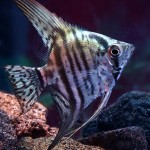
Zebra Angelfish have more vertical stripes on them than the Silver Angelfish.
The stripes continue through the tail.
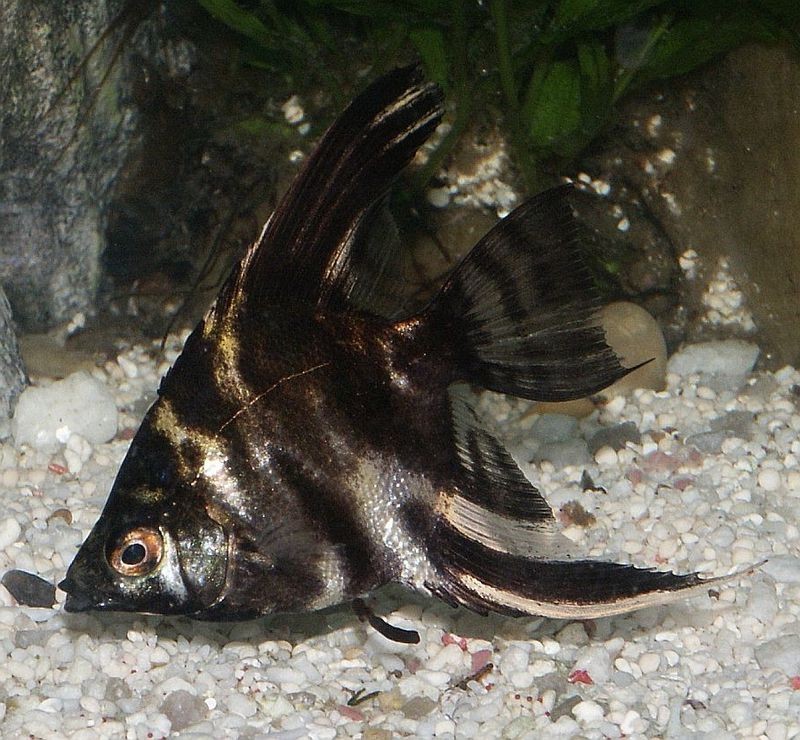
Black Angel

Black Angel

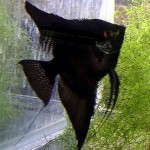
Black Angelfish

These angels are a solid, velvety black variety bred by mating a Black Angel to a Black Lace Angel.
The offspring will be 50% Black and 50% Black Lace.   If you mate a Black Angel to another Black Angel you will get 100% Black offspring.
Black Lace Angelfish

Black Lace Angelfish

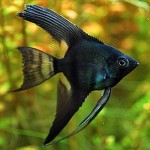
Black Lace Angelfish

The Black Lace Angels are the steppingstones to the solid black variety.  The primary difference between a Black Lace and a Silver Angel is the intensity of the colors, especially on the fins where you see the lace like effect that gives them their name.  When you mate two Black Lace Angels, you can expect to get 25% Black, 50% Black Lace and 25% Silver offspring.  The Black Angel fry are very fragile and usually don not survive to the free swimming stage.  They should be immediately transferred and cared for separately if they do make it to the free swimming stage.
Half Black Angel

Half Black Angel

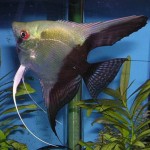
Half Blacks

As their name implies, Half Blacks are just that.  The forepart of their bodies are white and rear is black.  The black cuts right through the top and bottom fins and goes right through the tail.

Pearlscale Veiltail Angel

Pearlscale Veiltail Angel

Veiltail Angels

Veiltail Angels come in all color varieties and all have very elongated fins.   Veiltail Angels are bred by mating a Veil Angel with a Silver Angel.  The offspring will be half Veil and half Silver.  If you breed two Veiltail Angels together, you can expect half of them to be Veil Angels, 25% ordinary Angels and 25% Long Tailed Veil Angels.  The Long Tailed Veil Angels will have noticeably longer fins and tails than the Veil.     Breeding two Long Tailed Veil Angels together will produce all Long Tailed Veils but they will not be as hearty and they will produce fewer eggs when they spawn.   Some Veiltail Angels have fins so long that they become bent and are often broken.

Marble Angels
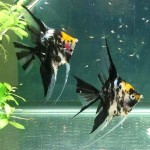
Marble Blushing Angel

Marble Blushing Angel

Marble Angels have a broken pattern of black and silver that can only be described as Marble.

There may be undertones of golden around the head and back areas but the fins usually have rays of black and white.  If you breed a Marble Angel with a Black Lace Angel, some of the offspring will be Black Lace Marble, with the traits of both parents.

Golden Angel
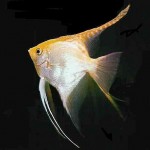
Golden Angel

Golden Angel

Golden Angelfish can be all golden in color with no other markings or from a solid silvery white to a gold color.  There is usually a gold mantle over the head and back areas.

Blushing Angel
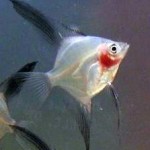
Blushing Blue Angel

Blushing Blue Angel

Blushing Angels due to selective breeding are the most delicate of angels.  They have a red cheek area with no obvious pattern on a white body.

Pearl Scale Angel
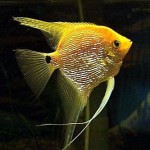
Pearlscale Gold Marble Angel

Pearlscale Gold Marble Angel

Pearl Scale Angels are absolutely beautiful fish.  They have bumpy almost rough looking scales on their body and come in many color varieties.  The are outstanding when shown under suitable lighting.

Don’t let the beautiful delicateness of angelfish fool you. Pairing them with bettas, tetras or guppies in a community tank is not recommended unless you want a bloodbath.  Because most beginners start tropical fish keeping with only one species of fish, keeping angelfish may be your best option.

Remember that Angelfish lay lots of eggs and are great parents.  They will usually live with their young without fear that they will eat them in their infancy.  But, unless you don’t plan on selling angelfish to pet shops or other breeders, you will need a larger tank or tanks to keep all the fish.  Despite the challenges they present, Angelfish are less difficult to manage as their other cichlid relatives like Discus.

Provide them with a large well planted tank, keep their water clean, feed them a carnivorous diet and you will have and amazing tropical fish tank to enjoy for a long time.

Posted in Angelfish, Featured Articles, Freshwater Fish, South American Cichlids0 Comments

Geophagus_pellegrini

Tropical Fish Keeping – Popular Freshwater Tropical Fish Species

Listing all of the popular freshwater tropical fish species adapted to aquarium life would be an effort in futility.  There are literally more tropical fish species in Africa, South and Central America and the Orient than you could ever count and scientists are discovering new ones on a regular basis.

If you want your tank filled with beautiful fish that will give you hours of enjoyment;  here are some of the more popular and readily available fish species that people have been putting into their aquariums for a number of years.

The following species are all freshwater fish.  Freshwater tanks are more affordable and easier to maintain than saltwater tanks and they provide tropical fish keeping enthusiasts with just as much pleasure as saltwater, without the learning curve.   Once your fish keeping skills have been refined and your tank is large enough, you can always adapt it to saltwater use at a future date.

  • Catfish –
AsianGlassCatfish

AsianGlassCatfish

There are many species of tropical catfish that can be kept in your tank that will remain relatively small.

Catfish are bottom feeding scavengers and will help clean up any uneaten fish food from the bottom of your tank.

Most species of catfish are perfect for community tanks and will keep to themselves foraging just off or on the bottom of the tank.

The more common types like the Pictus, Synodontis, Porthole, and Armored catfish seldom grow over five inches long.  A “soft” bottom or coated surface gravel on the bottom of the tank will help bottom feeders forage for food lodged there.

Some of the more exotic species like the Red Tail and Shovelnose catfish can grow several feet long and should be avoided.

  • Cichlids –
Haplochromis

Haplochromis

Countless books have been written about these beautiful fish.  They are found in the tropics of South and Central America and in Africa’s lakes and rivers.

One of the more popular and common cichlids is the Angelfish with their many varieties.  All have strikingly colorful stripes and long pointed fins.

The Rams and Geophagus (Pearl Chiclid) have bright sparkling scales.

The Lake Malawi African Cichlid varieties with their  bright, sparkling scales and dazzling color patterns are some of the most beautiful in the world.

Most –cichlids are territorial and will require special housing.   Because they usually claim the entire tank as their territory, they are not suitable for community tanks.

  • Loaches –
Kuhli Loaches

Kuhli Loaches

Loaches like catfish are bottom feeding scavangers and can be found in most South American rivers and lakes.

Loaches have small wiskers and spines that help them hold onto rocks in fast currents.  They are readily available in most pet shops are are an asset in the community tank settings.

The only drawback to keeping these little cleaners is that they are sensitive to high nitrate levels and will die without water changes.  Never put loaches in a tank before it has gone through the cycling process.

  • Tetras –
Congo Tetra

Congo Tetra

These small brightly colored South American fish thrive in large schools and in wide open spaces.

They do exceptionally well in planted tanks and love to hide in the vegetation or driftwood.  Although they require slightly acidic water to breed, they can tolerate being in a neutral environment.

Tetras are great in community tanks with their own kind and are quite peaceful with most other peaceful species.

To highlight their many varied colors, many tropical fish keepers accent the surrounding lighting to keep the tank and substrate materials slightly darker.

  • Rainbow Fish
Boesemani rainbow

Boesemani rainbow

Rainbow fish –are small, brightly colored freshwater fish found in northern and eastern Australia, New Guinea, islands in Cenderawasih Bay, and the Raja Ampat Islands.

If you really want to add some vibrant color to your tank, buy yourself some rainbowfish.

Rainbow fish are the perfect addition to your community tank. They move in schools, love to swim fast and are constantly darting in and out of things.

Having only one or two rainbow fish in a tank can lead to aggressiveness and since they do better in schools, purchase at least six when adding then to your tank.

Some popular types are the Celebes rainbow, the checkered rainbow and the Boesemani rainbow pictured here.

These are only a few of the many types of tropical fish you have available to populate your freshwater tropical fish tank.  Start up with a few of these varieties and build from there.

Look for specific articles on each fish under Tropical Fish Species in future posts.

Posted in Featured Articles, Freshwater Fish, Tropical Fish Keeping, Tropical Fish Species0 Comments

hatchetfish school

How To Keep Your Fish Healthy

Learning how to keep your fish healthy is essential if you plan on keeping them for any length of time.

Except for fish breeders, most tropical fish keeping enthusiasts want to keep their fish for as long as possible.  In order for them to survive and live a normal lifespan,  you will have to learn how to keep your fish happy and healthy in their enclosed environment.
butterfly fish

Black African Butterfly Fish

Here are some things you need to know when operating a tropical fish aquarium that will keep your fish healthy and vigorous.
  • Cleanliness
To minimize the loss of fish in any enclosed environment you need to keep the environment as clean as possible.

Clean you tank regularly.   Even with the best filter, tropical fish tanks are not self cleaning.  This is especially important with saltwater fish.

Filters can quickly become overloaded, especially when too many fish are added to the tank too quickly.   When adding fish to your tank, always add only a few fish at one time so that the  tank environment remains in balance and has a chance to settle down.  Adding too many fish at one time creates an ammonia spike that can kill your fish population.

Keeping your tank water clean greatly reduces this scenario.

  • Acclimation

Acclimate new fish to the tank environment slowly over a period of hours whenever possible.  – It is never a good idea to dump your fish into the new tank water, especially with the water in the bag that you transferred the fish home with.   If the shock doesn’t kill them, the ammonia spike from the contaminated water in the bag may.   Instead, empty your fish into a suitable container and add aquarium water to the fish one cup at a time until the fish can get used to it.   After about a half an hour or so, and a few additional cups of tank water, your fish will be ready to enjoy his new environment without difficulty.  Make sure to net the fish from the acclimation container into your tank and NOT add the water to your tank.

  • Coexistence

Choose fish for your tank that can coexist together. – All fish are not docile and most are bullies or predators in nature.  If you get an aggressive fish that likes to fight and mix it with another friendly species, your friendly fish will not be friendly for long and will most likely either die from infections caused by the battles or be on the aggressive fish’s menu.  Tropical fish selection is one of the most important things you need to educate yourself about if you plan on being a successful tropical fish keeper, so learn which fish can be kept together before you buy.

  • Purchase Healthy Fish

Examine your fish carefully before buying one for your tank.  Never mix a sick fish with your healthy fish.  Fish with white spots that are not supposed to be there, probably have the “ick.”  Fish that are swimming on the bottom of the tank at the pet store are usually suffering from some sort of ailment.  It could be the “shimmies”, an internal parasite that could be transferred to other fish in your tank, or some other parasitic ailment.  In any event, don’t buy fish that look or act sick.

  • Overfeeding

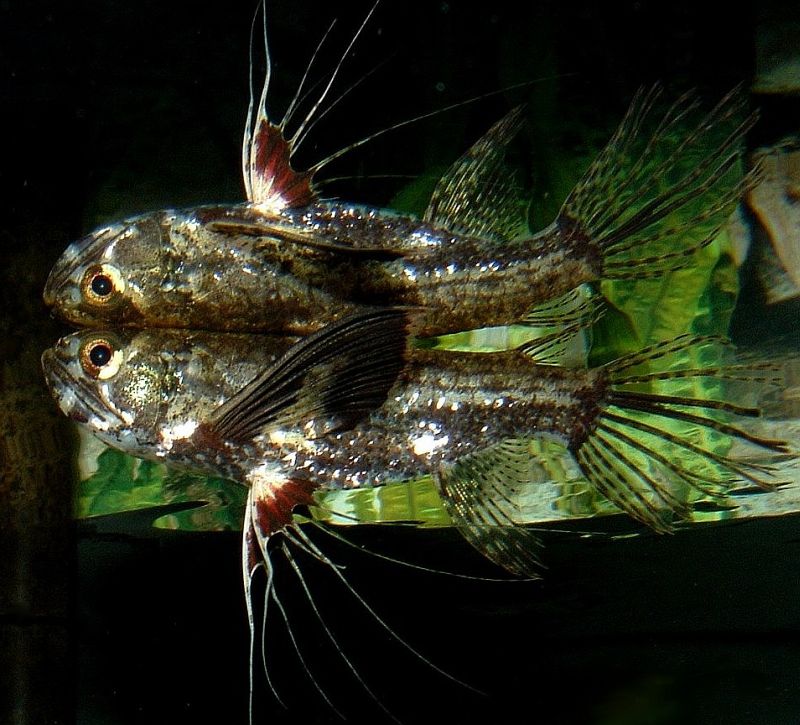
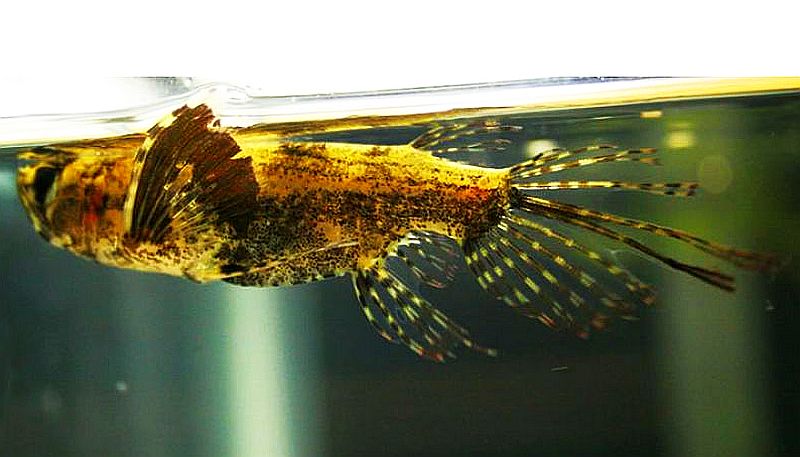
Try not to over feed your fish. Many fish swim to the top of the tank for other reasons than to get fed and many fish like the Hatchet fish and the African Butterfly fish live their entire lives on the surface.  Fish only need a few pieces of flake food or pellets a day to stay healthy.  Feeding them any more than that is a waste and will pollute the water when excess food collects on the bottom of the tank.  Overeating can also cause illness or even death in some species.  Koi often die from overeating during cold temperature conditions.

African Butterfly Fish

African Butterfly Fish

  • Give Your Fish Light

Like humans, fish need light about eight hours a day in order to remain healthy.   The easiest way to accomplish this is to buy a hood for your tank and plug it into a cheap timer.  Some fish (primarily saltwater fish, corals and inverts) will die if they do not receive a sufficient amount of daylight spectrum.   Too much light promotes green algae growth so don’t leave your tank hood on 24 hours a day unless you have a lot of plecos in your tank to eat the algae.

To keep your fish healthy, provide them with sufficient room to swim around, clean water, food, light and pleasant surroundings.  Sounds a lot like us, don’t you think?

If you learn how to take care of their environment from the beginning, maintaining a healthy tank is a breeze.

Posted in Featured Articles, Setting Up Your First Aquarium, Tropical Fish Keeping0 Comments

Elephant Nose Fish

Tropical Fish Selection: What You Need To Look For

Tropical fish selection is one of the most important things you need to educate yourself about if you plan on being a successful  at tropical fish keeping.

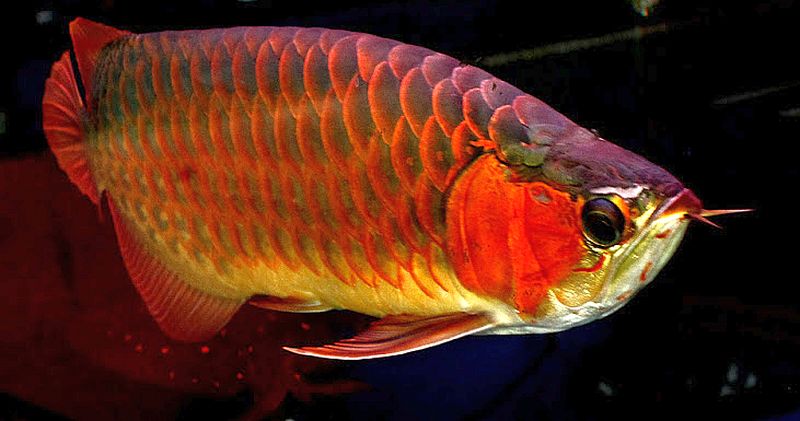
Super Red Arowana

Super Red Arowana

Out of the hundreds of thousands of fresh and saltwater fish species found around the world, how do you know which ones are adaptable for life in your aquarium?

If you have ever visited your local aquarium you already know that tropical fish come in all sizes, shapes and colors.  Although they are all beautiful, not all fish can be successfully housed in an aquarium regardless of it’s size.

When purchasing your fish online or from your local pet shop, you need to be discerning about which fish you put together in your tank.  So, here are some tips to help you choose just the right mix of fish for.

  • Know Your Fish

Tropical fish selection becomes much easier when you know your fish. Your fish tank can be a literal work of art of living colors or a “dead zone” if your tropical fish selection skills are not up to par.  Like any other pet species, tropical fish have different temperaments and “personalities”.

Fortunately many books have been written about freshwater and saltwater tropical fish that can educate you on fish compatibility, heartiness, delicateness, difficulty to keep, feeding, danger to humans, etc.  You should educate yourself enough to be knowledgeable about the type of fish you want for your home before visiting your local pet shop.  Most pet shop owners are happy to guide you in your tropical fish selection but there are some unscrupulous vendors who will sell you any type of fish or a sick fish just to make the sale.

  • How healthy are the fish you are looking to buy?

Purchasing tropical fish is a long term investment that can become quite pricey, so you need to be armed with as much information about fish health and fish compatibility as possible.

When you decide to populate your tank with fish, your best bet is to buy them from a fish breeder or a reputable pet store.  These individuals already have the knowledge needed to help you make the right choices for your aquarium.

What signs do you look for?  Do the fish have any discolorations outside of their normal pigmentation?  If so, don’t buy them.  Do the fish have any white spots or fluffy white tufts on their bodies?  If they do they probably are infected with ick or a fungus.  Are the fish wagging and listless?  Don’t buy them.

Watch the fish a little while before you decide to purchase one.  If the fish is aggressively attacking it’s tank mates, it will almost certainly do the same to other fish in your tank when you bring it home.

  • Saltwater or freshwater? –

One major decision you need to make before even setting up a tropical fish tank, is if you want to keep freshwater or a saltwater fish.

Freshwater fish are much less expensive than saltwater fish.   And, you can get started keeping freshwater tropical fish for a lot less money.  In addition to their cost, saltwater fish are more labor-intensive when it comes to maintenance.   The temperature, salinity, pH and bacteria levels in a saltwater environment require constant monitoring to maintain the proper levels.   Generally, freshwater fish are heartier than their saltwater cousins and are more tolerant to conditions that would kill saltwater fish in a closed environment.

We recommend  that you start your tropical fish keeping efforts with freshwater fish until you gain the experience to migrate into saltwater fish keeping.

  • Fish Size

Fish size is also a factor in tropical fish selection.  –Tropical fish come in a variety of sizes.  They may start out in your tank less than an inch long, but they grow just like any other animal species.   The cute little fish that you selected for you 55 gallon tank may be small  now but could quickly outgrow your tank.  The South American Red Tail catfish is one such fish.  They are beautiful fish and fun to keep when small, but they quickly become aggressive and can reach 50 pounds in weight.

  • Overstocking

Another common problem with tropical fish aquariums is overstocking.  When you purchase your fish, keep in mind how big they will grow in your tank.  Buy fewer fish initially and add fish later, if you still care to.  An experienced tropical fish keeper may successfully keep a school of twenty small fish in a ten gallon aquarium, but it could be disastrous for a beginner to try it.

There is some debate over the one inch per gallon rule but it is a good place to start.  We recommend taking 80% of the net gallon capacity of the tank as the minimum number of fish to keep, especially with saltwater specimens.  The 80% number represents the actual amount of water in the tank when displacement from gravel and decorations are factored into consideration.

  • Food

Another consideration in tropical fish selection is food.  All tropical fish do not eat flakes or pellets.   Some like “elephant nose” fish need heartier food like tubifex worms.   Baby fry have their own specialized diet until they grow old enough to eat what you feed the rest of your fish.  Many saltwater fish have specialized diets that can put you in the poor house, so if you don’t want the food bill to bust your budget, select fish that have simple tastes.

Before you invest a lot of money in tropical fish, know what to look for when selecting a species and aim for the most peaceful fish.


Posted in Featured Articles, Setting Up Your First Aquarium, Tropical Fish Keeping0 Comments

300 Gal South American Chiclid Tank

Setting Up Your First Tropical Fish Aquarium

Setting Up A Tropical Aquarium
Tropical fish keeping is an enjoyable, relaxing hobby, but setting up your first tropical fish aquarium for the first time can be a daunting experience if you have never done it before.  Before you even think about bringing your first fish home, they must have a place to stay.  Since the aquarium will now be their new official residence,  it should ideally have as many of the amenities of their previous digs as possible.

Here is a simple guide to setting up your first tropical fish aquarium:

The first step is to purchase a suitable aquarium for the fish you intend to keep.  Ideally, you need to purchase the largest aquarium that you can afford.   A twenty or thirty gallon tank may seem large for one small fish, but in time the fish will grow and so will the other fish that you will inevitably add to the tank.  Size does matter!

Fish need plenty of room to swim around in both to reduce stress and to provide them with as much oxygen as possible to their gills.   The more fish you add to your tank, regardless of the size of the tank, the less oxygen the fish will be able to absorb.  Therefore take some time to plan ahead on what type fish you will be keeping and size the tank.

After you purchase a suitable tank, think about where you want to showcase your fish.  Positioning your aquarium is important for several reasons.   Placing your tank close to or directly in a window is a bad idea.  Sunlight can heat up your tank and cause the water temperatures to rise beyond what the fish can tolerate and you could find your beautiful tropical fish going belly up.

Conversely, situating the tank near an air conditioner or directly under a ceiling fan can have the opposite effect and keep the tank water too cool for many tropical fish species.   In most areas of the country you will need a heater to keep the tank water at a comfortable temperature for your fish, so be sure there is an outlet nearby for plugging in your heater,  running your filters and your tank lights.

Another consideration many people overlook is the weight of the tank when filled with water.  One gallon of water weighs approximately 8.35 pounds which makes a 55 gallon tank setup with gravel, scenery, filter, hood, stand, etc. weigh in at a minimum of 460 pounds.  Make sure your  tank is placed in an area that can support the weight when fully set up.

Your next step in setting up your first tropical fish aquarium is to add a suitable substrate over your under gravel filter along with rocks, caves, fake or real plants, etc. for the fish to enjoy.   If you are going to use an under-gravel filtration system, you need to cover it with at least an inch of gravel to provide for adequate filtration and slope it towards the front of the tank.  The sloping is done to aid in siphoning out fish waste and other nasty stuff from the bottom of the tank after it has cycled.

If you use not using an under-gravel filtration system, be sure to purchase either a good canister filter or an outside filter that requires at least two filter cartridges.   This minimizes the disruption of the naturally growing beneficial bacteria when your need to replace a dirty cartridge.  The idea is to replace one filter cartridge at a time at different intervals so you do not disrupt the nitrogen cycle.

Your next step is to slowly fill your tank with de-chlorinated tap water.    Tap water is convenient for filling freshwater aquariums but municipal water generally has high levels of chlorine, nitrites and nitrates in it which will kill tropical fish.   Additionally, depending on the area that you live in, your tap water may be excessively soft or hard.

Use one of the many available chlorine removal products, along with an approved test kit to check your water hardness before adding any fish to your tank and adjust your pH accordingly.   Add water to your tank slowly so you don’t disrupt the gravel, plants or other scenery.  Placing a small plate on the bottom of the tank and running your water on it will minimize cloudiness.

After your tank is filled, don’t bother re-testing the water until you add fish to the tank.    Pet stores stock test kits which you can purchase that test a variety of chemical levels in your tropical fish tank.   Excessive amounts of ammonia, nitrates and nitrites will kill your fish and should be carefully monitored after fish have been added to the tank.

Test the water regularly to make sure that these levels stay within normal limits as your tank goes through its nitrogen cycle.  The filtration system and beneficial bacteria that grow inside your tank environment will gradually rid the tank water of excess ammonia, nitrites and nitrates.  Keep a keen eye on these levels for the first few weeks before and after your tank cycles out.

Accessories and additional fish can be gradually added after your tank completes it’s nitrogen cycle.   Add only one or two fish at a time to prevent ammonia spikes.

Most fish love to hide in rocks or coral caves and swim through dense live or artificial plants, so it’s generally a good idea to make your tank look as much as possible like their natural surroundings.

An aquarium planted with live foliage along with an anchored wooden log will keep most South American fish healthy and happy and maintain the correct pH of the water. 

South American Tank

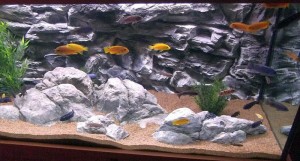
An aquarium set up with plenty of open rock structure and makeshift caves will keep African cichlids healthy and happy.

African Chiclids Tank

Want to know more about setting up your first tropical fish aquarium?   Look for additional posts on this site or visit your local bookstore to check out the numerous magazines and manuals written on how to care for your tropical fish.

Posted in Featured Articles, Setting Up Your First Aquarium0 Comments

Discus

Freshwater Tropical Fish – Brilliant Gems From The Deep

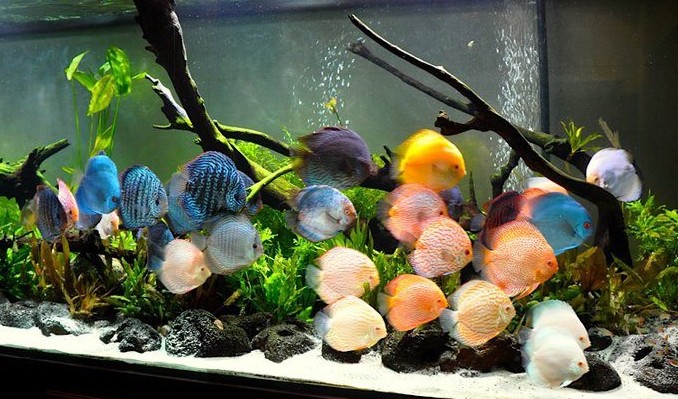
Discus School

Most people eventually tire of watching the same old goldfish swimming around in the bowl that they won at the local Fair and will start looking for something a little bit more exotic.

If you know where to go and what species to look for, you will be able to find many brilliant gems from the deep that will brighten up your home and provide your family with hours of enjoyment.   There are more types of brilliantly colored exotic tropical fish available to tropical fish keeping enthusiasts than you could ever imagine.   Many exotic fish have strange body shapes, weird breeding rituals, odd colorations and are found in sizes that can be kept in an aquarium environment with very little effort.

Exotic fish are hard to define.  There are so many fish species that are different from what we are normally used to seeing that we often refer to them as “exotics”.   Usually fish that are rare or hard to find have this distinction.  But, fish that are interbred to keep certain specific characteristics (like Discus, show Koi, Guppies or Angelfish) are also placed into this category.

Here are a few freshwater species you might want to check out.:

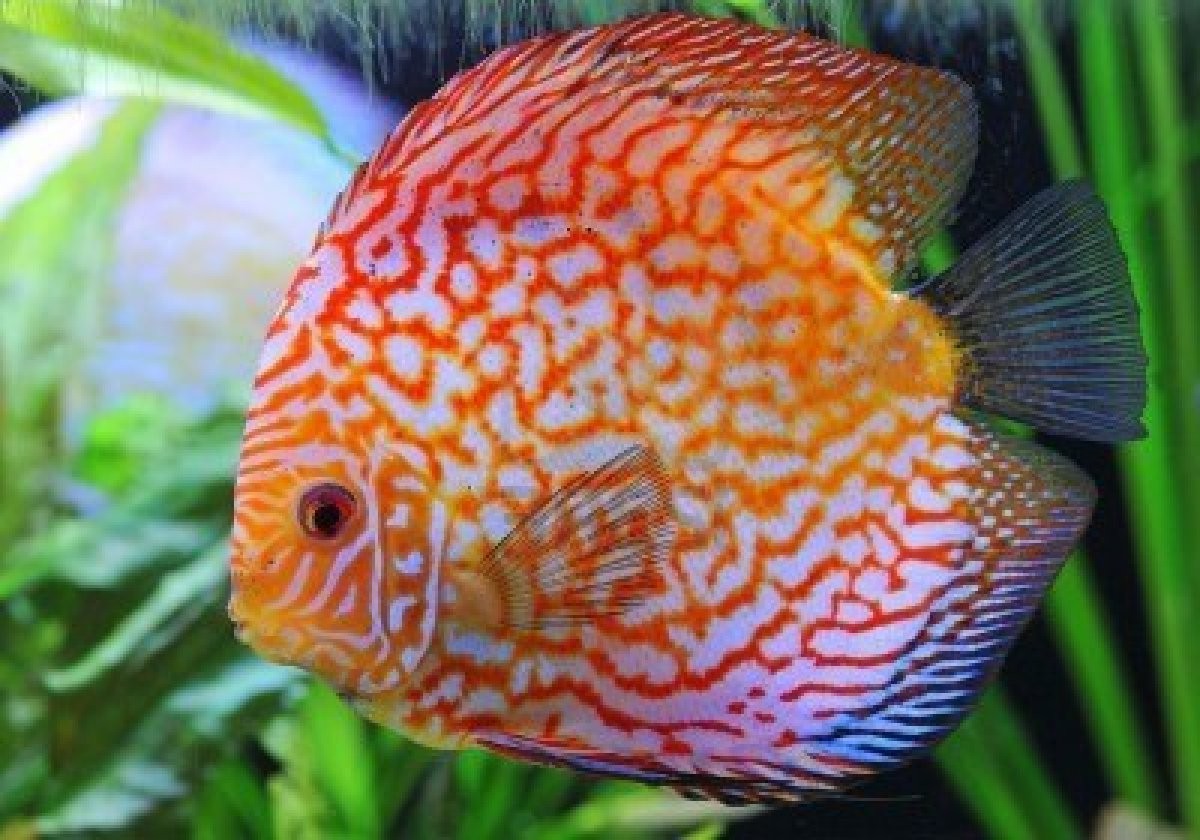
Discus FishDiscus – Discus are a flat, wide, brilliantly colored freshwater fish named after the discus used in the Olympic Games in Greece.  These shy fish come from the Amazon River Basin and easily get along with others of their kind in an aquarium setting.  They come in a variety of colors and patterns and are tank bred to enhance these characteristics.  Discus are sensitive to water quality changes, prefer soft water (pH level of 6) and temperatures at a constant 82 to 86 degrees F.   Discus fish thrive in deep water and because they can grow up to 7 inches long, they are not usually found alone in community tanks but in rather large aquariums.

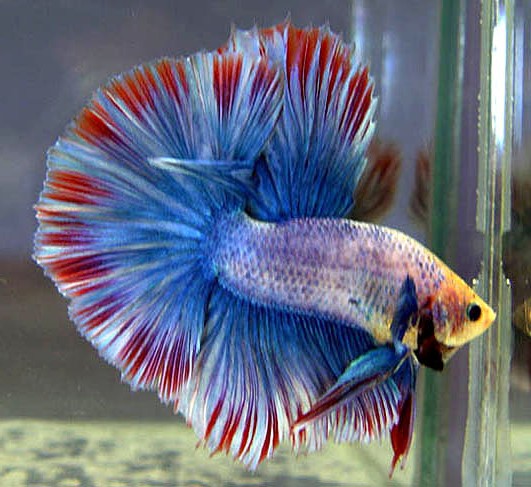
BettaBetta – Betta fish are beautiful and quite aggressive.  Bettas are VERY territorial toward any fish that they think is another male Betta and they will fight other male betta fish to the death if left unattended.  Their beautiful coloring extends to their feathery fins and as they swim, their fins will open up to an even more beautiful show.   Betta fish come in a variety of colors (primarily blue and red) are because of their coloring, choosing betta fish that are healthy can be a challenge.  Look for fish with no bruising, scarring or white spots which is an indication of ich.

Blue Moscow GuppyGuppies – People have always loved keeping guppies.  These small hardy fish with brightly colored tail fins resemble a bride in a tight dress with a flared bottom.  The various types (Tuxedo, Cobra, Mosaic, Grass,  Metal, Platinum) come in almost  every color of the rainbow, are easy to care for, easy to breed and do especially well in community aquariums.  Female guppies generally grow larger than the males, sometimes by about two or three inches.   For the fish keeper on a tight budget, they do well in a 10 gallon aquarium, will eat almost any type of fish flake and thrive with minimal care.  Guppies are another exotic tropical fish that have been interbred to achieve specific skin and color patterns.  A true rare beauty from the deep.

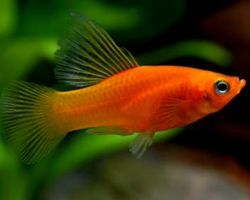
High Fin PlatyPlaty – Platys are a hearty tropical freshwater fish that thrive in community tank conditions.  Platy fish have dark colored fins that outline their beautiful red, yellow and orange colored bodies.  Because Platys can tolerate wide changes in nitrate and nitrite levels, they are a good fish to use for stocking and cycling a new aquarium.  They thrive do best with tank vegetation planted to hide their eggs when they breed.

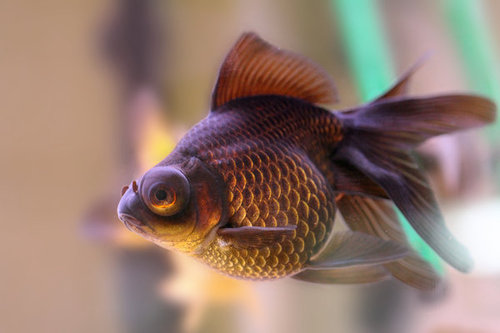
Black MoorGoldfish –  Goldfish should not be counted out of the exotic tropical fish category just yet.   There are goldfish species that are very exotic and bring a high price, especially in the Chinese and Japanese markets.  Consider the Black Moor, the various types of Koi and other inbred goldfish varieties.  The Black Moor is a round bodied goldfish with bulging eyes and long velvety tail fins.  It is a telescope-eyed variety of fancy goldfish that has a characteristic pair of protruding eyes.  It is also referred to as popeye, telescope, kuro demekin in Japan and dragon-eye in China.  They can grow up to a length of 10 inches and have a lifespan of 6 to 25 years.   Black Moors are a cold water fish and may revert to a metallic orange color when exposed to warm water temperatures.

Marbled AngelfishAngelfish – Angelfish are a tropical freshwater and saltwater species prized by tropical fish keepers.  The freshwater Angelfish is a cichlid that comes from the Amazon Basin of South America and is one of the most commonly kept freshwater aquarium fish.  They are prized for their unique shape, color patterns and behavior.  Angelfish were not successfully bred in captivity in the United States until the late 1920s to 1930s, but now are frequently bred to enhance their distinct fin patterns and unique color markings.

Regardless of what type of exotic tropical fish you like, there is a variety that will liven up your tank for  beginners as well as those more expert in Tropical Fish Keeping.

Posted in Featured Articles, Freshwater Fish, Tropical Fish Keeping, Tropical Fish Species1 Comment

Saltwater Fish

Featuring Clownfish

Aquarium Supplies

On-Sale Aquarium Supplies!

Saltwater Specials

Categories