Harlequin Shrimp (Hymenocera picta)
The Harlequin Shrimp (Hymenocera picta), known to tropical fish keeping enthusiasts as the Painted Shrimp or Clown Shrimp, is found throughout the tropical waters of the Indo-West Pacific and the Eastern Pacific Ocean.
The Harlequin Shrimp is a small marine decapod crustacean that is normally found among the shallow coral reefs, rocky crevices, and rubble fields of their range at depths from the low intertidal zone to around 65 feet where they spend their lives hunting their exclusive prey, the sea starfish.
Hymenocera picta are not natural diggers. They are a highly deliberate, constantly moving, mostly nocturnal species, with the peak of their hunting activity begfinning at dusk.
Substantial numbers of Harlequin Shrimp can often be found tucked away inside small caves or beneath low rocky ledges during the day. The dense rockwork apparently provides Harlequin Shrimp a safe haven from benthic and pelagic predators that hunt them from the open reef, especially large wrasses and moray eels.
Although Harlequin Shrimp are frequently found sharing the same reef system, they are not necessarily social animals in a large colony. They are a docile, non-aggressive species toward fish, but they are highly territorial toward other members of their own sex.
Except for the strict, lifelong monogamous pairs they form to hunt much larger starfish like Acanthaster planci (Crown-of-Thorns) or Linckia laevigata, Harlequin Shrimp do not seem to associate much with conspecifics.
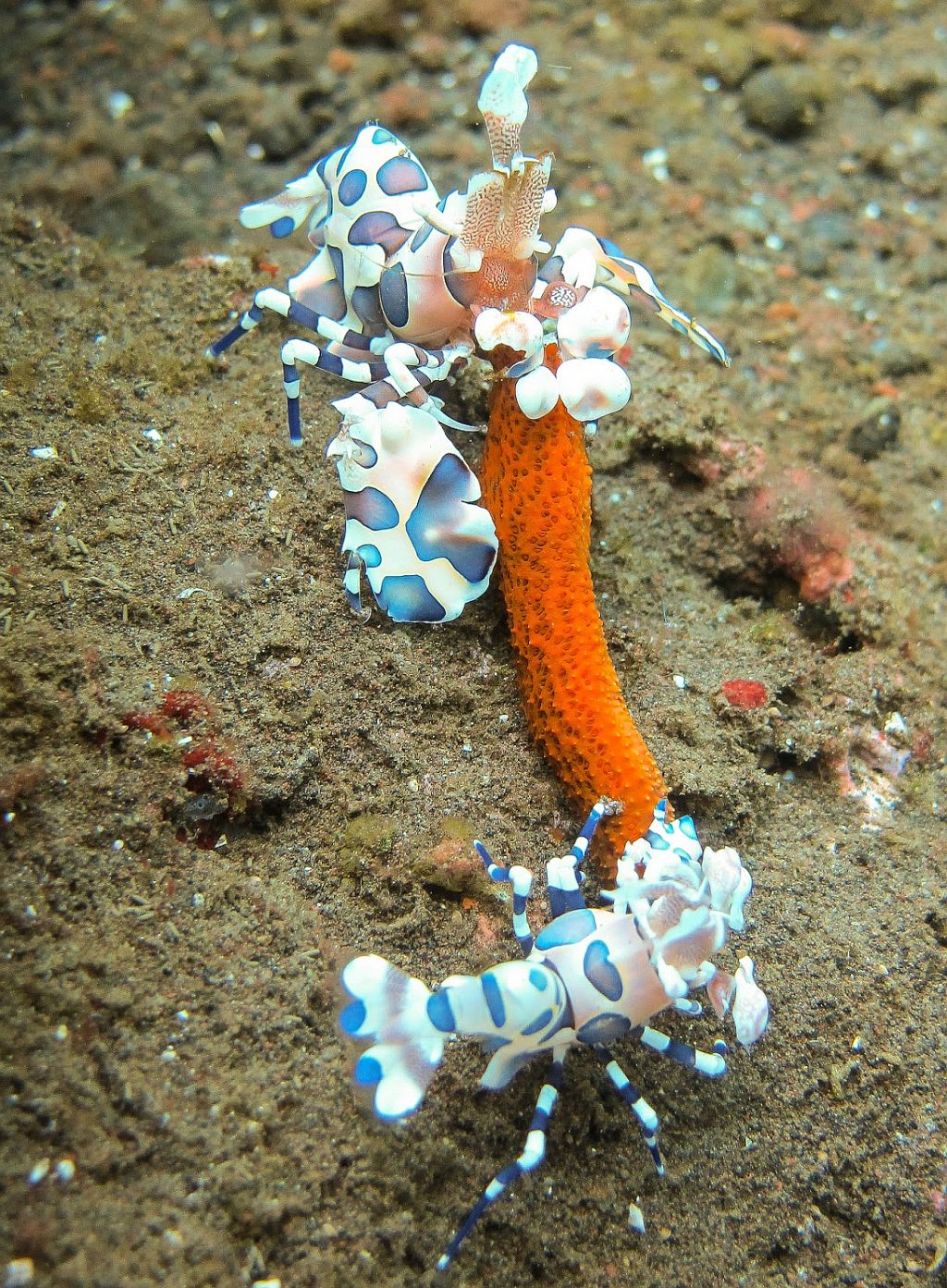
Because the majority of starfish they hunt are often much larger than the shrimp themselves, Harlequin Shrimp
Harlequin Shrimp (Hymenocera picta)
pairs use their petal-like sensory antennules to track down a target. They work together to flip the starfish onto its back to immobilize it, and then methodically eat it alive over the course of days or several weeks, focusing on the tube feet and soft tissues first to keep the prey alive for as long as possible.
Hymenocera picta seldom exceed 1.5 to 2 inches in body length.
Harlequin Shrimp (Hymenocera picta)
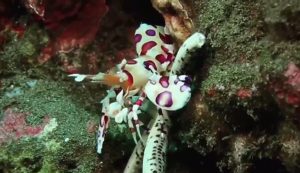
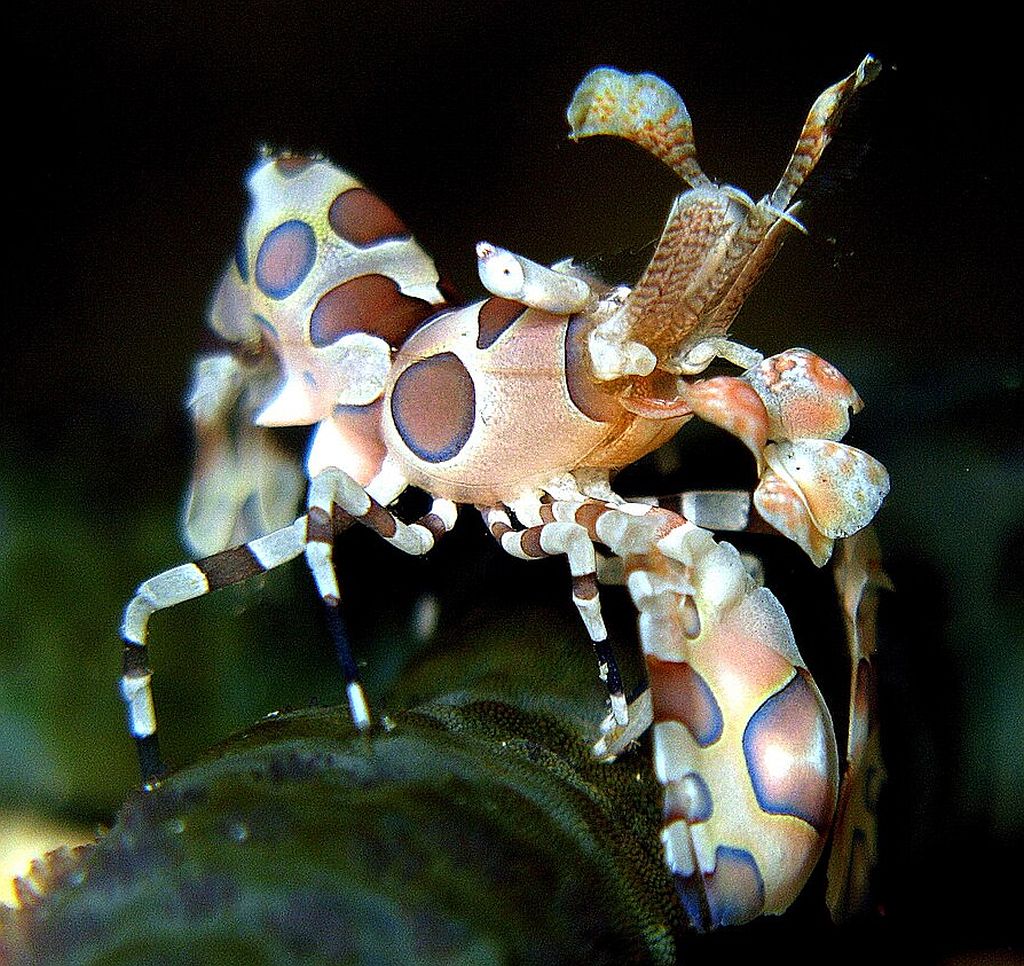
True Harlequin Shrimp feature an extraordinary, highly distinct look with a translucent, cream-white to yellowish body adorned with large, ornate spots. These vibrant pink, purple, or blue markings are frequently outlined by a dark ring, creating a striking contrast. Their physical structure is highly modified into a leaf-like shape, complete with flattened, petal-shaped antennae. They also possess massively expanded, shield-like pincers, which they wave rhythmically to navigate their surroundings and deter rivals.
Harlequin shrimp are gonochoric, displaying clear external sexual dimorphism. Mature females are noticeably larger and heavier-bodied than males and possess colored abdominal plates (pleopods) on the underside of their body. Males lack the distinct color patterns on their abdominal plates.
Unlike many marine creatures that can retreat into a heavy shell for protection, the Harlequin Shrimp does not have a heavy defensive armor shell. Instead, they rely on their cryptic, disruptive coloration to blend into toxic sea anemones or corals, and use their intimidating leaf-like claws to ward off threats.
While generally slow and methodical, Harlequin Shrimp can escape danger in an instant. When threatened, they use their pleopods to execute a sudden, backward tail-flick, launching themselves deep into the safety of the rockwork.
The Harlequin Shrimp is completely reef safe with caution and is best housed in a well-established reef aquarium of at least 10 gallons in capacity. The ideal setup includes a fine coralline sand substrate, plenty of live rock arranged into small caves, crevices, overhangs, and stable hiding places, leaving sufficient room for a mated pair to roam.
Although Harlequin Shrimp are too small to cause any damage in a reef tank and will completely ignore all corals and true anemones, they will aggressively hunt down and consume any ornamental starfish in the aquarium.
Harlequin Shrimp are quite docile and non-aggressive. They do exceptionally well in a mature FOWLR or nano reef tank with peaceful tank mates like small, non-carnivorous fish.
Good tankmates include: Firefish, Gobies, Blennies, Cardinalfish, and peaceful snails like Cerith or Trochus snails.
Tankmates to avoid: Larger and more aggressive fish, Hawkfish, Dottybacks, Coral Banded Shrimp, large predatory crabs, and all species of starfish-eating or predatory wrasses that will view these slow-moving ornamental shrimp as an easy meal.
Unlike almost all other cleanup crew members, Harlequin Shrimp (Hymenocera picta) have an incredibly strict, specialized diet and lack the ravenous appetite for algae or fish waste that other shrimp species posses.
In the aquarium, Clown Shrimp are obligate carnivores that thrive exclusively on the tube feet and tissue of live echinoderms, specifically starfish like the Chocolate Chip Starfish or the nuisance micro Asterina starfish, making them legendary biological weapons for clearing out Asterina starfish plagues in reef systems.
Because of its highly specific diet, the Harlequin Shrimp is not especially easy to keep long-term. They are extremely sensitive to sudden changes in water parameters, particularly sudden drops in salinity. Furthermore, copper-based medications are completely lethal to them.
In addition to pristine water quality, they require stable tropical water temperatures between 72–78°F, adequate iodine levels to support their regular molting process, and a constant, steady supply of live starfish to survive. An excellent reef filtration system and oversize protein skimmer are highly recommended to handle the organic waste generated by decaying starfish pieces.
Though there have been sporadic reports of successfully raising Hymenocera picta in specialized aquaculture facilities, Harlequin shrimp do not generally reproduce successfully in a standard home aquarium environment due to their highly delicate planktonic larval stages.
Mated pairs stay closely bonded and spawning occurs right after the female molts. The female carries a large cluster of thousands of bright, fertilized eggs under her abdomen attached to her pleopods for roughly 12 to 18 days. The tiny larvae hatch and are released into the water column after dark.
In a standard reef or FOWLR aquarium, this release will usually cloud up the waterr to trigger a minor feeding response from corals. The microscopic free-swimming larvae are treated as immediate planktonic food and are quickly consumed by fish long before they can complete their numerous larval molting phases.
In their natural environment, the Harlequin Shrimp feeds exclusively on the vascular tube feet and soft tissues of live starfish, including large species like the Crown-of-Thorns starfish (Acanthaster planci), Linckia, and Fromia species. They hunt their prey as a pair working together to flip a starfish onto its back, rendering it helpless while they slowly consume it alive over several days.
In an established aquarium environment, Harlequin Shrimp will only feed on live starfish like the inexpensive Chocolate Chip Starfish (Protoreaster nodosus) or wild-caught Asterina starfish. They will completely ignore flakes, pellets, algae wafers, frozen mysis, brine shrimp, or any other prepared seafoods and will starve to death if a continuous supply of live starfish is not provided.
Experienced tropical fish keeping enthusiasts will often keep 2 or 3 live Chocolate Chip Starfish in the sump or refugium and humanely slice off a single leg every week to drop into the main tank. The live leg will stay fresh while the shrimp eats it, and the donor starfish will slowly regenerate its limb while recovering in the sump.
The Harlequin Shrimp (Hymenocera picta) is a highly sought-after, premium saltwater species that can be purchased from online retailers, specialized local fish stores, and wholesalers.
They are frequently sold online to tropical nano-reef keeping enthusiasts as specialized biological solutions for Asterina starfish infestations or exotic additions to miniature nano reef aquariums. Current retail prices typically range from $40.00 to over $90.00 per individual, depending on the size, sex, and whether they are purchased as a certified mated pair.
Although aquacultured specimens are occasionally available from specialized breeders; the majority of Harlequin Shrimp are wild caught.
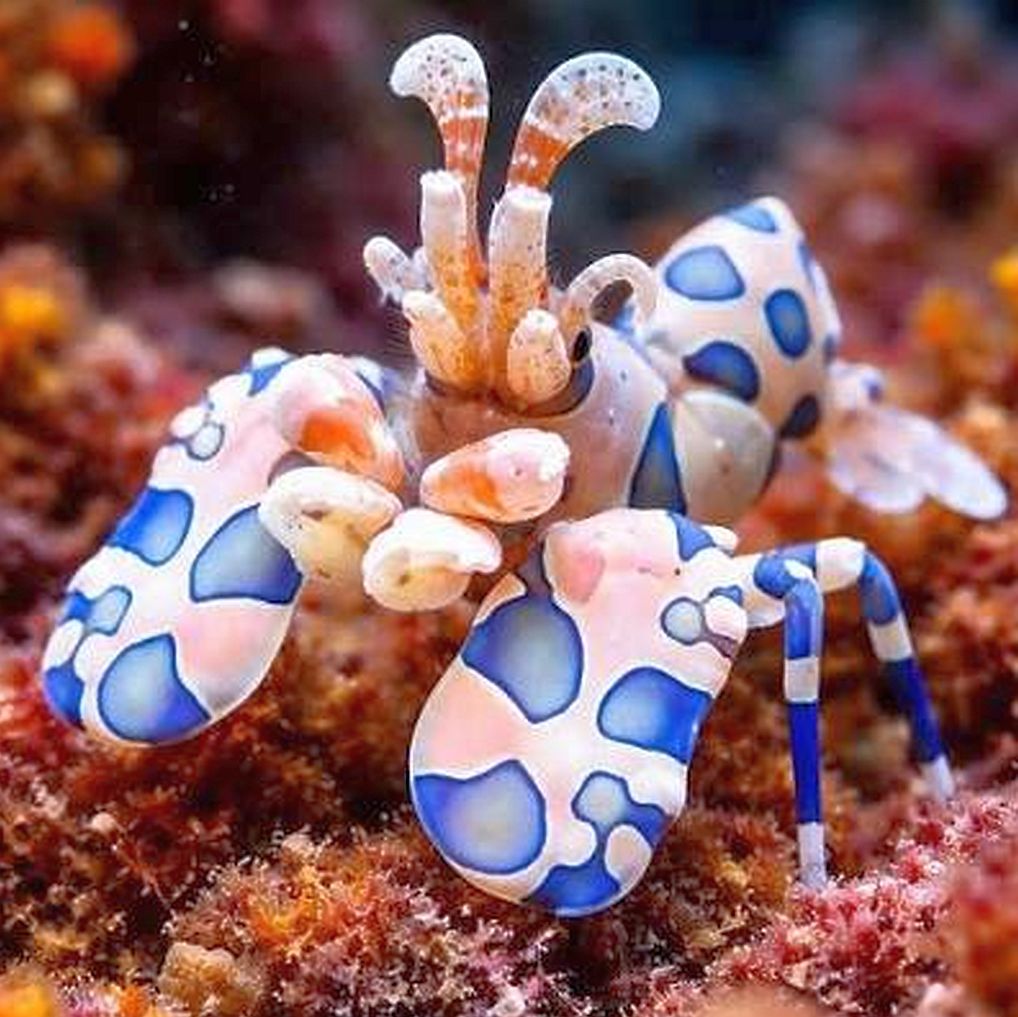
Harlequin Shrimp (Hymenocera picta)
Minimum Tank Size: 10 gallons
Aquarium Type: Established Reef or FOWLR
Care Level: Difficult (Due to strict diet)
Temperament: Peaceful
Aquarium Hardiness: Semi-Hardy
Water Conditions: 72–78°F, dKH 8 to 12, pH 8.1–8.4, sg 1.023–1.025
Max. Size: 2″
Color Form: Cream-White with Pink, Purple, or Blue Spots
Diet: Strict Obligate Carnivore (Starfish only)
Compatibility: Reef Compatible (Will eat ornamental Starfish)
Origin: Indo-West Pacific, Eastern Pacific
Family: Palaemonidae
Lifespan: 2 – 5 years
Aquarist Experience Level: Intermediate to Expert