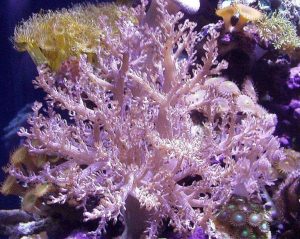
Kenya Tree coral (Capnella)
The Kenya Tree coral (Capnella) known to tropical fish keeping enthusiasts as the Capnella coral, Cauliflower coral, Colt coral, Taro Tree Coral, Tree Coral, Broccoli Soft Coral, Brown Cauliflower Coral, Soft Tree Coral, African Tree Coral and Nepthea coral is found throughout the Indo Pacific with a range that extends from the coast of Africa to the Western Pacific and into the Red Sea.
Kenya Tree coral is native to the warm waters of the Western Indian Ocean in the region of Kenya and Tanzania where they are common in shallow reefs with moderate water flow.
Although the Kenya Tree coral is generally found among the coral reef slopes of their range in clear shallow to deeper waters with strong tidal currents, they are quite adaptable and are also found in shadier spots closer to shore growing on rocks and coral rubble.
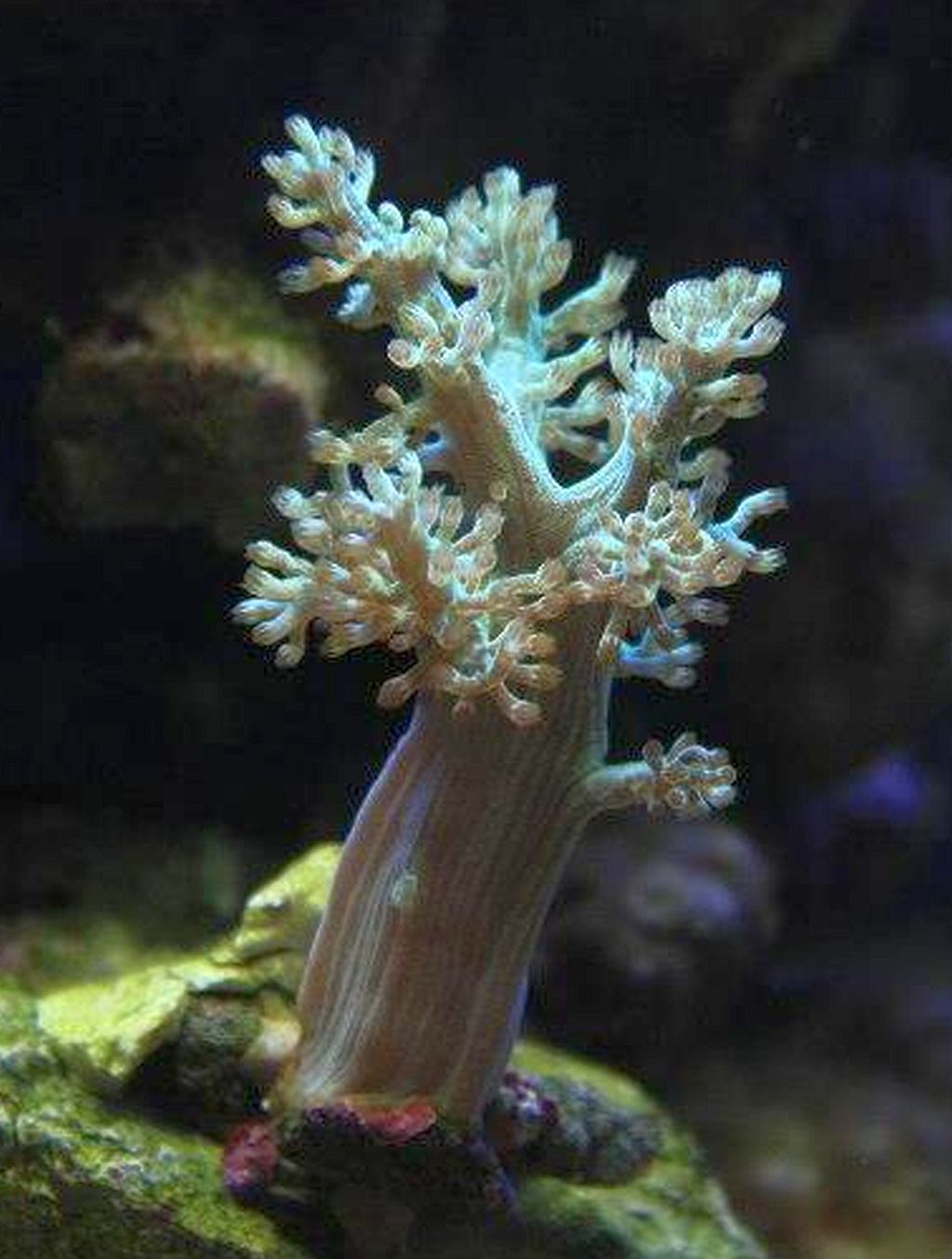
Kenya Tree coral (Capnella)
The Kenya Tree coral, like all species of Capnella are arborescent and form thick trunks with branches that resemble a tree branch, hence their common name.
Some of the species (listed below) are lobed and in areas with very strong currents, form flatter colonies with shorter branches.
Capnella arbuscula Verseveldt, 1977
Capnella australiensis (Thorpe, 1928)
Capnella bouilloni Verseveldt, 1976
Capnella erecta Verseveldt, 1977
Capnella fructosa
Capnella fungiformis Kükenthal, 1903
Capnella gaboensis Verseveldt, 1977
Capnella garetti Verseveldt, 1977
Capnella imbricata (Quoy & Gaimard, 1833)
Capnella johnstonei Verseveldt, 1977
Capnella lacertiliensis Macfadyen
Capnella parva Light, 1913
Capnella portlandensis Verseveldt, 1977
Capnella ramosa Light, 1913
Capnella sabangensis Roxas, 1933
Capnella shepherdi Verseveldt, 1977
Capnella spicata (May)
Capnella susanae Williams, 1988
Capnella thyrsoidea (Verrill, 1989)
Capnella watsonae Verseveldt, 1977
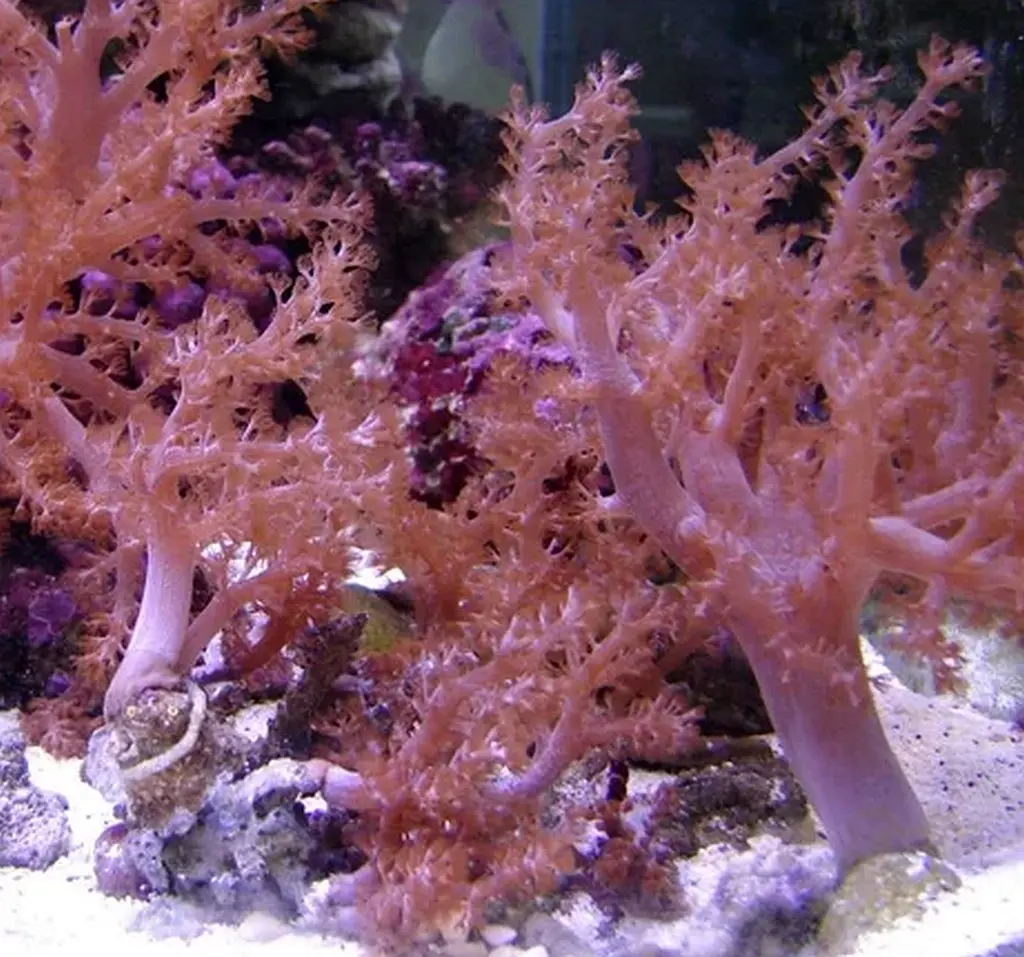
Kenya Tree coral (Capnella)
Capnella are generally colored gray with brown polyps, however, they are collected in a variety of color forms from Brown, Beige, Pink, Red, Purple, Green, etc. Their color and the intensity of their colors is dependent on how much light they receive. The more intense the light, the lighter the color of the coral.
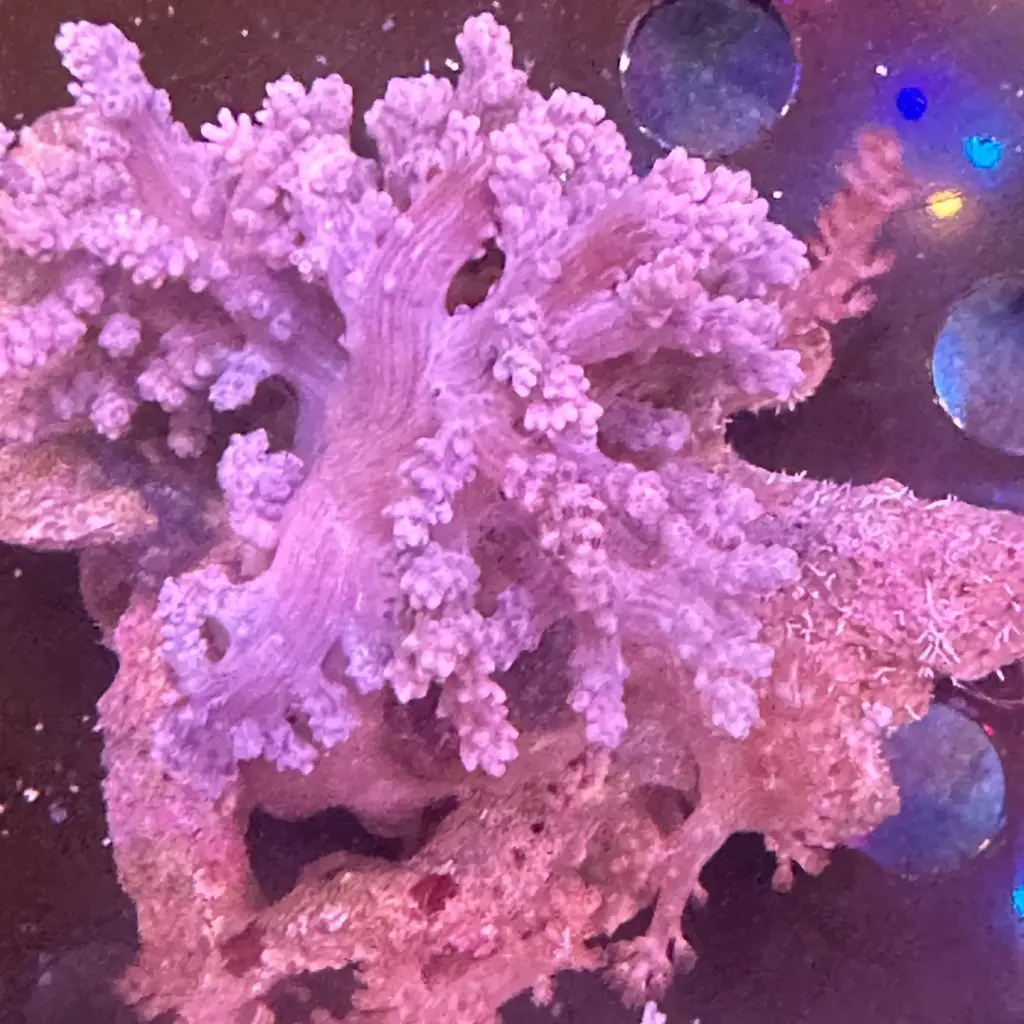
Pink Kenya Tree coral (Capnella)
Because the Kenya Tree coral is extremely adaptive and has the ability to thrive in a variety of environments, they are a common sight throught their range.
Although the Kenya Tree coral can be housed in reef tanks as small as 10 gallons, they are best kept in larger reef tanks of at least 50 gallon capacity with a sand or fine coralline gravel substrate and plenty of rubble or live rock for them to attach themselves to. They do well in the middle to bottom of the tank with low to moderate lighting, moderate to high indirect water flow, and adequate space to minimize overgrowth.
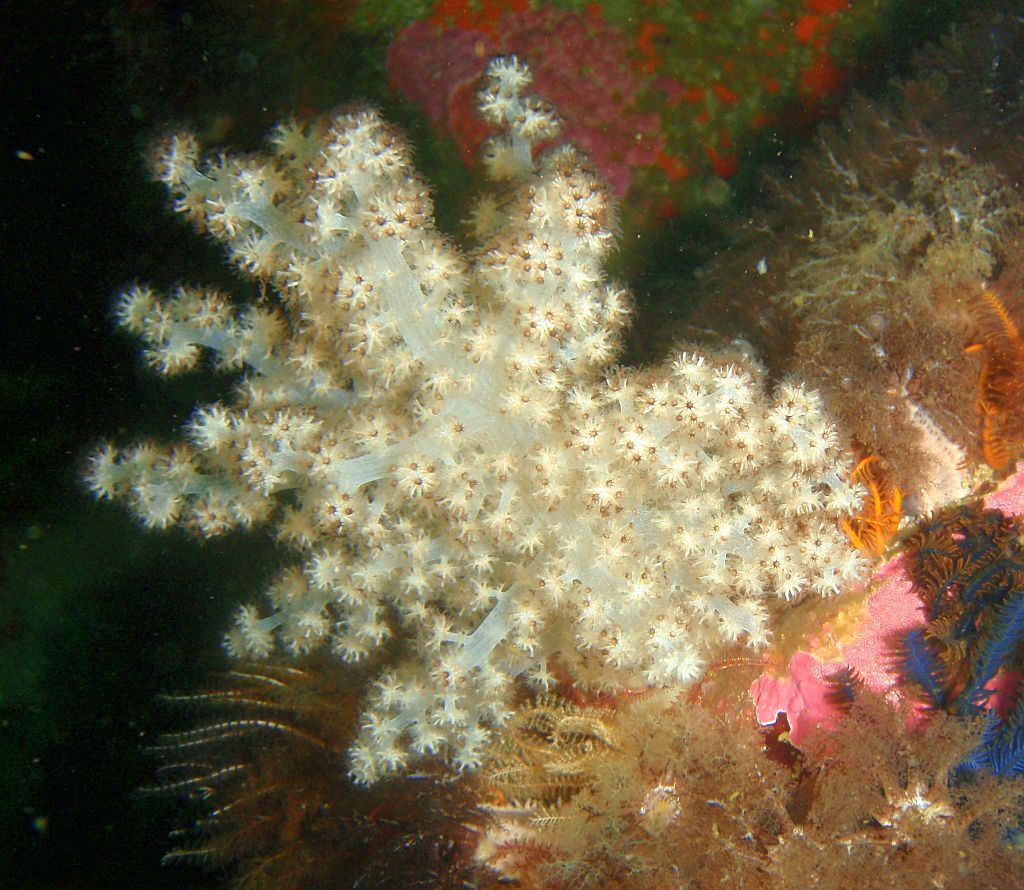
Kenya Tree coral (Capnella)
Capnella is semi aggressive towards other corals and will give off chemical toxins to ward off invasive competitors. Albiet somewhat invasive, it is a great addition to fill out rockwork.
Compatible tankmates for Kenyan Tree Coral include Firefish, Royal Gramma, Gobies, Clownfish, Cleaner Shrimp, and other peaceful species.
The Kenya Tree coral reproduces asexually by dropping off branches. When they are ready to reproduce, a distinct swelling will form at the bottom of a branch which then drops off to form a new colony. The dropped branch will quickly secure a new hold and eventually develop into a new colony. Dropped branches stick very quickly and will usually be firmly rooted in a day or less. Established colonies are able to bend and reattach to the rock by “creeping” and divison at their base.
In their natural environment, Kenya Tree corals obtain most of their nutrients from their zooxantheliae, symbiotic algae. Although they rely mostly on photosynthesis and dissolved organics for growth, they are also able to capture and consume small planktonic organizms with their polyps.
In an aquarium environment with moderate water flow, they benefit from weekly supplemental feedings of phytoplankton, zooplankton, baby brine shrimp, or marine snow mixed with water that they catch with their polyps.
The Kenya Tree coral (Capnella) is readily available in the aquarium trade to tropical fish ikeeping enthusiasts as wild caught and captive-bred specimens from a vareity of online retailers at modest prices.
Aquaculture of this coral has been successful, leading to increased availability and sustainability in the hobby.
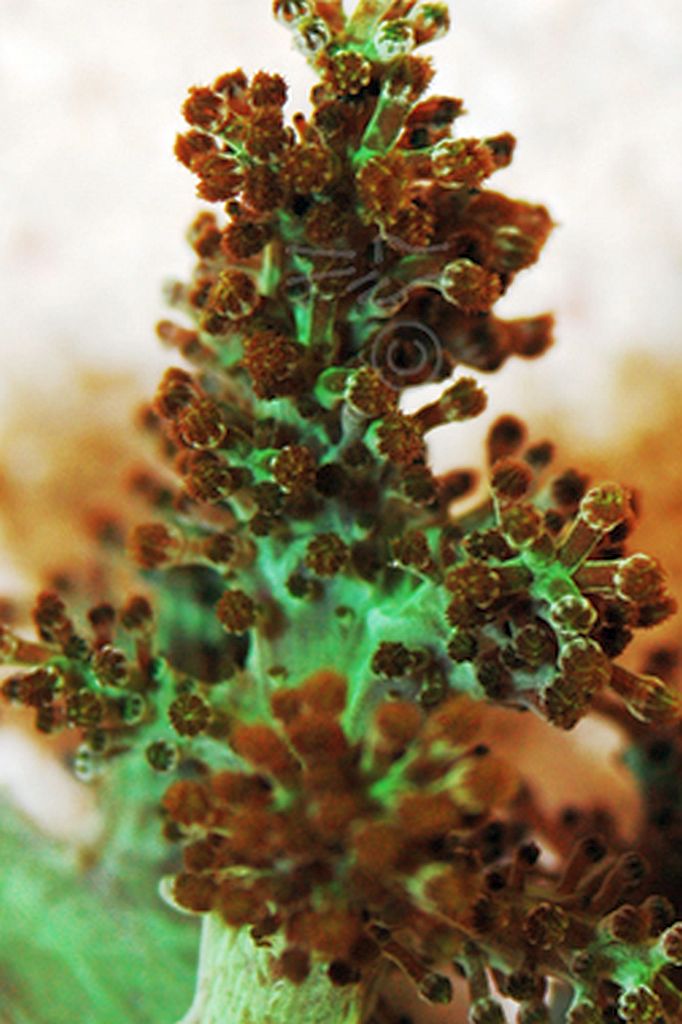
Kenya Tree coral (Capnella)
Minimum Tank Size: 50 gallon
Tank Placement: Bottom to Middle
Water Flow: Moderate to Strong
Care Level: Easy
Aquarium Hardiness: Hardy
Temperament: Semi Aggressive
Toxicity: Yes, weak toxins
Invasive: yes
Water Conditions: 73 – 82°F, dKH 8 – 12°, pH 8.1–8.4, sg 1.023-1.025, Nitrate 2.5 – 10 ppm
Lighting: Moderate
Feeding: phytoplankton, zooplankton
Growth Rate : Fast
Color Form: Brown, Beige, Pink, Purple, Green, etc.
Diet: Photosynthetice, Filter Feeder
Origin: Indo-Pacific, Red Sea
Family: Nephtheidae
Lifespan: 5 – 7 years
Aquarist Experience Level: Beginner