Pistol Shrimp (Alpheus heterochaelis)
The Pistol Shrimp (Alpheus heterochaelis), known to tropical fish keeping enthusiasts as the Bigclaw Snapping Shrimp, Green Pistol Shrimp, or Snapping Shrimp, is a marine decapod crustacean species that is found throughout the western Atlantic Ocean, from North Carolina down through the Gulf of Mexico and the Caribbean to Brazil.
Pistol Shrimp are normally found among shallow estuaries, the salt marshes, and oyster reefs of their range at depths from the low intertidal zone to around 30 feet where they often inhabit muddy or sandy seafloors with plenty of scattered rubble.
Alpheus heterochaelis are consummate natural diggers. They seem to be constantly on the move and are mostly nocturnal animals, with the peak of their activity beginning at dusk, though they will continuously excavate their tunnels throughout the day.
Large numbers of Pistol Shrimp are often found completely hidden underground in complex, multi-chambered burrows that they excavate beneath flat stones or live rock, rather than in the open.
The extensive tunnel network provides Pistol Shrimp with protection from benthic predators that hunt them from the water column above, particularly croakers and aggressive crabs.
Although Pistol Shrimp are frequently found inhabiting the same large rubble fields, this does not necessarily mean they are social animals. They are generally non-aggressive toward peaceful fish but can be highly territorial toward other members of their own species, except when they form a compatible male-female pair and share a common burrow.
However, Pistol Shrimp are well known for forming close, mutually beneficial symbiotic relationships with various species of watchman gobies. The goby acts as the shrimp’s “eyes,” keeping watch for potential predators, while the shrimp serves as the “bulldozer,” excavating and maintaining their shared burrow.
Pistol Shrimp (Alpheus heterochaelis)
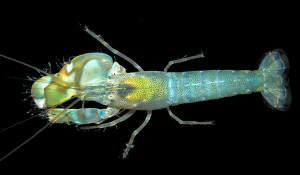
Alpheus heterochaelis are small marine crustaceans that seldom exceed 1.5 to 2 inches in body length. True Pistol Shrimp have a slightly translucent, dull greenish-brown to greyish-blue colored body that provides excellent camouflage against muddy substrates. They possess a highly modified, massively oversized snapper claw that can be up to half the size of their entire body. This specialized claw features a plunger-like mechanism that, when snapped shut under extreme muscular tension, shoots out a high-velocity cavitation bubble capable of producing a loud “sonic pop” that stuns small prey and deters intruders.
Pistol Shrimp are gonochoric, meaning individuals are either male or female. They exhibit mild external sexual dimorphism, with mature males typically having a slightly larger snapping claw relative to their body size than females.
Unlike many marine animals that rely on thick protective shells or venomous stingers as their primary defensive mechanism, the Pistol Shrimp uses its powerful snapping claw to generate acoustic cavitation bubbles to ward off curious predators and to stun their prey. The shrimp also uses its specialized appendages to clear shifting sand and debris from their tunnel entrances. Their reaction time is lightning fast, allowing them to retreat backward into the safety of their burrows in an instant.
The Pistol Shrimp is completely reef safe and is best housed in a well-established FOWLR or reef aquarium of at least 20 gallon capacity, with a thick argonite sand and mixed rubble substrate, plenty of flat live rock arranged safely on the bottom glass to prevent collapsing tunnels, and sufficient room for them to burrow and build their complexes.
Pistol Shrimp are too small to damage any corals, but they will constantly rearrange loose gravel and small pieces of rubble to reinforce their burrow entrances, which can occasionally bury low-lying frags that are not securely attached.
Many species of Pistol Shrimp in the family Alpheidae form mutualistic partnerships with watchman gobies and make fascinating additions to both reef and FOWLR aquariums.
For a successful partnership, choose compatible species, preferably an established pair, and provide a suitable burrowing environment. A deep sand bed approximately 3 to 4 inches deep, mixed with coarser coral rubble and small shell fragments, provides the shrimp with the materials they need to construct stable tunnels. Because the shrimp’s digging can undermine the rockwork, all live rock should be situated directly on the bottom of the tank before adding the substrate.
Pistol Shrimp are secretive by nature and non-aggressive. Choose peaceful, non-aggressive tankmates that will not harass the goby or prey on the shrimp.
Pistol Shrimp get along exceptionally well in a FOWLR tank with small, non-carnivorous fish like Yellow Watchman Gobies, Hi Fin Red Banded Gobies, Randall’s Pistol Gobies, Peppermint Shrimp, and peaceful snails like Cerith or Nassarius snails.
Although the Pistol Shrimp is relatively easy to keep and very hardy once acclimated; they are sensitive to sudden changes in water values, rapid fluctuations in salinity and pH, and copper-based medications that are lethal to them. In addition to stable water quality, they require a constant food source, a stable tropical water temperature between 72–78°F, and adequate iodine levels to support their regular molting process.
An efficient filtration system and protein skimmer is highly recommended to maintain the pristine water quality and stable water conditions they require, and because gobies are notorious jumpers, a tight fitting tank lid is essential.
Pistol Shrimp (Alpheus heterochaelis)
Never house Pistol Shrimp with large and/or aggressive carnivorous fish like Hawkfish, Dottybacks, all species of large predatory wrasses, most predatory crab species, or mantis shrimp that will aggressively hunt them down inside their burrows.
Although there are a few reports of successfully hatching them in captivity, Alpheus heterochaelis do not generally reproduce successfully in a home aquarium environment due to their complex larval stages.
Males and females form tight bonds when kept as a pair, and mating occurs immediately following a female’s molt. The female carries a cluster of bright fertilized eggs (berries) under her abdomen attached to her pleopods for approximately 3 to 4 weeks. Once the tiny, dark “eyeballs” are clearly visible in the eggs, hatching will generally occur within 24 to 48 hours; almost always at night.
In the wild, the tiny, transparent larvae spend the next 3 to 5 days drifting as zoplankton with the ocean currents, molting through their three larval stages, and dropping to the sea floor as tiny juveniles.
In a typical reef tank, the majority of larvae do not survive the first night. They are quickly drawn into the filtration system, captured by protein skimmers, or eaten by corals and fish. Few if any free swimming larvae escape from being quickly consumed by tankmates before they can metamorphose into crawling juveniles.
In their natural environment, the Pistol Shrimp is an opportunistic omnivore and ambush predator that feeds on a diverse diet of small fish, crabs, worms, amphipods, mollusks, smaller shrimp, and scavaged organic detritus, decaying animal carcasses, and macro algae that accumulate or pass by their burrow entrances.
In addition to scavenging organic materials from the mud, they use their massive claw to generate a localized acoustic shockwave to instantly stun or kill small fish or invertebrates passing their burrow entrance. The shockwave briefly emits temperatures matching the surface of the sun and reaches pressure levels louder than a gunshot.
In an aquarium environment, Alpheus heterochaelis are great scavengers that thrive on shifting the sand for detritus, debris, and any leftover shrimp or fish foods, such as sinking pellets, flakes, mysis shrimp, brine shrimp, and frozen meaty foods that drift near their burrow opening. They will rarely venture far from their tunnel during daylight hours, preferring to wait for food to land right at their doorstep.
The Pistol Shrimp (Alpheus heterochaelis) is a very common saltwater species that can be purchased from online retailers, local fish stores, and wholesalers at reasonable prices. They are frequently sold online to tropical fish keeping enthusiasts as half of a “symbiotic pair” alongside watchman gobies for reef tanks.
Prices for individual pistol shrimp typically range from $15 to $40, while pre-bonded goby and shrimp pairs run anywhere from $60 to over $200.
Prices depend heavily on the specific species involved, whether the animals are sold individually or pre-bonded, and whether they have been fully quarantined by the retailer.
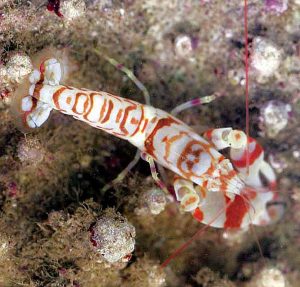
The most popular and active bulldozer, Tiger Pistol Shrimp (Alpheus bellulus) pair seamlessly with Watchman gobies and sell from $18 – $25.
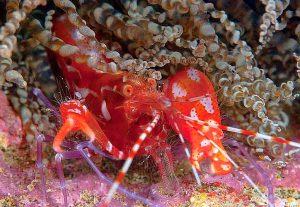
The smaller bright red and white striped Randall’s / Candy Cane Pistol (Alpheus randalli) sell from $15 – $32.
The colorful but solitary Bullseye Pistol Shrimp (Alpheus soror) sell from $35 – $40.
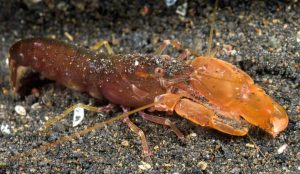
Pistol Shrimp (Alpheus heterochaelis)
Minimum Tank Size: 20 gallons
Aquarium Type: Established Reef or FOWLR
Care Level: Easy
Temperament: Peaceful (Territorial with other Pistol Shrimp)
Aquarium Hardiness: Hardy
Water Conditions: 72–78°F, dKH 8 to 12, pH 8.1-8.4, sg 1.023-1.025
Max. Size: 2″
Color Form: Green, Brown, Grey-Blue
Diet: Omnivore/scavenger
Compatibility: Reef Compatible
Origin: Western Atlantic (North Carolina to Brazil)
Family: Alpheidae
Lifespan: 1 – 3 years
Aquarist Experience Level: Beginner